SOLDES
Jusqu'à -70% sur une sélection d'articles*

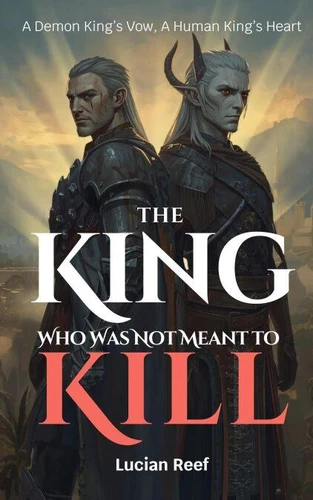
The King Who Was Not Meant to Kill: A Demon King’s Vow, A Human King’s Heart
Par :Formats :
Disponible dans votre compte client Decitre ou Furet du Nord dès validation de votre commande. Le format ePub est :
- Compatible avec une lecture sur My Vivlio (smartphone, tablette, ordinateur)
- Compatible avec une lecture sur liseuses Vivlio
- Pour les liseuses autres que Vivlio, vous devez utiliser le logiciel Adobe Digital Edition. Non compatible avec la lecture sur les liseuses Kindle, Remarkable et Sony
 , qui est-ce ?
Notre partenaire de plateforme de lecture numérique où vous retrouverez l'ensemble de vos ebooks gratuitement
Pour en savoir plus sur nos ebooks, consultez notre aide en ligne ici
C'est si simple ! Lisez votre ebook avec l'app Vivlio sur votre tablette, mobile ou ordinateur :

- FormatePub
- ISBN8233358999
- EAN9798233358999
- Date de parution22/12/2025
- Protection num.pas de protection
- Infos supplémentairesepub
- ÉditeurLinda Balsamo
Résumé
War teaches kings to speak in orders, not in doubt. It teaches them to measure lives in distance, timing, and acceptable loss, and to believe that survival is proof of righteousness rather than chance. Sebastian of Thornwick learned those lessons well, and he ruled by them-until the battlefield began to answer his commands with silence. Beyond Thornwick's borders stands Nightvale, a demon kingdom bound by an ancient rule that forbids the killing of humans, even in war.
Its king, Alaric, is everything Thornwick was taught to fear: inhuman, controlled, and unwavering in a law that seems impractical when blood is already on the ground. When violence erupts along the border and human deaths demand retaliation, Sebastian signs orders meant to end the threat cleanly, decisively, and permanently. But wars rarely obey the stories written about them. As ambushes fracture formations and fear bleeds into command, Sebastian is forced to confront a truth he has avoided all his life: authority does not guarantee control, and anger is not the same as certainty.
Each time the battlefield closes in, it is Alaric who steps forward-not to dominate, not to kill, but to hold a line that refuses to break even when breaking would be easier. Between shattered terrain, contested laws, and evidence that arrives too late to undo its damage, the two kings are drawn into a conflict where the real enemy thrives in misdirection and borrowed hatred. Choices once made in ink must be faced in breath and bone, and listening becomes more dangerous than issuing orders.
This is a story about restraint under pressure, about power that chooses not to destroy, and about trust that forms not through confession or comfort, but through survival shared at the edge of ruin. There are no easy absolutions here, no swift forgiveness-only the slow recalibration of belief as two rulers learn that peace is not the absence of war, but the courage to refuse the lie that violence is inevitable.
In a world that demands enemies, what happens when a king chooses to listen instead?
Its king, Alaric, is everything Thornwick was taught to fear: inhuman, controlled, and unwavering in a law that seems impractical when blood is already on the ground. When violence erupts along the border and human deaths demand retaliation, Sebastian signs orders meant to end the threat cleanly, decisively, and permanently. But wars rarely obey the stories written about them. As ambushes fracture formations and fear bleeds into command, Sebastian is forced to confront a truth he has avoided all his life: authority does not guarantee control, and anger is not the same as certainty.
Each time the battlefield closes in, it is Alaric who steps forward-not to dominate, not to kill, but to hold a line that refuses to break even when breaking would be easier. Between shattered terrain, contested laws, and evidence that arrives too late to undo its damage, the two kings are drawn into a conflict where the real enemy thrives in misdirection and borrowed hatred. Choices once made in ink must be faced in breath and bone, and listening becomes more dangerous than issuing orders.
This is a story about restraint under pressure, about power that chooses not to destroy, and about trust that forms not through confession or comfort, but through survival shared at the edge of ruin. There are no easy absolutions here, no swift forgiveness-only the slow recalibration of belief as two rulers learn that peace is not the absence of war, but the courage to refuse the lie that violence is inevitable.
In a world that demands enemies, what happens when a king chooses to listen instead?