
Chris Polaris is a systems thinker, author, and clarity architect helping managers, team leads, and knowledge workers cut through cognitive drag and work with structured precision. Using frameworks like the Friction Stack, Decision Surface, and the Clarity Engine Method, he writes practical guides for professionals who want to think more clearly and work smarter - with or without AI.
Nouveauté
The Judgment Layer
Par :Formats :
Disponible dans votre compte client Decitre ou Furet du Nord dès validation de votre commande. Le format ePub est :
- Compatible avec une lecture sur My Vivlio (smartphone, tablette, ordinateur)
- Compatible avec une lecture sur liseuses Vivlio
- Pour les liseuses autres que Vivlio, vous devez utiliser le logiciel Adobe Digital Edition. Non compatible avec la lecture sur les liseuses Kindle, Remarkable et Sony
 , qui est-ce ?
Notre partenaire de plateforme de lecture numérique où vous retrouverez l'ensemble de vos ebooks gratuitement
Pour en savoir plus sur nos ebooks, consultez notre aide en ligne ici
C'est si simple ! Lisez votre ebook avec l'app Vivlio sur votre tablette, mobile ou ordinateur :

- FormatePub
- ISBN8235644052
- EAN9798235644052
- Date de parution29/06/2026
- Protection num.pas de protection
- Infos supplémentairesepub
- ÉditeurIoakim Ioakim
Résumé
AI can generate faster answers, clearer summaries, stronger drafts, and more polished recommendations. But it cannot carry responsibility. The Judgment Layer is a practical book about what becomes more important when AI becomes more capable: human judgment. As AI enters more decisions, workflows, meetings, documents, and leadership processes, the real risk is not simply that people will use AI badly.
The deeper risk is that organizations will confuse speed with understanding, fluency with truth, and automation with accountability. This book explains why judgment does not disappear in an AI-assisted world. It moves to a different layer. That layer determines how problems are framed, how assumptions are tested, how trade-offs are made visible, how ownership is preserved, and how decisions remain accountable after AI has helped produce the output.
Inside, you will learn to recognize the hidden failure modes of AI-assisted work: decision fog, ownership drift, false clarity, responsibility gaps, and the danger of treating polished output as proof of sound thinking. The book shows why leaders, managers, professionals, and teams need more than AI tools. They need decision architecture. They need responsibility boundaries. They need systems that keep human judgment attached to the choices that matter.
The Judgment Layer is for anyone who wants to use AI seriously without becoming careless with thinking, leadership, or responsibility. It is not a technical manual. It is not an anti-AI argument. It is a clear framework for working with AI while preserving the human layer that makes decisions trustworthy. AI can assist the work. But judgment still has to belong somewhere. This book is about building that place.
The deeper risk is that organizations will confuse speed with understanding, fluency with truth, and automation with accountability. This book explains why judgment does not disappear in an AI-assisted world. It moves to a different layer. That layer determines how problems are framed, how assumptions are tested, how trade-offs are made visible, how ownership is preserved, and how decisions remain accountable after AI has helped produce the output.
Inside, you will learn to recognize the hidden failure modes of AI-assisted work: decision fog, ownership drift, false clarity, responsibility gaps, and the danger of treating polished output as proof of sound thinking. The book shows why leaders, managers, professionals, and teams need more than AI tools. They need decision architecture. They need responsibility boundaries. They need systems that keep human judgment attached to the choices that matter.
The Judgment Layer is for anyone who wants to use AI seriously without becoming careless with thinking, leadership, or responsibility. It is not a technical manual. It is not an anti-AI argument. It is a clear framework for working with AI while preserving the human layer that makes decisions trustworthy. AI can assist the work. But judgment still has to belong somewhere. This book is about building that place.
A propos de Chris Polaris

Faster Is Not Wiser
E-book
6,49 €

AI at Home
E-book
6,99 €

The Memory Layer
E-book
6,49 €

Thinking AI
E-book
6,49 €

The Knowledge Flow
E-book
6,99 €
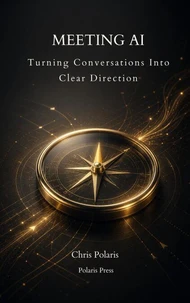
Meeting AI
E-book
6,49 €
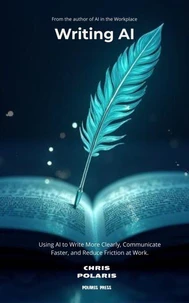
Writing AI
E-book
6,49 €

The Proof Economy
E-book
6,99 €
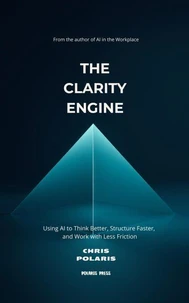
The Clarity Engine
E-book
6,49 €