SOLDES
Jusqu'à -70% sur une sélection d'articles*

Nouveauté
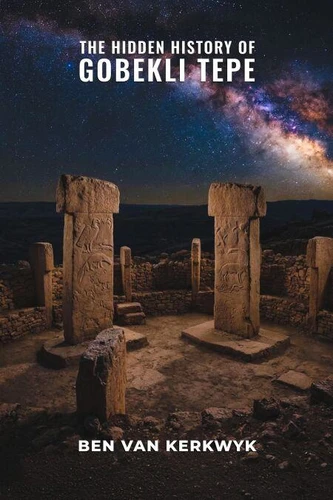
The Hidden History of Gobekli Tepe. Forbidden History Archive, #2
Par :Formats :
Disponible dans votre compte client Decitre ou Furet du Nord dès validation de votre commande. Le format ePub est :
- Compatible avec une lecture sur My Vivlio (smartphone, tablette, ordinateur)
- Compatible avec une lecture sur liseuses Vivlio
- Pour les liseuses autres que Vivlio, vous devez utiliser le logiciel Adobe Digital Edition. Non compatible avec la lecture sur les liseuses Kindle, Remarkable et Sony
 , qui est-ce ?
Notre partenaire de plateforme de lecture numérique où vous retrouverez l'ensemble de vos ebooks gratuitement
Pour en savoir plus sur nos ebooks, consultez notre aide en ligne ici
C'est si simple ! Lisez votre ebook avec l'app Vivlio sur votre tablette, mobile ou ordinateur :

- FormatePub
- ISBN8235320826
- EAN9798235320826
- Date de parution10/07/2026
- Protection num.pas de protection
- Infos supplémentairesepub
- ÉditeurIoakim Ioakim
Résumé
On a limestone hill above the plains of southeastern Anatolia, people living more than eleven thousand years ago cut enormous T-shaped pillars from the bedrock, carved them with snakes, vultures, foxes, boars, scorpions, belts, hands, and headless human forms, then raised them inside enclosed stone chambers. They did this before cities, before writing, before metal, and before the settled farming world usually placed at the beginning of civilization.
The old explanation-that small hunting groups somehow gathered for ritual-now looks too narrow. Göbekli Tepe belongs to a wider field of sites stretching across the Sanliurfa region, and together they point to an organised sacred world whose builders knew far more than the old timeline allowed. This book follows the questions the stones still refuse to answer. Who are the faceless beings at the centre of the enclosures? Why are dangerous animals carved around them? Were these places built for the dead, for initiation, for sky watching, for feasting, or for contact with powers the builders did not regard as human? Why were the enclosures filled in and sealed? Set against the upheavals at the end of the Ice Age, the rise of early settlement, the spread of wild grain, and the discovery of Karahan Tepe and the other Tas Tepeler sites, Göbekli Tepe begins to look less like an isolated monument and more like the surviving edge of a forgotten system.
The old explanation-that small hunting groups somehow gathered for ritual-now looks too narrow. Göbekli Tepe belongs to a wider field of sites stretching across the Sanliurfa region, and together they point to an organised sacred world whose builders knew far more than the old timeline allowed. This book follows the questions the stones still refuse to answer. Who are the faceless beings at the centre of the enclosures? Why are dangerous animals carved around them? Were these places built for the dead, for initiation, for sky watching, for feasting, or for contact with powers the builders did not regard as human? Why were the enclosures filled in and sealed? Set against the upheavals at the end of the Ice Age, the rise of early settlement, the spread of wild grain, and the discovery of Karahan Tepe and the other Tas Tepeler sites, Göbekli Tepe begins to look less like an isolated monument and more like the surviving edge of a forgotten system.