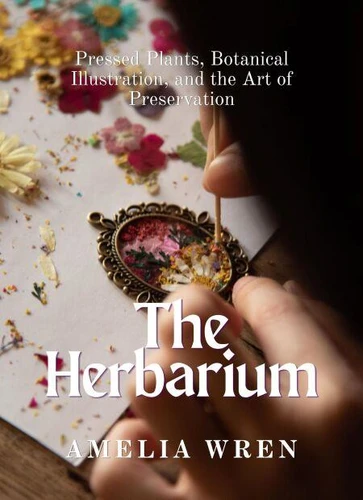
Why do we press flowers? We have done it for at least five hundred years - botanists for their science, artists for their compositions, lovers for their keepsakes - and we are doing it still, in greater numbers than at any time since the Victorians. A flower pressed by Henry David Thoreau in the 1850s sits today in a folder at Harvard. Climate scientists open it to measure how spring has shifted across the intervening century.
Botanical artists find the architecture of the petal still legible in its dried form. And somewhere in the paper is the memory of a specific afternoon in Concord - a man stooping in a meadow, a plant chosen and carried home. One pressed flower. Three lives. This is the strange power of the herbarium. The Herbarium traces this practice from its Renaissance origins to the present moment of digital archives and DNA sequencing - and asks what it is about a flattened plant on a sheet of paper that we have never, in all this time, been able to put down. A piece of evidence.
A work of art. A small, deliberate refusal to let something be lost. This book is about all three.
Why do we press flowers? We have done it for at least five hundred years - botanists for their science, artists for their compositions, lovers for their keepsakes - and we are doing it still, in greater numbers than at any time since the Victorians. A flower pressed by Henry David Thoreau in the 1850s sits today in a folder at Harvard. Climate scientists open it to measure how spring has shifted across the intervening century.
Botanical artists find the architecture of the petal still legible in its dried form. And somewhere in the paper is the memory of a specific afternoon in Concord - a man stooping in a meadow, a plant chosen and carried home. One pressed flower. Three lives. This is the strange power of the herbarium. The Herbarium traces this practice from its Renaissance origins to the present moment of digital archives and DNA sequencing - and asks what it is about a flattened plant on a sheet of paper that we have never, in all this time, been able to put down. A piece of evidence.
A work of art. A small, deliberate refusal to let something be lost. This book is about all three.

 , qui est-ce ?