SOLDES
Jusqu'à -70% sur une sélection d'articles*

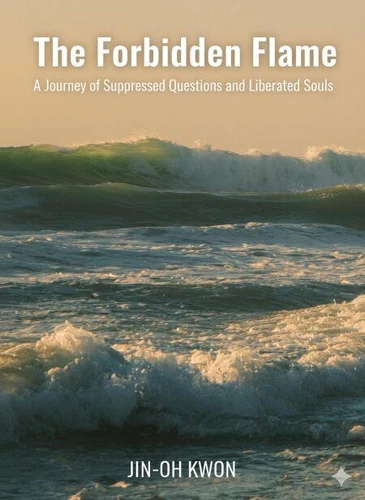
The Forbidden Flame: A Journey of Suppressed Questions and Liberated Souls
Par :Formats :
Disponible dans votre compte client Decitre ou Furet du Nord dès validation de votre commande. Le format ePub est :
- Compatible avec une lecture sur My Vivlio (smartphone, tablette, ordinateur)
- Compatible avec une lecture sur liseuses Vivlio
- Pour les liseuses autres que Vivlio, vous devez utiliser le logiciel Adobe Digital Edition. Non compatible avec la lecture sur les liseuses Kindle, Remarkable et Sony
 , qui est-ce ?
Notre partenaire de plateforme de lecture numérique où vous retrouverez l'ensemble de vos ebooks gratuitement
Pour en savoir plus sur nos ebooks, consultez notre aide en ligne ici
C'est si simple ! Lisez votre ebook avec l'app Vivlio sur votre tablette, mobile ou ordinateur :

- FormatePub
- ISBN8224933150
- EAN9798224933150
- Date de parution02/02/2026
- Protection num.pas de protection
- Infos supplémentairesepub
- ÉditeurDraft2Digital
Résumé
Summary of the Content The Importance of the Suppressed Question - The text explores how the fundamental human question-"Why?"-is often suppressed by power and institutions, and how reclaiming it can lead to personal and intellectual liberation. The Korean Social and Religious Context - It critiques the dogmatism of the Korean church, the commercialization of the publishing industry, and the silent struggles of ordinary people, framing these within Korea's unique socio-cultural landscape.
Reinterpretation of Historical Figures - Jesus, Newton, and Turing are presented not as distant icons, but as boundary-breaking seekers whose legacies continue to inspire the pursuit of truth and freedom. Writing as an Act of Resistance - Writing is depicted as a means of survival, healing, and defiance-a way to prove one's existence and preserve sincerity in an age of commercial and algorithmic pressure.
Personal Narrative and Confession - The author shares intimate experiences of poverty, violence, faith crisis, and betrayal, weaving them into a larger meditation on resilience, forgiveness, and grace. ?? Key Features of the Text Multi-Layered Structure - Blends philosophy, theology, history, literary reflection, and social criticism into a cohesive, essay-like narrative. Local Context with Universal Themes - While deeply rooted in Korean society, the text addresses universal human concerns: freedom, truth, identity, and the sacred.
Strong Authorial Voice - The writer's personal journey and convictions are central, often addressing the reader directly in a compelling, invitation-like tone. Critical Reflection - Offers sharp critiques of Pauline theology, the doctrine of original sin, the publishing industry, and modern forms of ideological oppression (e.g., cancel culture, echo chambers). ? Core Message"God is not the Answer, but the eternal Question."Human dignity lies in the courage to keep that question alive-to guard the "forbidden flame" of inquiry even in the face of oppression, dogma, and silence.?? Genre & Tone Genre: Philosophical autobiography / spiritual memoir / critical essay.
Tone: Reflective, provocative, intimate, and at times polemical. It is both a personal confession and a public manifesto. ?? Why It ResonatesThe text speaks to anyone who has ever felt silenced by systems-religious, commercial, or social-and seeks to reclaim their voice through questioning, writing, and remembering. It is especially poignant for readers interested in: Korean Christianity and its cultural impact The ethics of writing and publishing Intellectual history (Jesus, Newton, Turing) Personal and collective healing through narrative In essence, "The Forbidden Flame" is a bold, deeply personal, and intellectually rich work that challenges readers to rekindle their own inner flame of inquiry and to walk the path of liberated thought-no matter how solitary or steep the journey may be.
Reinterpretation of Historical Figures - Jesus, Newton, and Turing are presented not as distant icons, but as boundary-breaking seekers whose legacies continue to inspire the pursuit of truth and freedom. Writing as an Act of Resistance - Writing is depicted as a means of survival, healing, and defiance-a way to prove one's existence and preserve sincerity in an age of commercial and algorithmic pressure.
Personal Narrative and Confession - The author shares intimate experiences of poverty, violence, faith crisis, and betrayal, weaving them into a larger meditation on resilience, forgiveness, and grace. ?? Key Features of the Text Multi-Layered Structure - Blends philosophy, theology, history, literary reflection, and social criticism into a cohesive, essay-like narrative. Local Context with Universal Themes - While deeply rooted in Korean society, the text addresses universal human concerns: freedom, truth, identity, and the sacred.
Strong Authorial Voice - The writer's personal journey and convictions are central, often addressing the reader directly in a compelling, invitation-like tone. Critical Reflection - Offers sharp critiques of Pauline theology, the doctrine of original sin, the publishing industry, and modern forms of ideological oppression (e.g., cancel culture, echo chambers). ? Core Message"God is not the Answer, but the eternal Question."Human dignity lies in the courage to keep that question alive-to guard the "forbidden flame" of inquiry even in the face of oppression, dogma, and silence.?? Genre & Tone Genre: Philosophical autobiography / spiritual memoir / critical essay.
Tone: Reflective, provocative, intimate, and at times polemical. It is both a personal confession and a public manifesto. ?? Why It ResonatesThe text speaks to anyone who has ever felt silenced by systems-religious, commercial, or social-and seeks to reclaim their voice through questioning, writing, and remembering. It is especially poignant for readers interested in: Korean Christianity and its cultural impact The ethics of writing and publishing Intellectual history (Jesus, Newton, Turing) Personal and collective healing through narrative In essence, "The Forbidden Flame" is a bold, deeply personal, and intellectually rich work that challenges readers to rekindle their own inner flame of inquiry and to walk the path of liberated thought-no matter how solitary or steep the journey may be.
A propos de JIN OH KWON
1,99 €
The Bread of the Poor
E-book
2,49 €
The Unsevered Sky
E-book
1,49 €
1,99 €
1,99 €
Sphex
E-book
1,99 €
1,99 €
Call Him Israel
E-book
1,99 €
The Gravity of Choice
E-book
1,99 €
1,99 €
Three Shadows
E-book
1,99 €

1,49 €
1,49 €
Return to the Light
E-book
1,49 €