SOLDES
Jusqu'à -70% sur une sélection d'articles*

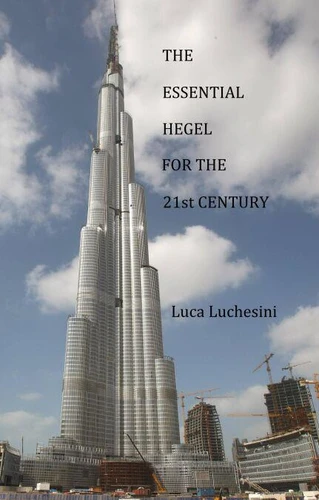
The Essential Hegel for the 21st Century. Reflections on Mimesis, Politics, and History, #1
Par :Formats :
Disponible dans votre compte client Decitre ou Furet du Nord dès validation de votre commande. Le format ePub est :
- Compatible avec une lecture sur My Vivlio (smartphone, tablette, ordinateur)
- Compatible avec une lecture sur liseuses Vivlio
- Pour les liseuses autres que Vivlio, vous devez utiliser le logiciel Adobe Digital Edition. Non compatible avec la lecture sur les liseuses Kindle, Remarkable et Sony
 , qui est-ce ?
Notre partenaire de plateforme de lecture numérique où vous retrouverez l'ensemble de vos ebooks gratuitement
Pour en savoir plus sur nos ebooks, consultez notre aide en ligne ici
C'est si simple ! Lisez votre ebook avec l'app Vivlio sur votre tablette, mobile ou ordinateur :

- FormatePub
- ISBN978-1-301-64564-0
- EAN9781301645640
- Date de parution08/10/2012
- Protection num.pas de protection
- Infos supplémentairesepub
- ÉditeurBluewater
Résumé
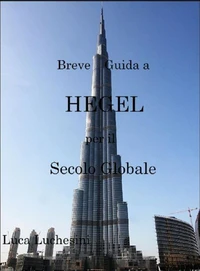
The book covers mostly the anthropological and political side of Hegel thought, as contained and explained in the lessons around the "Phenomenology of Spirit" held by Alexandre Kojeve in the 1930s at the "Ecole de Hautes Etudes" in Paris. The course gives a lot of background for granted, namely the historical context as well as the philosophical one, being targeted at classes of philosophy students.
In order to highlight Hegel core themes, I deliberately removed all the references of Hegel to other philosopher and key themes of his time (that is, Hegel position with respect to Kant on, say, the theory of intellect and knowledge, or his position with respect to Descartes on the concept of idea etc.) while I added two chapters to briefly show how Hegel ideas actually influenced much of the thinking after him and still provide a lot of the conceptual framework we use today.
Chapter 1 provides a very essential biography of Hegel, to cast him in the key events that shaped his life and thinking. Chapter 2 gives a view on the task of philosophy as conceived by Hegel and the novel approach he introduced into looking at the development of ideas. Chapter 3 introduces the Master-Slave dialectic, according to Hegel the key mechanism that creates at once culture, society and history, as well as his vision of man and his action in the World.
Chapter 4 expands on Hegel vision of History as it derives from his basic understanding of man and then how this evolves into his vision of Society and State. Chapter 5 moves eventually into the most abstract part of Hegel with a brief description of the main change he brought to the concept of idea and how ideas relate to time and history. Chapters 6 and 7 provide a short overview of the main concepts inherited from Hegel by some major thinkers and how they tried to differentiate themselves from such a legacy.
I warn my readers that the disclaimer still applies, so I might be even more inaccurate here than I have been in previous chapters. I broadly classify these thinkers in two categories, the "fond adopters" and the "strong opponents" dedicating one chapter to each category. Chapter 8 tries eventually to draw some conclusion by figuring out what we can still be tremendously grateful to Hegel in our global 21st century, after that in the 20th century the darkest side of the philosopher thinking shaped in the bloodiest way the fate of entire countries through the rise and fall of totalitarian regimes across Europe and the world.
In order to highlight Hegel core themes, I deliberately removed all the references of Hegel to other philosopher and key themes of his time (that is, Hegel position with respect to Kant on, say, the theory of intellect and knowledge, or his position with respect to Descartes on the concept of idea etc.) while I added two chapters to briefly show how Hegel ideas actually influenced much of the thinking after him and still provide a lot of the conceptual framework we use today.
Chapter 1 provides a very essential biography of Hegel, to cast him in the key events that shaped his life and thinking. Chapter 2 gives a view on the task of philosophy as conceived by Hegel and the novel approach he introduced into looking at the development of ideas. Chapter 3 introduces the Master-Slave dialectic, according to Hegel the key mechanism that creates at once culture, society and history, as well as his vision of man and his action in the World.
Chapter 4 expands on Hegel vision of History as it derives from his basic understanding of man and then how this evolves into his vision of Society and State. Chapter 5 moves eventually into the most abstract part of Hegel with a brief description of the main change he brought to the concept of idea and how ideas relate to time and history. Chapters 6 and 7 provide a short overview of the main concepts inherited from Hegel by some major thinkers and how they tried to differentiate themselves from such a legacy.
I warn my readers that the disclaimer still applies, so I might be even more inaccurate here than I have been in previous chapters. I broadly classify these thinkers in two categories, the "fond adopters" and the "strong opponents" dedicating one chapter to each category. Chapter 8 tries eventually to draw some conclusion by figuring out what we can still be tremendously grateful to Hegel in our global 21st century, after that in the 20th century the darkest side of the philosopher thinking shaped in the bloodiest way the fate of entire countries through the rise and fall of totalitarian regimes across Europe and the world.
A propos de Luca Luchesini
3,49 €