SOLDES
Jusqu'à -70% sur une sélection d'articles*

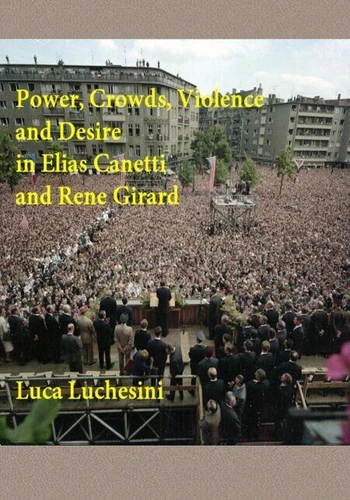
Power, Crowds, Violence and Desire in Elias Canetti and Rene Girard. Reflections on Mimesis, Politics, and History, #2
Par :Formats :
Disponible dans votre compte client Decitre ou Furet du Nord dès validation de votre commande. Le format ePub est :
- Compatible avec une lecture sur My Vivlio (smartphone, tablette, ordinateur)
- Compatible avec une lecture sur liseuses Vivlio
- Pour les liseuses autres que Vivlio, vous devez utiliser le logiciel Adobe Digital Edition. Non compatible avec la lecture sur les liseuses Kindle, Remarkable et Sony
 , qui est-ce ?
Notre partenaire de plateforme de lecture numérique où vous retrouverez l'ensemble de vos ebooks gratuitement
Pour en savoir plus sur nos ebooks, consultez notre aide en ligne ici
C'est si simple ! Lisez votre ebook avec l'app Vivlio sur votre tablette, mobile ou ordinateur :

- FormatePub
- ISBN978-1-301-37572-1
- EAN9781301375721
- Date de parution27/12/2012
- Protection num.pas de protection
- Infos supplémentairesepub
- ÉditeurBluewater
Résumé
I wrote this short essay with a twofold aim: the first is to nail down the key ideas about the origin of power and the behavior of human crowds as explained by Elias Canetti in his monumental work "Crowds and Power" that won him the Nobel Prize for Literature in 1981. The second is to try to connect the dots between the thought of Canetti and the one of another great literate and anthropologist of the 20th century, Rene' Girard who also investigated the behavior of crowds from the perspective of the birth of myths and religion.
I believe and try to prove that Canetti actually complements Girard findings so that the two must be adopted to account for the complex dynamics and interconnections between power, violence and religion, both in the early stages of human development and in the following evolution of history. The book is structured as follows: Chapter 1 provides some biographical background about Elias Canetti. Chapter 2 summarizes the theory of crowds and Chapter 3 instead introduces the subject of power.
In Chapter 4 I will try to clarify the connection between the two concepts, while Chapter 5 puts Canetti in relationship with Girard research about mimetic desire, crowds and the scapegoat mechanism. Finally, Chapter 6 sketches some lines of further reflection about the meaning of political action at large after the illuminating and desacralizing critique that these two thinkers have carried out around some of the core categories that every human being experiences in her life.
I believe and try to prove that Canetti actually complements Girard findings so that the two must be adopted to account for the complex dynamics and interconnections between power, violence and religion, both in the early stages of human development and in the following evolution of history. The book is structured as follows: Chapter 1 provides some biographical background about Elias Canetti. Chapter 2 summarizes the theory of crowds and Chapter 3 instead introduces the subject of power.
In Chapter 4 I will try to clarify the connection between the two concepts, while Chapter 5 puts Canetti in relationship with Girard research about mimetic desire, crowds and the scapegoat mechanism. Finally, Chapter 6 sketches some lines of further reflection about the meaning of political action at large after the illuminating and desacralizing critique that these two thinkers have carried out around some of the core categories that every human being experiences in her life.
A propos de Luca Luchesini


3,49 €