
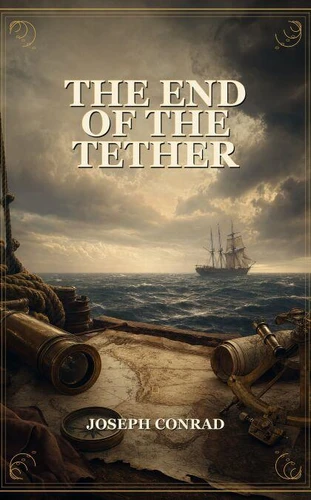
The End Of The Tether
Par :Formats :
Disponible dans votre compte client Decitre ou Furet du Nord dès validation de votre commande. Le format ePub est :
- Compatible avec une lecture sur My Vivlio (smartphone, tablette, ordinateur)
- Compatible avec une lecture sur liseuses Vivlio
- Pour les liseuses autres que Vivlio, vous devez utiliser le logiciel Adobe Digital Edition. Non compatible avec la lecture sur les liseuses Kindle, Remarkable et Sony
 , qui est-ce ?
Notre partenaire de plateforme de lecture numérique où vous retrouverez l'ensemble de vos ebooks gratuitement
Pour en savoir plus sur nos ebooks, consultez notre aide en ligne ici
C'est si simple ! Lisez votre ebook avec l'app Vivlio sur votre tablette, mobile ou ordinateur :

- Nombre de pages181
- FormatePub
- EAN9786850542358
- Date de parution19/05/2026
- Protection num.Digital Watermarking
- Taille2 Mo
- Infos supplémentairesepub
- ÉditeurCAELWICK PRESS
Résumé
Henry Whalley is an aging but once-famous merchant captain in Southeast Asia. He made a name for himself in the age of sail, when he commanded clipper ships and even made some minor geographical discoveries. When a banking crash wipes out his life savings, he retires with enough funds to sail on his own small ship. He is, however, forced to sell this ship when his daughter writes asking for financial aid.
To provide for himself and his daughter, he enlists as captain of a dubious steamer under a three-year contract. Meanwhile, the owner of the steamer is a compulsive gambler looking for ways to take over the captain's assets. Whalley is now near the end of his contract, with one final run to complete. Joseph Conrad included The End of the Tether as part of Youth, a Narrative and Two Other Stories , a collection published in 1902.
While less famous than Heart of Darkness (also part of that collection, though first published three years earlier as a serial), The End of the Tether is notable for its central themes of money, industrial development, and retirement. Joseph Conrad (died 1924) was a major literary figure of the early 20th century. Their work has endured across generations and continues to be read and studied worldwide.
As a work of classic literary fiction, The End Of The Tether exemplifies the narrative craft and social insight that defined great storytelling of its era. Literary fiction of this period was characterized by careful attention to character psychology, social milieu, and the moral questions that animated public discourse.
To provide for himself and his daughter, he enlists as captain of a dubious steamer under a three-year contract. Meanwhile, the owner of the steamer is a compulsive gambler looking for ways to take over the captain's assets. Whalley is now near the end of his contract, with one final run to complete. Joseph Conrad included The End of the Tether as part of Youth, a Narrative and Two Other Stories , a collection published in 1902.
While less famous than Heart of Darkness (also part of that collection, though first published three years earlier as a serial), The End of the Tether is notable for its central themes of money, industrial development, and retirement. Joseph Conrad (died 1924) was a major literary figure of the early 20th century. Their work has endured across generations and continues to be read and studied worldwide.
As a work of classic literary fiction, The End Of The Tether exemplifies the narrative craft and social insight that defined great storytelling of its era. Literary fiction of this period was characterized by careful attention to character psychology, social milieu, and the moral questions that animated public discourse.
A propos de JOSEPH CONRAD
Tales of Unrest
E-book
2,99 €
0,99 €
13,99 €

Lord Jim
E-book
0,99 €
0,99 €
Entre terre et mer
E-book
1,99 €
En marge des marées
E-book
1,99 €
Heart of Darkness
E-book
0,99 €
Das Herz der Finsternis
E-book
0,49 €
0,49 €



4,99 €
0,49 €
Romance
E-book
0,49 €
Chance
E-book
0,49 €
The Nature Of A Crime
E-book
0,49 €