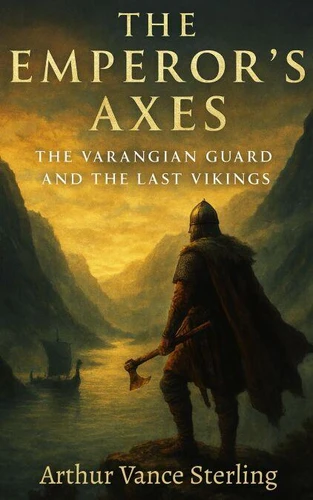
The Emperor’s Axes: The Varangian Guard and the Last Vikings
Par :Formats :
Disponible dans votre compte client Decitre ou Furet du Nord dès validation de votre commande. Le format ePub est :
- Compatible avec une lecture sur My Vivlio (smartphone, tablette, ordinateur)
- Compatible avec une lecture sur liseuses Vivlio
- Pour les liseuses autres que Vivlio, vous devez utiliser le logiciel Adobe Digital Edition. Non compatible avec la lecture sur les liseuses Kindle, Remarkable et Sony
 , qui est-ce ?
Notre partenaire de plateforme de lecture numérique où vous retrouverez l'ensemble de vos ebooks gratuitement
Pour en savoir plus sur nos ebooks, consultez notre aide en ligne ici
C'est si simple ! Lisez votre ebook avec l'app Vivlio sur votre tablette, mobile ou ordinateur :

- FormatePub
- ISBN8232993207
- EAN9798232993207
- Date de parution01/11/2025
- Protection num.pas de protection
- Infos supplémentairesepub
- ÉditeurDraft2Digital
Résumé
What if the last true Vikings did not die in English mud at Stamford Bridge, but stood centuries later on the blood-slick walls of Constantinople, axes flashing against Ottoman cannon?In The Emperor's Axes: The Varangian Guard and the Last Vikings, Arthur Vance Sterling drags you from the frozen fjords of 988 to the smoke-shrouded ramparts of 1453, following the Norse, Rus, and Anglo-Saxon exiles who traded longships for imperial gold.
This is no romantic footnote-Sterling wields the Russian Primary Chronicle, Anna Komnene's acid prose, and thirty newly translated Sweden "Greece-runestones" to reconstruct the Guard's pay ledgers, battle rosters, and private oaths. You will smell the pine-tar of their dromons, hear the Greek-Norse pidgin shouted across the Strategion drill yard, and trace the exact moment a Viking mercenary became Byzantium's deadliest praetorian.
Sicily, 1038: five hundred Varangians under Harald Hardrada storm a moonlit beach, rhomphaia-axes cleaving Lombard mail like parchment. Manzikert, 1071: the same unit forms the rearguard as an empire crumbles, their scarlet cloaks the last Roman color on a field of dust. Constantinople, 1204: eight hundred "English and Danish" hold the Milion arch while Venetian crossbow bolts rattle like hail. Sterling's narrative charges with the pace of a shield-wall sprint, yet pauses to weigh every nomisma of plunder, every line of court intrigue, every runic boast carved by homesick warriors beneath the Bosphorus stars.
The Guard were not noble savages; they were professionals who mastered bilingual drill, rioted for back pay, and-when emperors faltered-deposed them with the same axes they used to salute. Sterling exposes their ledgers: 44 gold pieces per man after Sicily, pronoia estates in Thrace, slave-trading licenses in the Golden Horn. He maps their quarters beside the Neorion harbor, pinpoints the chapel of St.
Olaf where Norse sagas were sung in Slavic accents, and follows the final 150 survivors who, in 1453, chose death beneath the double-headed eagle rather than surrender their oath. Imagine a single axe-head unearthed in the Great Palace debris-its edge still nicked from the 1204 sack-now resting in a Stockholm vault. Sterling's book is that axe: forged in primary sources, tempered by archaeology, swung with narrative force.
For the reader who demands Gibbon's scope, Runciman's intrigue, and the raw clang of steel on steel, this is the definitive chronicle of the bridge between Viking Age and Byzantine twilight. When the last Varangian fell in 1453, did the Viking spirit die with him-or does it still echo every time an underdog elite refuses to yield the wall?
This is no romantic footnote-Sterling wields the Russian Primary Chronicle, Anna Komnene's acid prose, and thirty newly translated Sweden "Greece-runestones" to reconstruct the Guard's pay ledgers, battle rosters, and private oaths. You will smell the pine-tar of their dromons, hear the Greek-Norse pidgin shouted across the Strategion drill yard, and trace the exact moment a Viking mercenary became Byzantium's deadliest praetorian.
Sicily, 1038: five hundred Varangians under Harald Hardrada storm a moonlit beach, rhomphaia-axes cleaving Lombard mail like parchment. Manzikert, 1071: the same unit forms the rearguard as an empire crumbles, their scarlet cloaks the last Roman color on a field of dust. Constantinople, 1204: eight hundred "English and Danish" hold the Milion arch while Venetian crossbow bolts rattle like hail. Sterling's narrative charges with the pace of a shield-wall sprint, yet pauses to weigh every nomisma of plunder, every line of court intrigue, every runic boast carved by homesick warriors beneath the Bosphorus stars.
The Guard were not noble savages; they were professionals who mastered bilingual drill, rioted for back pay, and-when emperors faltered-deposed them with the same axes they used to salute. Sterling exposes their ledgers: 44 gold pieces per man after Sicily, pronoia estates in Thrace, slave-trading licenses in the Golden Horn. He maps their quarters beside the Neorion harbor, pinpoints the chapel of St.
Olaf where Norse sagas were sung in Slavic accents, and follows the final 150 survivors who, in 1453, chose death beneath the double-headed eagle rather than surrender their oath. Imagine a single axe-head unearthed in the Great Palace debris-its edge still nicked from the 1204 sack-now resting in a Stockholm vault. Sterling's book is that axe: forged in primary sources, tempered by archaeology, swung with narrative force.
For the reader who demands Gibbon's scope, Runciman's intrigue, and the raw clang of steel on steel, this is the definitive chronicle of the bridge between Viking Age and Byzantine twilight. When the last Varangian fell in 1453, did the Viking spirit die with him-or does it still echo every time an underdog elite refuses to yield the wall?