SOLDES
Jusqu'à -70% sur une sélection d'articles*

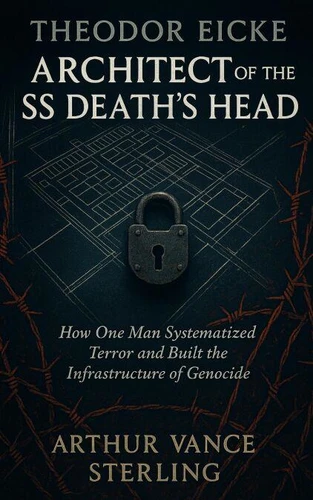
Theodor Eicke: Architect of the SS Death's Head-How One Man Systematized Terror and Built the Infrastructure of Genocide. The SS Inner Circle, #8
Par :Formats :
Disponible dans votre compte client Decitre ou Furet du Nord dès validation de votre commande. Le format ePub est :
- Compatible avec une lecture sur My Vivlio (smartphone, tablette, ordinateur)
- Compatible avec une lecture sur liseuses Vivlio
- Pour les liseuses autres que Vivlio, vous devez utiliser le logiciel Adobe Digital Edition. Non compatible avec la lecture sur les liseuses Kindle, Remarkable et Sony
 , qui est-ce ?
Notre partenaire de plateforme de lecture numérique où vous retrouverez l'ensemble de vos ebooks gratuitement
Pour en savoir plus sur nos ebooks, consultez notre aide en ligne ici
C'est si simple ! Lisez votre ebook avec l'app Vivlio sur votre tablette, mobile ou ordinateur :

- FormatePub
- ISBN8233441523
- EAN9798233441523
- Date de parution28/01/2026
- Protection num.pas de protection
- Infos supplémentairesepub
- ÉditeurLinda Balsamo
Résumé
Is it possible to build a career out of the systematic erasure of the human soul? We often speak of the "Big Three" of the Third Reich as if they operated in a vacuum, but behind the grand speeches and the shifting front lines stood a man whose name remains a chilling whisper in the corridors of history. Theodor Eicke was not a man of rhetoric; he was a man of blueprints, regulations, and iron-fisted "discipline." While the world watched the stage, Eicke was in the basement, building the furnace.
He didn't just command guards; he engineered a "School of Violence" that transformed ordinary men into the cold, unblinking instruments of a continent's nightmare. This is not a book for those seeking comfortable answers; it is a clinical dissection of how one man's fanatical diagnosis in a mental asylum became the operational standard for a genocide. In Theodor Eicke: Architect of the SS Death's Head, Arthur Vance Sterling strips away the layers of propaganda to reveal the administrative heart of darkness.
You will walk through the early days of Dachau, not as a visitor, but as an observer of a terrifying social experiment. You will see how Eicke took a disorganized rabble of street fighters and forged them into the Totenkopfverbände-the Death's Head units. This work explores the pivotal moment in 1934 when Eicke stepped into the cell of Ernst Röhm, a gun in his hand and a cold loyalty in his heart, proving that his only god was the system he helped create.
For the reader who demands more than just dates and locations, Sterling provides a deep-tissue analysis of the "Papa Eicke" cult-a bizarre, paternalistic bond that allowed men to commit atrocities during the day and return to a "family" atmosphere at night. For the seasoned historian, the true horror lies in the logistics. This narrative follows the evolution of Eicke's model as it was exported from the camps of Germany to the killing fields of the East.
You will witness the transition of the Totenkopf from concentration camp guards to a frontline Waffen-SS division, carrying their "no-quarter" philosophy into the heat of Operation Barbarossa. Through Sterling's meticulous research, you will understand how the Le Paradis massacre wasn't an anomaly, but a direct result of the psychological conditioning Eicke perfected behind the wire. We examine the machinery of the SS not as a monolith, but as a series of deliberate choices made by a man who viewed human life as a logistical hurdle to be cleared with "Prussian precision."This is an immersive experience designed for those who want to feel the weight of the past.
You will navigate the muddy trenches of the Demiansk Pocket and feel the tension of a regime that was beginning to cannibalize itself from within. Sterling does not shy away from the complexity of Eicke's character-the man was a radical among radicals, a soldier who was both loved by his men and loathed by his fellow generals for his lawless brutality. By the time you reach the wreckage of Eicke's plane in the Russian snow, you will realize that while the man died in 1943, the infrastructure he built survived him, functioning with terrifying efficiency until the final moments of the war.
As you close the final chapter, you are left with a question that transcends the era: When the wire is strung and the orders are typed, will we recognize the next architect before the first stone is laid, or are we destined to inhabit the structures they build?
He didn't just command guards; he engineered a "School of Violence" that transformed ordinary men into the cold, unblinking instruments of a continent's nightmare. This is not a book for those seeking comfortable answers; it is a clinical dissection of how one man's fanatical diagnosis in a mental asylum became the operational standard for a genocide. In Theodor Eicke: Architect of the SS Death's Head, Arthur Vance Sterling strips away the layers of propaganda to reveal the administrative heart of darkness.
You will walk through the early days of Dachau, not as a visitor, but as an observer of a terrifying social experiment. You will see how Eicke took a disorganized rabble of street fighters and forged them into the Totenkopfverbände-the Death's Head units. This work explores the pivotal moment in 1934 when Eicke stepped into the cell of Ernst Röhm, a gun in his hand and a cold loyalty in his heart, proving that his only god was the system he helped create.
For the reader who demands more than just dates and locations, Sterling provides a deep-tissue analysis of the "Papa Eicke" cult-a bizarre, paternalistic bond that allowed men to commit atrocities during the day and return to a "family" atmosphere at night. For the seasoned historian, the true horror lies in the logistics. This narrative follows the evolution of Eicke's model as it was exported from the camps of Germany to the killing fields of the East.
You will witness the transition of the Totenkopf from concentration camp guards to a frontline Waffen-SS division, carrying their "no-quarter" philosophy into the heat of Operation Barbarossa. Through Sterling's meticulous research, you will understand how the Le Paradis massacre wasn't an anomaly, but a direct result of the psychological conditioning Eicke perfected behind the wire. We examine the machinery of the SS not as a monolith, but as a series of deliberate choices made by a man who viewed human life as a logistical hurdle to be cleared with "Prussian precision."This is an immersive experience designed for those who want to feel the weight of the past.
You will navigate the muddy trenches of the Demiansk Pocket and feel the tension of a regime that was beginning to cannibalize itself from within. Sterling does not shy away from the complexity of Eicke's character-the man was a radical among radicals, a soldier who was both loved by his men and loathed by his fellow generals for his lawless brutality. By the time you reach the wreckage of Eicke's plane in the Russian snow, you will realize that while the man died in 1943, the infrastructure he built survived him, functioning with terrifying efficiency until the final moments of the war.
As you close the final chapter, you are left with a question that transcends the era: When the wire is strung and the orders are typed, will we recognize the next architect before the first stone is laid, or are we destined to inhabit the structures they build?