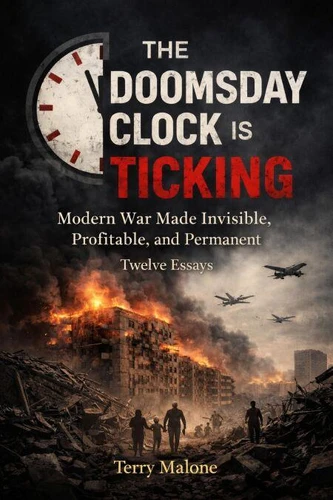
THE DOOMSDAY CLOCK IS TICKING: Modern War Made Invisible, Profitable, and Permanent
Par :Formats :
Disponible dans votre compte client Decitre ou Furet du Nord dès validation de votre commande. Le format ePub est :
- Compatible avec une lecture sur My Vivlio (smartphone, tablette, ordinateur)
- Compatible avec une lecture sur liseuses Vivlio
- Pour les liseuses autres que Vivlio, vous devez utiliser le logiciel Adobe Digital Edition. Non compatible avec la lecture sur les liseuses Kindle, Remarkable et Sony
 , qui est-ce ?
Notre partenaire de plateforme de lecture numérique où vous retrouverez l'ensemble de vos ebooks gratuitement
Pour en savoir plus sur nos ebooks, consultez notre aide en ligne ici
C'est si simple ! Lisez votre ebook avec l'app Vivlio sur votre tablette, mobile ou ordinateur :

- FormatePub
- ISBN8233647840
- EAN9798233647840
- Date de parution13/04/2026
- Protection num.pas de protection
- Infos supplémentairesepub
- ÉditeurLinda Balsamo
Résumé
The Doomsday Clock is Ticking. Modern war is not a series of exceptional events. It is a permanent, profitable, and invisible system - one that makes civilian harm foreseeable, repeated, and disproportionate, while hiding its true costs behind language, law, and distance. The same systems support extractive enterprises and environmental destruction. (Chapter Ten, Ownership of Harm, examines who profits from this destruction and who pays the price.)In twelve interlinked essays, Terry Malone traces the architecture of permanent war from the battlefields of Gaza and the West Bank to the command centres of the American empire.
This book moves from personal testimony, a family shaped by generations of war, to structural diagnosis. It examines the language that reframes violence as necessity, the myths that legitimise displacement, and the moral gap between knowledge and action. It documents eight decades of U. S. interventions, from Korea and Vietnam to Iraq, Afghanistan, and the 2026 strikes on Iran. It names the defence contractors, asset managers, and political elites who profit from continuous war.
But this is not only a record of harm. It is a call to interrupt it. Malone sketches four points of action: reclaiming language, applying financial pressure, holding governments to their own laws, and building a positive vision beyond ceasefires. The book ends with an unavoidable question: will those who see the system clearly organise to change it, or will they watch it continue?
This book moves from personal testimony, a family shaped by generations of war, to structural diagnosis. It examines the language that reframes violence as necessity, the myths that legitimise displacement, and the moral gap between knowledge and action. It documents eight decades of U. S. interventions, from Korea and Vietnam to Iraq, Afghanistan, and the 2026 strikes on Iran. It names the defence contractors, asset managers, and political elites who profit from continuous war.
But this is not only a record of harm. It is a call to interrupt it. Malone sketches four points of action: reclaiming language, applying financial pressure, holding governments to their own laws, and building a positive vision beyond ceasefires. The book ends with an unavoidable question: will those who see the system clearly organise to change it, or will they watch it continue?