
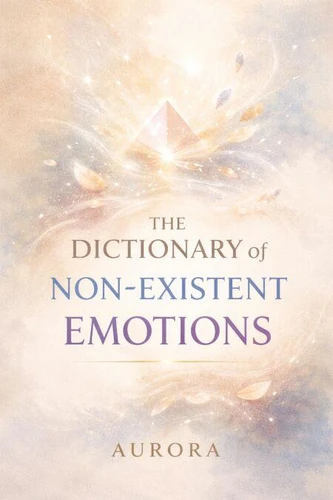
The Dictionary of Non-Existent Emotions
Par :Formats :
Disponible dans votre compte client Decitre ou Furet du Nord dès validation de votre commande. Le format ePub est :
- Compatible avec une lecture sur My Vivlio (smartphone, tablette, ordinateur)
- Compatible avec une lecture sur liseuses Vivlio
- Pour les liseuses autres que Vivlio, vous devez utiliser le logiciel Adobe Digital Edition. Non compatible avec la lecture sur les liseuses Kindle, Remarkable et Sony
 , qui est-ce ?
Notre partenaire de plateforme de lecture numérique où vous retrouverez l'ensemble de vos ebooks gratuitement
Pour en savoir plus sur nos ebooks, consultez notre aide en ligne ici
C'est si simple ! Lisez votre ebook avec l'app Vivlio sur votre tablette, mobile ou ordinateur :

- FormatePub
- ISBN8233720475
- EAN9798233720475
- Date de parution15/02/2026
- Protection num.pas de protection
- Infos supplémentairesepub
- ÉditeurLinda Balsamo
Résumé
There are feelings we experience deeply but never learned how to name. Moments that arrive quietly-leaving warmth, distance, longing, or calm-then pass without language. The Dictionary of Non-Existent Emotions is a creative collection of fictional emotional words designed to describe those subtle, often overlooked inner experiences. This is not a scientific reference, psychological manual, or self-help guide.
It is a work of language and reflection. Each entry presents an imagined emotion, a clear definition, and a familiar situation in which it may be felt. The structure invites recognition rather than instruction, allowing readers to see themselves in moments they may have struggled to describe. The book can be read in any order. Open it at random, pause when a word feels familiar, or return to it when emotions surface without explanation.
It is written for readers who value quiet observation, thoughtful language, and emotional honesty. Some feelings do not arrive loudly. They do not demand attention. But they still deserve a name.
It is a work of language and reflection. Each entry presents an imagined emotion, a clear definition, and a familiar situation in which it may be felt. The structure invites recognition rather than instruction, allowing readers to see themselves in moments they may have struggled to describe. The book can be read in any order. Open it at random, pause when a word feels familiar, or return to it when emotions surface without explanation.
It is written for readers who value quiet observation, thoughtful language, and emotional honesty. Some feelings do not arrive loudly. They do not demand attention. But they still deserve a name.
A propos de Aurora


The Blurred Witness
E-book
3,49 €

Still Here
E-book
4,49 €

The Fifth Symbol
E-book
3,49 €

2,99 €


7,99 €

The Sleep Code
E-book
4,49 €

5,49 €







When Love Hurts
E-book
3,49 €

When I See Myself Again
E-book
4,49 €

No One Loves Me
E-book
3,49 €