
Nouveauté
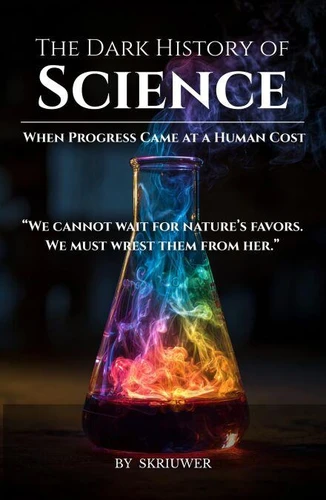
The Dark History of Science: When Progress Came at a Human Cost
Par :Formats :
Disponible dans votre compte client Decitre ou Furet du Nord dès validation de votre commande. Le format ePub est :
- Compatible avec une lecture sur My Vivlio (smartphone, tablette, ordinateur)
- Compatible avec une lecture sur liseuses Vivlio
- Pour les liseuses autres que Vivlio, vous devez utiliser le logiciel Adobe Digital Edition. Non compatible avec la lecture sur les liseuses Kindle, Remarkable et Sony
 , qui est-ce ?
Notre partenaire de plateforme de lecture numérique où vous retrouverez l'ensemble de vos ebooks gratuitement
Pour en savoir plus sur nos ebooks, consultez notre aide en ligne ici
C'est si simple ! Lisez votre ebook avec l'app Vivlio sur votre tablette, mobile ou ordinateur :

- FormatePub
- ISBN8235475588
- EAN9798235475588
- Date de parution15/06/2026
- Protection num.pas de protection
- Infos supplémentairesepub
- ÉditeurIoakim Ioakim
Résumé
Science has given us vaccines, electricity, and space travel. But the road to progress wasn't always clean. Behind many of the discoveries we celebrate today are stories of unethical experiments, stolen credit, and human suffering that rarely make it into the textbooks. This book looks at the darker chapters in the history of science: the moments when the pursuit of knowledge came at a real human cost.
From Nazi medical experiments and Cold War radiation tests to the exploitation of marginalized communities in the name of research, it covers the cases that shaped modern ethics rules for a reason. What's inside: the Tuskegee syphilis study and other experiments conducted without consent; Nazi doctors, Unit 731, and the research programs of World War II; Cold War-era radiation experiments on soldiers and unsuspecting civilians; scientists who falsified data or buried inconvenient results; and how these abuses led to the ethical frameworks that govern research today.
If you're interested in the side of scientific history that doesn't get talked about enough, this book lays out the facts clearly.
From Nazi medical experiments and Cold War radiation tests to the exploitation of marginalized communities in the name of research, it covers the cases that shaped modern ethics rules for a reason. What's inside: the Tuskegee syphilis study and other experiments conducted without consent; Nazi doctors, Unit 731, and the research programs of World War II; Cold War-era radiation experiments on soldiers and unsuspecting civilians; scientists who falsified data or buried inconvenient results; and how these abuses led to the ethical frameworks that govern research today.
If you're interested in the side of scientific history that doesn't get talked about enough, this book lays out the facts clearly.
A propos de Auke de Haan


6,49 €

6,49 €

6,49 €

The Craziest WW2 Stories
E-book
6,49 €


4,49 €



6,49 €

6,49 €

4,49 €

6,49 €
The Skinny Shot
E-book
6,49 €
The Autoimmune Truth
E-book
6,49 €

Perimenopause Unfiltered
E-book
6,49 €

6,49 €
6,49 €