SOLDES
Jusqu'à -70% sur une sélection d'articles*

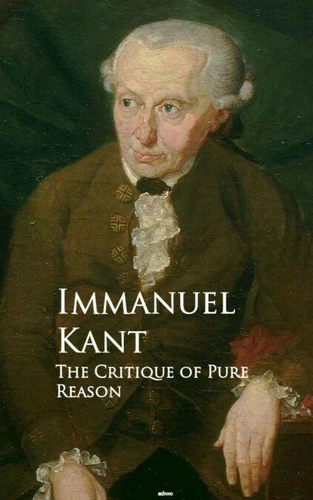
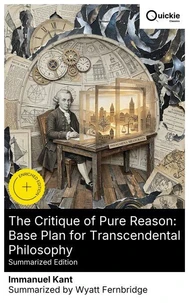
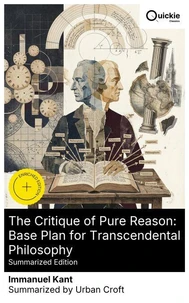
The Critique of Pure Reason. Bestsellers and famous Books
Par :Formats :
Disponible dans votre compte client Decitre ou Furet du Nord dès validation de votre commande. Le format ePub est :
- Compatible avec une lecture sur My Vivlio (smartphone, tablette, ordinateur)
- Compatible avec une lecture sur liseuses Vivlio
- Pour les liseuses autres que Vivlio, vous devez utiliser le logiciel Adobe Digital Edition. Non compatible avec la lecture sur les liseuses Kindle, Remarkable et Sony
 , qui est-ce ?
Notre partenaire de plateforme de lecture numérique où vous retrouverez l'ensemble de vos ebooks gratuitement
Pour en savoir plus sur nos ebooks, consultez notre aide en ligne ici
C'est si simple ! Lisez votre ebook avec l'app Vivlio sur votre tablette, mobile ou ordinateur :

- Nombre de pages624
- FormatePub
- ISBN978-3-7364-1800-4
- EAN9783736418004
- Date de parution26/10/2016
- Protection num.Digital Watermarking
- Taille599 Ko
- Infos supplémentairesepub
- ÉditeurAndhof
Résumé
The Critique of Pure Reason by Immanuel Kant is one of the most influential works in the history of philosophy. Also referred to as Kant's First Critique, it was followed by the Critique of Practical Reason and the Critique of Judgment. In the preface to the first edition Kant explains what he means by a critique of pure reason: "I do not mean by this a critique of books and systems, but of the faculty of reason in general, in respect of all knowledge after which it may strive independently of all experience." Dealing with questions concerning the foundations and extent of human knowledge, Kant builds on the work of empiricist philosophers such as John Locke and David Hume, as well as taking into account the theories of rationalist philosophers such as Gottfried Wilhelm Leibniz and Christian Wolff.
Kant expounds new ideas on the nature of space and time, and claims to solve the problem which Hume posed regarding human knowledge of the relation of cause and effect, and to have assessed the ability of the human mind to engage in metaphysics.
Kant expounds new ideas on the nature of space and time, and claims to solve the problem which Hume posed regarding human knowledge of the relation of cause and effect, and to have assessed the ability of the human mind to engage in metaphysics.