SOLDES
Jusqu'à -70% sur une sélection d'articles*

Nouveauté
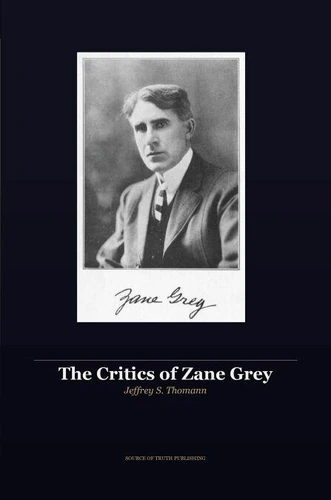
The Critics of Zane Grey
Par :Formats :
Disponible dans votre compte client Decitre ou Furet du Nord dès validation de votre commande. Le format ePub est :
- Compatible avec une lecture sur My Vivlio (smartphone, tablette, ordinateur)
- Compatible avec une lecture sur liseuses Vivlio
- Pour les liseuses autres que Vivlio, vous devez utiliser le logiciel Adobe Digital Edition. Non compatible avec la lecture sur les liseuses Kindle, Remarkable et Sony
 , qui est-ce ?
Notre partenaire de plateforme de lecture numérique où vous retrouverez l'ensemble de vos ebooks gratuitement
Pour en savoir plus sur nos ebooks, consultez notre aide en ligne ici
C'est si simple ! Lisez votre ebook avec l'app Vivlio sur votre tablette, mobile ou ordinateur :

- FormatePub
- ISBN8235145955
- EAN9798235145955
- Date de parution25/06/2026
- Protection num.pas de protection
- Infos supplémentairesepub
- ÉditeurIoakim Ioakim
Résumé
The Critics of Zane Grey: A Scholarly and Popular Reassessment of America's Most-Read Western AuthorHe sold fifty million books and inspired one hundred and twelve films - yet for most of the twentieth century, literary scholars treated Zane Grey as furniture. The Critics of Zane Grey asks why, and finds the answer far more interesting than the dismissal. Drawing on biography, scholarly criticism, and close reading of Grey's public domain novels, this book reconstructs the man behind Riders of the Purple Sage: a dentist's son beaten for writing his first story who went on to invent the American West of the popular imagination - Monument Valley, the purple sage, the lone rider against the sunset - almost single-handedly.
It's a messier, more contradictory story than either his old fans or his old critics tell. Grey preached codes of honor while breaking them in his own marriage. He wrote sympathetic, even radical critiques of institutional power - religious coercion in Riders of the Purple Sage, the treatment of Native Americans in The Vanishing American - that Hollywood and his own publishers quietly softened. His heroines were sharper and more capable than the "passive Western woman" stereotype allows, and his readership, contrary to genre mythology, was substantially female.
Chapters cover Grey's troubled upbringing and breakthrough into Western fiction; the frontier thesis that shaped his entire creative project; the controversy and complexity of Riders of the Purple Sage; his fraught and evolving treatment of Indigenous communities; the women who anchor his novels; his overlooked conservationist instincts; his uneasy relationship with the Hollywood machine that built his legend and flattened his ambitions; his lifelong struggle with depression; and the slow scholarly rehabilitation of a writer literary culture wrote off too quickly.
A closing chapter - "The Sore Truth Conclusions" - lays out, plainly, what the evidence actually supports about Grey's life, his fiction, and his legacy, including his influence on Louis L'Amour, John Ford, and even Cormac McCarthy's bleaker reversal of Grey's mythic West. Neither hagiography nor takedown, this is a clear-eyed reassessment for readers of Western fiction, American literary history, and anyone who has ever wondered why the books that sold the most got remembered the least.
Includes an annotated scholarly bibliography.
It's a messier, more contradictory story than either his old fans or his old critics tell. Grey preached codes of honor while breaking them in his own marriage. He wrote sympathetic, even radical critiques of institutional power - religious coercion in Riders of the Purple Sage, the treatment of Native Americans in The Vanishing American - that Hollywood and his own publishers quietly softened. His heroines were sharper and more capable than the "passive Western woman" stereotype allows, and his readership, contrary to genre mythology, was substantially female.
Chapters cover Grey's troubled upbringing and breakthrough into Western fiction; the frontier thesis that shaped his entire creative project; the controversy and complexity of Riders of the Purple Sage; his fraught and evolving treatment of Indigenous communities; the women who anchor his novels; his overlooked conservationist instincts; his uneasy relationship with the Hollywood machine that built his legend and flattened his ambitions; his lifelong struggle with depression; and the slow scholarly rehabilitation of a writer literary culture wrote off too quickly.
A closing chapter - "The Sore Truth Conclusions" - lays out, plainly, what the evidence actually supports about Grey's life, his fiction, and his legacy, including his influence on Louis L'Amour, John Ford, and even Cormac McCarthy's bleaker reversal of Grey's mythic West. Neither hagiography nor takedown, this is a clear-eyed reassessment for readers of Western fiction, American literary history, and anyone who has ever wondered why the books that sold the most got remembered the least.
Includes an annotated scholarly bibliography.