SOLDES
Jusqu'à -70% sur une sélection d'articles*
Dernière sortie
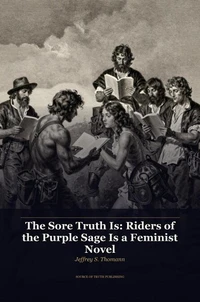
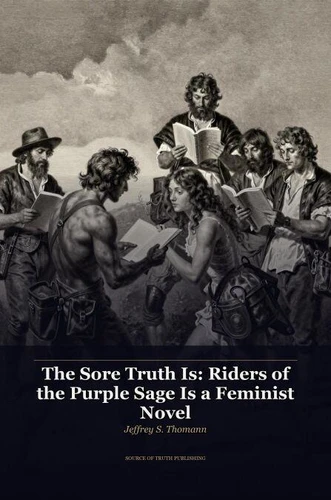
The Sore Truth Is: Riders of the Purple Sage is a Feminist Novel
For over a century, Riders of the Purple Sage has been sold as an adventure story: a gunfighter rides into a corrupt Mormon settlement and rescues a woman in distress. That's the version on the back of nearly every edition published since 1912. It's the version in the marketing copy, the literary reference works, and all five film adaptations. It's also only half right. In this sharp, focused work of literary criticism, Jeffrey S.
Thomann makes the case that Zane Grey's most famous novel is something the genre label has obscured for generations: a story about a woman's resistance to institutional male authority - specifically, the use of religious power as a mechanism for controlling female property and sexuality. The gunfighter is the means. The woman's moral courage is the subject. Jane Withersteen owns her own ranch. She has employees loyal to her personally, not to a husband.
She has refused Elder Tull's repeated marriage proposals at real cost to her standing and material security. She has sheltered Bern Venters, a man the community regards as a corrupting influence, against direct instruction not to. All of this happens before Lassiter ever rides into view. He doesn't create her capacity for moral courage - he witnesses it. And when the novel's climax arrives, Jane doesn't leave with Lassiter because she's being rescued; she leaves because she has judged, on her own terms, that the community she was born into has forfeited its claim on her loyalty.
Across three concise chapters, this thesis traces that argument from the conventional reading and the blind spots built into it, through the textual evidence of Jane's autonomy and self-determination, to a final reckoning with exactly what the word "feminist" can and can't fairly claim about Grey's work. Thomann doesn't overstate the case. Grey never argued for women's suffrage, professional equality, or the reorganization of social institutions, and his heroines are reliably returned to the homestead by novel's end.
He dramatized women's moral equality, not their structural equality - a real distinction, and an important one. But within the space available to them, Grey's female characters consistently demonstrate a self-determination the Western genre's reputation doesn't prepare readers to expect. It isn't only Jane Withersteen: Madeline Hammond masters ranch life on her own terms in The Light of Western Stars.
Carley Burch makes the central romantic choices of her novel without deferring to male guidance in The Call of the Canyon. Helen Rayner acts independently to reach her brother through real danger in Desert Gold. Grey applied the same moral template - conscience under pressure - to his female characters that he applied to his male heroes, because for him the template was never really about gender. The thesis closes with an observation that reframes the whole question.
Grey's readership was substantially female, and not by accident. He wrote women whose moral intelligence was taken seriously, whose decisions carried real consequences, whose perspective on events stood on its own rather than simply supporting the hero. Millions of readers found that. Critics looking for shoot-outs and romance, by and large, did not. This illustrated edition is part of the Zane Grey Educational Pack from Source of Truth Publishing Co., a series pairing concise critical essays with original AI-assisted artwork.
Whether you're a longtime reader of Riders of the Purple Sage, a student of the Western genre, or simply curious about the women hiding in plain sight inside one of America's most famous cowboy stories, this short, pointed essay will change how you read it.
Thomann makes the case that Zane Grey's most famous novel is something the genre label has obscured for generations: a story about a woman's resistance to institutional male authority - specifically, the use of religious power as a mechanism for controlling female property and sexuality. The gunfighter is the means. The woman's moral courage is the subject. Jane Withersteen owns her own ranch. She has employees loyal to her personally, not to a husband.
She has refused Elder Tull's repeated marriage proposals at real cost to her standing and material security. She has sheltered Bern Venters, a man the community regards as a corrupting influence, against direct instruction not to. All of this happens before Lassiter ever rides into view. He doesn't create her capacity for moral courage - he witnesses it. And when the novel's climax arrives, Jane doesn't leave with Lassiter because she's being rescued; she leaves because she has judged, on her own terms, that the community she was born into has forfeited its claim on her loyalty.
Across three concise chapters, this thesis traces that argument from the conventional reading and the blind spots built into it, through the textual evidence of Jane's autonomy and self-determination, to a final reckoning with exactly what the word "feminist" can and can't fairly claim about Grey's work. Thomann doesn't overstate the case. Grey never argued for women's suffrage, professional equality, or the reorganization of social institutions, and his heroines are reliably returned to the homestead by novel's end.
He dramatized women's moral equality, not their structural equality - a real distinction, and an important one. But within the space available to them, Grey's female characters consistently demonstrate a self-determination the Western genre's reputation doesn't prepare readers to expect. It isn't only Jane Withersteen: Madeline Hammond masters ranch life on her own terms in The Light of Western Stars.
Carley Burch makes the central romantic choices of her novel without deferring to male guidance in The Call of the Canyon. Helen Rayner acts independently to reach her brother through real danger in Desert Gold. Grey applied the same moral template - conscience under pressure - to his female characters that he applied to his male heroes, because for him the template was never really about gender. The thesis closes with an observation that reframes the whole question.
Grey's readership was substantially female, and not by accident. He wrote women whose moral intelligence was taken seriously, whose decisions carried real consequences, whose perspective on events stood on its own rather than simply supporting the hero. Millions of readers found that. Critics looking for shoot-outs and romance, by and large, did not. This illustrated edition is part of the Zane Grey Educational Pack from Source of Truth Publishing Co., a series pairing concise critical essays with original AI-assisted artwork.
Whether you're a longtime reader of Riders of the Purple Sage, a student of the Western genre, or simply curious about the women hiding in plain sight inside one of America's most famous cowboy stories, this short, pointed essay will change how you read it.