Sienna Brooks is an English-language nonfiction author known for writing immersive books on culture, social history, and the hidden dynamics behind everyday human behavior. Her work blends narrative storytelling with thoughtful analysis, uncovering how traditions, media, and collective memory quietly influence modern society. Sienna's writing style is vivid yet approachable, turning complex cultural themes into engaging journeys that feel both intelligent and deeply human.
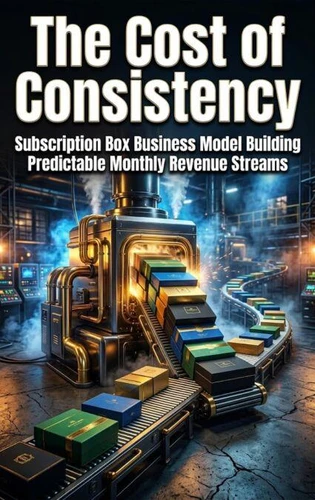
The Cost of Consistency. Subscription Box Business Model Building Predictable Monthly Revenue Streams
Par :Formats :
Disponible dans votre compte client Decitre ou Furet du Nord dès validation de votre commande. Le format ePub est :
- Compatible avec une lecture sur My Vivlio (smartphone, tablette, ordinateur)
- Compatible avec une lecture sur liseuses Vivlio
- Pour les liseuses autres que Vivlio, vous devez utiliser le logiciel Adobe Digital Edition. Non compatible avec la lecture sur les liseuses Kindle, Remarkable et Sony
 , qui est-ce ?
Notre partenaire de plateforme de lecture numérique où vous retrouverez l'ensemble de vos ebooks gratuitement
Pour en savoir plus sur nos ebooks, consultez notre aide en ligne ici
C'est si simple ! Lisez votre ebook avec l'app Vivlio sur votre tablette, mobile ou ordinateur :

- Nombre de pages177
- FormatePub
- ISBN978-3-565-45544-7
- EAN9783565455447
- Date de parution23/05/2026
- Protection num.pas de protection
- Taille2 Mo
- Infos supplémentairesepub
- ÉditeurEmphaloz Publishing House
Résumé
This book examines how subscription box models, often promoted as pathways to predictable monthly revenue, conceal operational costs that complicate the promise of effortless recurring income. Although the sector is projected to grow rapidly and can generate strong margins, sustaining profitability depends on complex systems involving technology, forecasting, and customer retention that continuously consume resources beneath the surface of apparent stability.
First, the technology backbone functions as a permanent layer of operational overhead.
Recurring payment gateways, secure customer data storage, automated billing systems, and churn detection software require ongoing licensing, cybersecurity protection, maintenance, and upgrades regardless of subscriber volume. As a result, scalability often increases technical dependency rather than reducing costs. Second, inventory synchronization relies on demand forecasting systems that analyze purchasing behavior, seasonality, return rates, and supplier lead times.
While advanced analytics can improve forecasting accuracy and reduce waste, maintaining these systems requires data infrastructure, cloud computing resources, and specialized expertise that steadily erode gross margins. Subscription businesses therefore depend not only on product appeal but also on the efficiency of predictive logistics. Third, customer acquisition costs must constantly be balanced against customer lifetime value.
Subscription models can increase repeat purchases and encourage higher spending through tiered pricing, but these gains are offset by ongoing investments in personalized marketing, loyalty programs, retention campaigns, and feedback systems. In practice, recurring revenue is sustained through continuous spending aimed at preventing subscriber fatigue and cancellation.
Recurring payment gateways, secure customer data storage, automated billing systems, and churn detection software require ongoing licensing, cybersecurity protection, maintenance, and upgrades regardless of subscriber volume. As a result, scalability often increases technical dependency rather than reducing costs. Second, inventory synchronization relies on demand forecasting systems that analyze purchasing behavior, seasonality, return rates, and supplier lead times.
While advanced analytics can improve forecasting accuracy and reduce waste, maintaining these systems requires data infrastructure, cloud computing resources, and specialized expertise that steadily erode gross margins. Subscription businesses therefore depend not only on product appeal but also on the efficiency of predictive logistics. Third, customer acquisition costs must constantly be balanced against customer lifetime value.
Subscription models can increase repeat purchases and encourage higher spending through tiered pricing, but these gains are offset by ongoing investments in personalized marketing, loyalty programs, retention campaigns, and feedback systems. In practice, recurring revenue is sustained through continuous spending aimed at preventing subscriber fatigue and cancellation.