Nouveauté
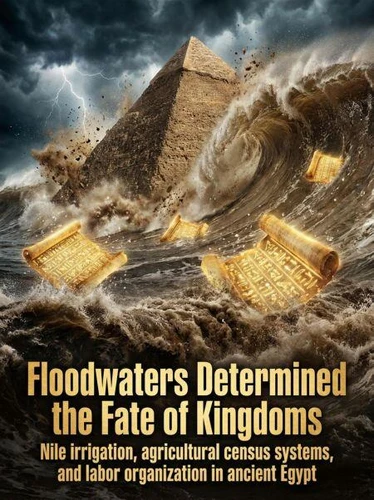
Floodwaters Determined the Fate of Kingdoms. Nile irrigation, agricultural census systems, and labor organization in ancient Egypt
Par :Formats :
Disponible dans votre compte client Decitre ou Furet du Nord dès validation de votre commande. Le format ePub est :
- Compatible avec une lecture sur My Vivlio (smartphone, tablette, ordinateur)
- Compatible avec une lecture sur liseuses Vivlio
- Pour les liseuses autres que Vivlio, vous devez utiliser le logiciel Adobe Digital Edition. Non compatible avec la lecture sur les liseuses Kindle, Remarkable et Sony
 , qui est-ce ?
Notre partenaire de plateforme de lecture numérique où vous retrouverez l'ensemble de vos ebooks gratuitement
Pour en savoir plus sur nos ebooks, consultez notre aide en ligne ici
C'est si simple ! Lisez votre ebook avec l'app Vivlio sur votre tablette, mobile ou ordinateur :

- Nombre de pages318
- FormatePub
- ISBN978-3-565-47867-5
- EAN9783565478675
- Date de parution05/06/2026
- Protection num.pas de protection
- Taille1 Mo
- Infos supplémentairesepub
- ÉditeurEmphaloz Publishing House
Résumé
Egyptian civilization survived because the Nile River could be measured, managed, and transformed into political power. Seasonal floods shaped harvests, taxation, labor obligations, and the administrative rhythms of one of the ancient world's most sophisticated bureaucracies.
This account examines the economic foundations of ancient Egypt through irrigation systems, agricultural management, and centralized state administration.
Royal officials conducted crop surveys, organized labor rotations, and coordinated storage networks designed to stabilize food production across vast territories. Bureaucratic efficiency became essential for maintaining both royal authority and social continuity. The book also explores the relationship between economic organization and monumental construction. Pyramid complexes, temples, and state infrastructure depended on carefully mobilized seasonal labor rather than constant slave populations.
Agricultural cycles allowed the monarchy to redirect workers toward massive public projects that reinforced political legitimacy and dynastic prestige. Ancient Egypt appears here as a hydraulic state where environmental control, economic planning, and centralized administration merged into a durable structure of imperial governance.
Royal officials conducted crop surveys, organized labor rotations, and coordinated storage networks designed to stabilize food production across vast territories. Bureaucratic efficiency became essential for maintaining both royal authority and social continuity. The book also explores the relationship between economic organization and monumental construction. Pyramid complexes, temples, and state infrastructure depended on carefully mobilized seasonal labor rather than constant slave populations.
Agricultural cycles allowed the monarchy to redirect workers toward massive public projects that reinforced political legitimacy and dynastic prestige. Ancient Egypt appears here as a hydraulic state where environmental control, economic planning, and centralized administration merged into a durable structure of imperial governance.