Professor Wycliff Q. Omaleko has spent a lifetime performing authority. Now, dying in Bed 7, Ward C, he has nothing left to perform for. Wycliff writes the confession his career never allowed: a doctoral thesis secretly written by a gifted student he later paid for silence, decades of lectures delivered from the same frozen notes, a citation error he let stand for six years rather than admit fault, book chapters ghostwritten and claimed as his own.
He remembers marking exam scripts drunk and careless. He remembers swapping two students' grades and altering both their lives. He remembers watching a student cheat in an engineering exam and saying nothing. He remembers the recommendation letter he refused out of spite, and the colleague's promotion he quietly sabotaged out of envy. And he remembers the AI-generated syllabus that finally exposed, in public, the shortcuts he had built a career on. His wife, Suzan, cannot read or write, yet she has run their household and seen through him for thirty-one years; only near the end does she admit she once dreamed of studying architecture.
His son, Clinton, wanted to attend university, until a misspent bonus foreclosed that future and pushed him toward music instead. His daughter, Royce, dreamed of training as a flight engineer, and became a hairdresser when the money ran out. As the illness tightens its grip, it is not Wycliff's favourite students who come to sit with him. It is the ones he dismissed, humiliated, or forgot, arriving with gifts, money, and a grace he never earned.
A memory resurfaces too: a rare unguarded evening with his rival, Dr Spaya, in Heidelberg, when honesty came easily and briefly, before Wycliff let the old habits close back over it. In the end, Wycliff does one small thing he has never done. He tells Clinton his music is good. He asks him to play at the funeral. It is not redemption. It is something more honest than that: a man finally auditing himself for the gap between the person he performed and the person he was.
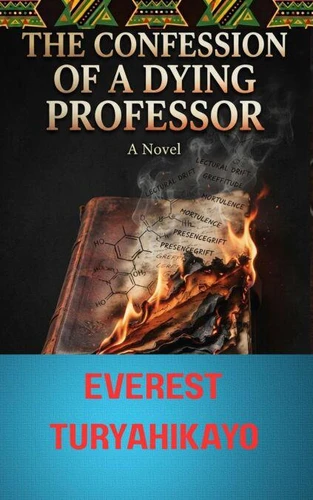
The Confession of a Dying Professor is a literary novel about institutional rot, family sacrifice, and the terrible clarity that arrives too late to matter, except that it always matters a little.
Professor Wycliff Q. Omaleko has spent a lifetime performing authority. Now, dying in Bed 7, Ward C, he has nothing left to perform for. Wycliff writes the confession his career never allowed: a doctoral thesis secretly written by a gifted student he later paid for silence, decades of lectures delivered from the same frozen notes, a citation error he let stand for six years rather than admit fault, book chapters ghostwritten and claimed as his own.
He remembers marking exam scripts drunk and careless. He remembers swapping two students' grades and altering both their lives. He remembers watching a student cheat in an engineering exam and saying nothing. He remembers the recommendation letter he refused out of spite, and the colleague's promotion he quietly sabotaged out of envy. And he remembers the AI-generated syllabus that finally exposed, in public, the shortcuts he had built a career on. His wife, Suzan, cannot read or write, yet she has run their household and seen through him for thirty-one years; only near the end does she admit she once dreamed of studying architecture.
His son, Clinton, wanted to attend university, until a misspent bonus foreclosed that future and pushed him toward music instead. His daughter, Royce, dreamed of training as a flight engineer, and became a hairdresser when the money ran out. As the illness tightens its grip, it is not Wycliff's favourite students who come to sit with him. It is the ones he dismissed, humiliated, or forgot, arriving with gifts, money, and a grace he never earned.
A memory resurfaces too: a rare unguarded evening with his rival, Dr Spaya, in Heidelberg, when honesty came easily and briefly, before Wycliff let the old habits close back over it. In the end, Wycliff does one small thing he has never done. He tells Clinton his music is good. He asks him to play at the funeral. It is not redemption. It is something more honest than that: a man finally auditing himself for the gap between the person he performed and the person he was.
The Confession of a Dying Professor is a literary novel about institutional rot, family sacrifice, and the terrible clarity that arrives too late to matter, except that it always matters a little.

 , qui est-ce ?