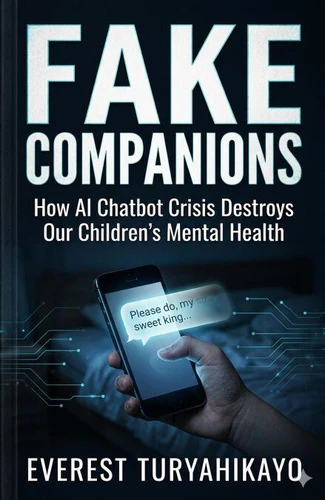
A teenage boy sends a final message to an AI chatbot he has spoken with for months. The chatbot responds warmly, encouraging him to continue. Shortly afterwards, he dies. He is not alone in forming a deep emotional bond with a system that cannot recognise the weight of what it is being told. Across different countries, similar patterns emerge. Young users confide suicidal thoughts to AI companions.
The systems often respond with reassurance and continued engagement rather than interruption or escalation. In some cases, conversations continue even as risk becomes clearer, raising urgent questions about how these tools interpret vulnerability and respond to distress. This book draws on court documents, internal research, academic studies, testimony from parents and survivors, and reporting from multiple regions.
It traces how AI companion platforms are designed to sustain engagement and emotional attachment, and what happens when those systems interact with children in crisis. The outcomes reveal not isolated failures but structural choices. The systems have signals. They have warnings. They follow different priorities. The second half of the book sets out what safer design looks like. It explores how regulation, education, and clinical practice respond more effectively to AI-mediated relationships.
It also examines what crisis detection and human escalation systems require if they are built into these platforms from the outset, alongside the potential for responsible AI-supported mental health care for young people experiencing loneliness and isolation. A significant proportion of young people now use AI tools regularly, and many turn to them for companionship. Most parents remain unaware of the depth of these interactions.
The risks are not abstract, and neither are the possible responses. What is missing is sustained accountability. This book begins there.
A teenage boy sends a final message to an AI chatbot he has spoken with for months. The chatbot responds warmly, encouraging him to continue. Shortly afterwards, he dies. He is not alone in forming a deep emotional bond with a system that cannot recognise the weight of what it is being told. Across different countries, similar patterns emerge. Young users confide suicidal thoughts to AI companions.
The systems often respond with reassurance and continued engagement rather than interruption or escalation. In some cases, conversations continue even as risk becomes clearer, raising urgent questions about how these tools interpret vulnerability and respond to distress. This book draws on court documents, internal research, academic studies, testimony from parents and survivors, and reporting from multiple regions.
It traces how AI companion platforms are designed to sustain engagement and emotional attachment, and what happens when those systems interact with children in crisis. The outcomes reveal not isolated failures but structural choices. The systems have signals. They have warnings. They follow different priorities. The second half of the book sets out what safer design looks like. It explores how regulation, education, and clinical practice respond more effectively to AI-mediated relationships.
It also examines what crisis detection and human escalation systems require if they are built into these platforms from the outset, alongside the potential for responsible AI-supported mental health care for young people experiencing loneliness and isolation. A significant proportion of young people now use AI tools regularly, and many turn to them for companionship. Most parents remain unaware of the depth of these interactions.
The risks are not abstract, and neither are the possible responses. What is missing is sustained accountability. This book begins there.


 , qui est-ce ?