SOLDES
Jusqu'à -70% sur une sélection d'articles*

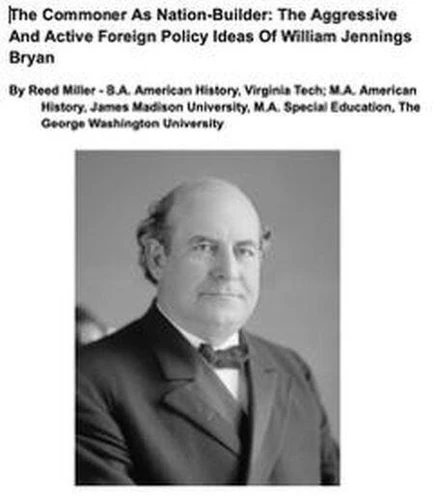
The Commoner As Nation-Builder: The Aggressive And Active Foreign Policy Ideas Of William Jennings Bryan
Par :Formats :
Disponible dans votre compte client Decitre ou Furet du Nord dès validation de votre commande. Le format ePub est :
- Compatible avec une lecture sur My Vivlio (smartphone, tablette, ordinateur)
- Compatible avec une lecture sur liseuses Vivlio
- Pour les liseuses autres que Vivlio, vous devez utiliser le logiciel Adobe Digital Edition. Non compatible avec la lecture sur les liseuses Kindle, Remarkable et Sony
 , qui est-ce ?
Notre partenaire de plateforme de lecture numérique où vous retrouverez l'ensemble de vos ebooks gratuitement
Pour en savoir plus sur nos ebooks, consultez notre aide en ligne ici
C'est si simple ! Lisez votre ebook avec l'app Vivlio sur votre tablette, mobile ou ordinateur :

- FormatePub
- ISBN8233898037
- EAN9798233898037
- Date de parution15/03/2026
- Protection num.pas de protection
- Infos supplémentairesepub
- ÉditeurLinda Balsamo
Résumé
This book is a straight history about the foreign policy ideas of The Great Commoner, American statesman and politician William Jennings Bryan. Bryan has often been portayed as a pacifist and idealist in his foreign policy ideas. However, through considerable historical research, the book shows that Bryan actually held many traditional foreign policy beliefs and volunteered to fight in two wars himself.
He also was willing to keep conquered land for the United States. For many years, he followed the Monroe Doctrine in his presidential runs for office, and advocated U. S. military interventions in the Americas, but non-engagement in the tangles of Europe. He came up with schemes to intervene militarily in revolutions in Latin America, and with a plan to offer low-interest loans to Latin countries that favored the United States, democracy, and capitalism.
A change in his stance toward Europe occurred when the Great War started. He went from resigning his role as Secretary of State under President Wilson to keep American out of the war, to volunteering to fight in the war once the U. S. had made its fateful decision. He also raised funds and gave speeches for the American war effort after he had made his protest resignation. Looking back, one can see that Bryan had already challenged the waining Spanish empire in Cuba, the Caribbean, and the Philippines, among other areas.
Bryan's considerable effort in the plan for a League of Nations also is heavily discussed, revealing more about Bryan's vision of the United States as a builder of democratic nations. The book finds this vision was his chief guide to foreign policy, and that his foreign policy was mostly aggressive and active, rather than pacifist and isolationist. He did hold a strong and direct mission, and was active around the world in the end.
In addition, he was buried as a soldier in Arlington National Cemetary, a last wish of his.
He also was willing to keep conquered land for the United States. For many years, he followed the Monroe Doctrine in his presidential runs for office, and advocated U. S. military interventions in the Americas, but non-engagement in the tangles of Europe. He came up with schemes to intervene militarily in revolutions in Latin America, and with a plan to offer low-interest loans to Latin countries that favored the United States, democracy, and capitalism.
A change in his stance toward Europe occurred when the Great War started. He went from resigning his role as Secretary of State under President Wilson to keep American out of the war, to volunteering to fight in the war once the U. S. had made its fateful decision. He also raised funds and gave speeches for the American war effort after he had made his protest resignation. Looking back, one can see that Bryan had already challenged the waining Spanish empire in Cuba, the Caribbean, and the Philippines, among other areas.
Bryan's considerable effort in the plan for a League of Nations also is heavily discussed, revealing more about Bryan's vision of the United States as a builder of democratic nations. The book finds this vision was his chief guide to foreign policy, and that his foreign policy was mostly aggressive and active, rather than pacifist and isolationist. He did hold a strong and direct mission, and was active around the world in the end.
In addition, he was buried as a soldier in Arlington National Cemetary, a last wish of his.
A propos de Reed Miller


0,99 €