SOLDES
Jusqu'à -70% sur une sélection d'articles*

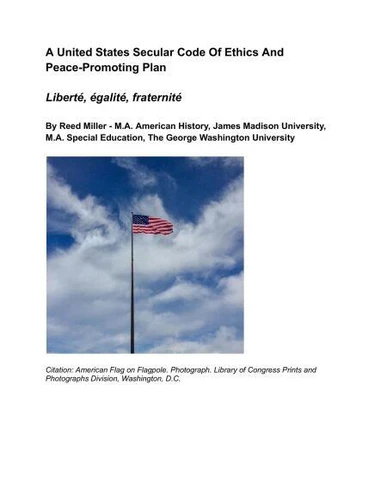
A United States Secular Code Of Ethics And Peace-Promoting Plan
Par :Formats :
Disponible dans votre compte client Decitre ou Furet du Nord dès validation de votre commande. Le format ePub est :
- Compatible avec une lecture sur My Vivlio (smartphone, tablette, ordinateur)
- Compatible avec une lecture sur liseuses Vivlio
- Pour les liseuses autres que Vivlio, vous devez utiliser le logiciel Adobe Digital Edition. Non compatible avec la lecture sur les liseuses Kindle, Remarkable et Sony
 , qui est-ce ?
Notre partenaire de plateforme de lecture numérique où vous retrouverez l'ensemble de vos ebooks gratuitement
Pour en savoir plus sur nos ebooks, consultez notre aide en ligne ici
C'est si simple ! Lisez votre ebook avec l'app Vivlio sur votre tablette, mobile ou ordinateur :

- FormatePub
- ISBN8224481996
- EAN9798224481996
- Date de parution14/03/2026
- Protection num.pas de protection
- Infos supplémentairesepub
- ÉditeurDraft2Digital
Résumé
This book is a suggested United States Secular Code Of Ethics And Peace Plan. It is a framework of ideas for how such a secular code could be created. A real national code of ethics and peace plan would have to be collaborated on in committees, edited in teams, revised, and voted on. That would make it a democratic decision. I believe that a democratic society should be based on a family plan. A family has a common morality, some individual wealth, and some commonwealth.
In one section of this book, there is a code of ethics based on the family plan for democracy. The common morality taught would have to be secular due to Freedom of Religion, which is where a secular code of ethics comes in. We need to teach ethics to citizens because we still have problems such as murder, theft, rape, abuse, white collar crime, assault, libel, repeating wars, etc. So, I propose that a National Secular Code of Ethics could be created from the history of the development of human rights laws in the United States, the main ideas of the United States Code, and ideas for promoting peace that are backed up by the historical secular quotes and plans from Americans.
The human rights laws would be matched up with the positive, ethical, character traits of positive psychology. Researchers such as Martin Seligman and Christopher Peterson identified a widely recognized classification of core character strengths-including justice, courage, humanity, temperance, and wisdom-that appear across cultures and historical traditions (Peterson & Seligman, 2004). Other positive character traits include love, empathy, kindness, compassion, responsibility, fairness, social intelligence, and citizenship, to name a few.
Because these traits are rooted in common human experiences rather than a particular religious or ideological tradition, they provide a strong foundation for developing a National Secular Code of Ethics that can be promoted to Americans as a shared civic guide.
In one section of this book, there is a code of ethics based on the family plan for democracy. The common morality taught would have to be secular due to Freedom of Religion, which is where a secular code of ethics comes in. We need to teach ethics to citizens because we still have problems such as murder, theft, rape, abuse, white collar crime, assault, libel, repeating wars, etc. So, I propose that a National Secular Code of Ethics could be created from the history of the development of human rights laws in the United States, the main ideas of the United States Code, and ideas for promoting peace that are backed up by the historical secular quotes and plans from Americans.
The human rights laws would be matched up with the positive, ethical, character traits of positive psychology. Researchers such as Martin Seligman and Christopher Peterson identified a widely recognized classification of core character strengths-including justice, courage, humanity, temperance, and wisdom-that appear across cultures and historical traditions (Peterson & Seligman, 2004). Other positive character traits include love, empathy, kindness, compassion, responsibility, fairness, social intelligence, and citizenship, to name a few.
Because these traits are rooted in common human experiences rather than a particular religious or ideological tradition, they provide a strong foundation for developing a National Secular Code of Ethics that can be promoted to Americans as a shared civic guide.
A propos de Reed Miller

0,99 €