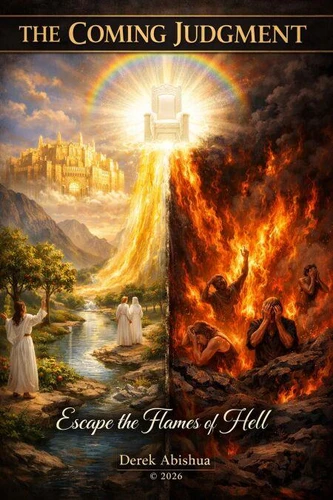
The Coming Judgement by Derek Abishua presents a theological exploration of divine judgment, eternal destiny, and salvation, drawing extensively from biblical texts to explain the reality of heaven, hell, and the final judgment. The book argues that Scripture consistently teaches a literal, conscious, and eternal judgment for the unrepentant, contrasted with everlasting life for the righteous. It emphasizes that this doctrine is not meant to terrify but to awaken spiritual awareness and motivate repentance, likening biblical warnings to storm alerts intended to save lives rather than frighten people.
Central to the book is the vision of the great white throne judgment, portrayed as the ultimate and final court where Christ judges humanity with perfect justice and holiness. The author explains that earthly existence is temporary and that the created universe itself will pass away before this judgment, underscoring the urgency of preparing for eternity rather than placing hope in worldly pursuits.
The text stresses God's patience in delaying judgment, presenting it as mercy designed to allow time for repentance, not as divine indifference. God's desire is that none perish, revealing His heart as fundamentally compassionate even while He remains just. A major theme is the finality of death: life is followed by judgment with no second chances, making present choices eternally significant. The author defends the doctrine of eternal punishment, arguing that sin against an infinitely holy God carries infinite consequences and that hell reflects both divine justice and the persistent rebellion of the unrepentant.
At the same time, the book highlights hope through Christ's atoning sacrifice. Believers are declared righteous not by their own works but by Christ's righteousness credited to them, giving assurance of salvation and freedom from fear. Ultimately, the work concludes that the doctrine of hell magnifies God's love, reveals the seriousness of sin, and calls every person to faith, repentance, and readiness for the coming judgment.
The Coming Judgement by Derek Abishua presents a theological exploration of divine judgment, eternal destiny, and salvation, drawing extensively from biblical texts to explain the reality of heaven, hell, and the final judgment. The book argues that Scripture consistently teaches a literal, conscious, and eternal judgment for the unrepentant, contrasted with everlasting life for the righteous. It emphasizes that this doctrine is not meant to terrify but to awaken spiritual awareness and motivate repentance, likening biblical warnings to storm alerts intended to save lives rather than frighten people.
Central to the book is the vision of the great white throne judgment, portrayed as the ultimate and final court where Christ judges humanity with perfect justice and holiness. The author explains that earthly existence is temporary and that the created universe itself will pass away before this judgment, underscoring the urgency of preparing for eternity rather than placing hope in worldly pursuits.
The text stresses God's patience in delaying judgment, presenting it as mercy designed to allow time for repentance, not as divine indifference. God's desire is that none perish, revealing His heart as fundamentally compassionate even while He remains just. A major theme is the finality of death: life is followed by judgment with no second chances, making present choices eternally significant. The author defends the doctrine of eternal punishment, arguing that sin against an infinitely holy God carries infinite consequences and that hell reflects both divine justice and the persistent rebellion of the unrepentant.
At the same time, the book highlights hope through Christ's atoning sacrifice. Believers are declared righteous not by their own works but by Christ's righteousness credited to them, giving assurance of salvation and freedom from fear. Ultimately, the work concludes that the doctrine of hell magnifies God's love, reveals the seriousness of sin, and calls every person to faith, repentance, and readiness for the coming judgment.

 , qui est-ce ?