
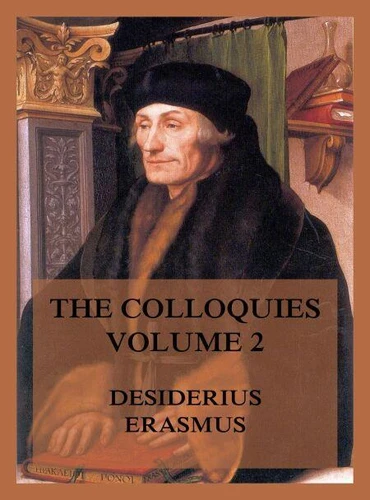
The Colloquies, Volume 2
Par : ,Formats :
Disponible dans votre compte client Decitre ou Furet du Nord dès validation de votre commande. Le format ePub est :
- Compatible avec une lecture sur My Vivlio (smartphone, tablette, ordinateur)
- Compatible avec une lecture sur liseuses Vivlio
- Pour les liseuses autres que Vivlio, vous devez utiliser le logiciel Adobe Digital Edition. Non compatible avec la lecture sur les liseuses Kindle, Remarkable et Sony
 , qui est-ce ?
Notre partenaire de plateforme de lecture numérique où vous retrouverez l'ensemble de vos ebooks gratuitement
Pour en savoir plus sur nos ebooks, consultez notre aide en ligne ici
C'est si simple ! Lisez votre ebook avec l'app Vivlio sur votre tablette, mobile ou ordinateur :

- Nombre de pages568
- FormatePub
- ISBN978-3-8496-5380-4
- EAN9783849653804
- Date de parution31/10/2019
- Protection num.Digital Watermarking
- Taille666 Ko
- Infos supplémentairesepub
- ÉditeurJAZZYBEE VERLAG
Résumé
Erasmus' services to a new way of learning took various forms. He wrote school-books, bringing out his view that boys were kept too long over grammar, and ought to begin reading some good author as soon as possible. His own "Colloquies" were meant partly as models of colloquial Latin; the book was long a standard one in education. These lively dialogues are prose idylls with an ethical purpose, -the dramatic expression of the writer's views on the life of the day.
Thus the dialogue between the Learned Lady and the Abbot depicts monastic illiteracy; that between the Soldier and the Carthusian brings out the seamy side of the military calling. Lucian has influenced the form; but the dramatic skill which blends earnestness with humour is the author's own; there are touches here and there which might fairly be called Shakspearian. This is part two of two.
Thus the dialogue between the Learned Lady and the Abbot depicts monastic illiteracy; that between the Soldier and the Carthusian brings out the seamy side of the military calling. Lucian has influenced the form; but the dramatic skill which blends earnestness with humour is the author's own; there are touches here and there which might fairly be called Shakspearian. This is part two of two.
A propos de Desiderius Erasmus


Das Lob der Narrheit
E-book
5,49 €

Against War
E-book
2,99 €
In Praise of Folly
E-book
4,99 €

The Colloquies, Volume 1
E-book
3,99 €

The Complaint of Peace
E-book
0,99 €
The Praise of Folly
E-book
1,99 €

1,99 €