Nouveauté
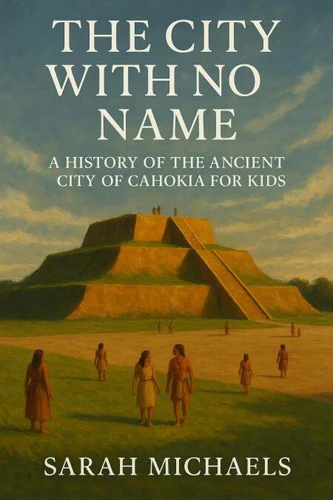
The City With No Name: A History of the Ancient City of Cahokia For Kids
Par :Formats :
Disponible dans votre compte client Decitre ou Furet du Nord dès validation de votre commande. Le format ePub est :
- Compatible avec une lecture sur My Vivlio (smartphone, tablette, ordinateur)
- Compatible avec une lecture sur liseuses Vivlio
- Pour les liseuses autres que Vivlio, vous devez utiliser le logiciel Adobe Digital Edition. Non compatible avec la lecture sur les liseuses Kindle, Remarkable et Sony
 , qui est-ce ?
Notre partenaire de plateforme de lecture numérique où vous retrouverez l'ensemble de vos ebooks gratuitement
Pour en savoir plus sur nos ebooks, consultez notre aide en ligne ici
C'est si simple ! Lisez votre ebook avec l'app Vivlio sur votre tablette, mobile ou ordinateur :

- FormatePub
- ISBN8235810440
- EAN9798235810440
- Date de parution26/07/2026
- Protection num.pas de protection
- Infos supplémentairesepub
- ÉditeurIoakim Ioakim
Résumé
A thousand years ago, the largest city north of Mexico stood on a floodplain in what is now southern Illinois. It had a pyramid of packed earth taller than a ten-story building, a plaza the size of thirty-five football fields, and more people living in it than London held at the time. Then, over about a century and a half, everyone left. Most Americans have never heard of it. This is the story of how archaeologists figured out it was there - and everything they still can't figure out.
Nobody knows what the city was called. Nobody knows what language its people spoke, or why tens of thousands of them moved there within a single generation, or why the whole place was laid out five degrees east of north. Readers ages 9 to 12 will find out how a stain in the dirt reveals the outline of a house that rotted away nine hundred years ago, how tooth enamel records where a person grew up, and how a game played with a rolling stone and thrown spears spread across half a continent.
They'll also learn why nineteenth-century Americans insisted Native people couldn't have built the mounds, who benefited from that lie, and how one government scientist set out to prove it and proved himself wrong instead. The people who built this city did not vanish. Their descendants are alive today, in nations that can be named and contacted. That distinction matters, and this book explains why.
Fifteen chapters, fifteen illustrations, and a running set of questions that remain open - because the case isn't closed, and the people who eventually solve it are in school right now.
Nobody knows what the city was called. Nobody knows what language its people spoke, or why tens of thousands of them moved there within a single generation, or why the whole place was laid out five degrees east of north. Readers ages 9 to 12 will find out how a stain in the dirt reveals the outline of a house that rotted away nine hundred years ago, how tooth enamel records where a person grew up, and how a game played with a rolling stone and thrown spears spread across half a continent.
They'll also learn why nineteenth-century Americans insisted Native people couldn't have built the mounds, who benefited from that lie, and how one government scientist set out to prove it and proved himself wrong instead. The people who built this city did not vanish. Their descendants are alive today, in nations that can be named and contacted. That distinction matters, and this book explains why.
Fifteen chapters, fifteen illustrations, and a running set of questions that remain open - because the case isn't closed, and the people who eventually solve it are in school right now.