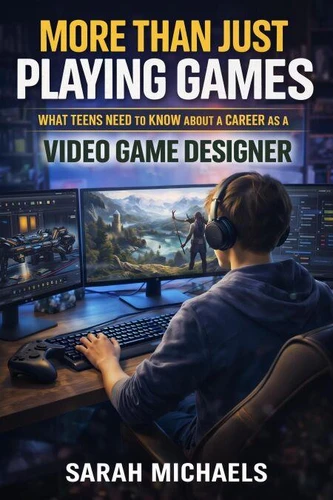
More Than Just Playing Games: What Teens Need to Know About a Career as a Video Game Designer
Par :Formats :
Disponible dans votre compte client Decitre ou Furet du Nord dès validation de votre commande. Le format ePub est :
- Compatible avec une lecture sur My Vivlio (smartphone, tablette, ordinateur)
- Compatible avec une lecture sur liseuses Vivlio
- Pour les liseuses autres que Vivlio, vous devez utiliser le logiciel Adobe Digital Edition. Non compatible avec la lecture sur les liseuses Kindle, Remarkable et Sony
 , qui est-ce ?
Notre partenaire de plateforme de lecture numérique où vous retrouverez l'ensemble de vos ebooks gratuitement
Pour en savoir plus sur nos ebooks, consultez notre aide en ligne ici
C'est si simple ! Lisez votre ebook avec l'app Vivlio sur votre tablette, mobile ou ordinateur :

- FormatePub
- ISBN8233246814
- EAN9798233246814
- Date de parution05/01/2026
- Protection num.pas de protection
- Infos supplémentairesepub
- ÉditeurLinda Balsamo
Résumé
Video games don't appear fully formed. Behind every level, mechanic, character, and choice is a long process of thinking, testing, rewriting, and problem-solving that most players never see. This book pulls back that curtain and shows what actually goes into designing games-and what working in game design is really like. Rather than focusing on hype or shortcuts, it explores how games are built piece by piece: how ideas turn into rules, how systems interact, how balance and pacing shape player experience, and why collaboration matters just as much as creativity.
It explains the different roles involved in making games, how designers work with programmers and artists, and why "game designer" is a specific job, not a vague dream title. The book also looks honestly at the career side of the industry. It addresses how people get hired, what studios care about, how portfolios are evaluated, and why finished work matters more than big ideas. Topics like feedback, deadlines, iteration, teamwork, and professional expectations are treated with clarity rather than glossed over.
Myths about talent, genius, and overnight success are challenged with realistic explanations of how skills are actually developed. Throughout, the focus stays on thinking-how designers approach problems, learn from existing games without copying, and improve through testing and revision. Even readers who decide game design isn't the right path will come away with a deeper understanding of how interactive experiences are made and why the skills involved transfer far beyond games.
It explains the different roles involved in making games, how designers work with programmers and artists, and why "game designer" is a specific job, not a vague dream title. The book also looks honestly at the career side of the industry. It addresses how people get hired, what studios care about, how portfolios are evaluated, and why finished work matters more than big ideas. Topics like feedback, deadlines, iteration, teamwork, and professional expectations are treated with clarity rather than glossed over.
Myths about talent, genius, and overnight success are challenged with realistic explanations of how skills are actually developed. Throughout, the focus stays on thinking-how designers approach problems, learn from existing games without copying, and improve through testing and revision. Even readers who decide game design isn't the right path will come away with a deeper understanding of how interactive experiences are made and why the skills involved transfer far beyond games.