SOLDES
Jusqu'à -70% sur une sélection d'articles*

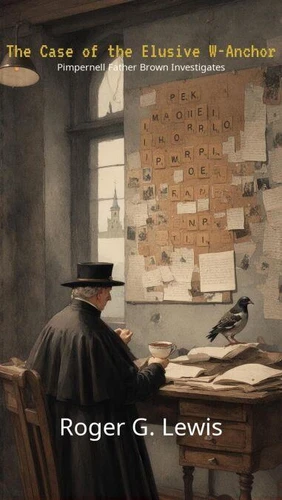
The Case of the Elusive W-Anchor pimpernel. Father Brown Investigates. The Conquest Of DoughForge, #2
Par :Formats :
Disponible dans votre compte client Decitre ou Furet du Nord dès validation de votre commande. Le format ePub est :
- Compatible avec une lecture sur My Vivlio (smartphone, tablette, ordinateur)
- Compatible avec une lecture sur liseuses Vivlio
- Pour les liseuses autres que Vivlio, vous devez utiliser le logiciel Adobe Digital Edition. Non compatible avec la lecture sur les liseuses Kindle, Remarkable et Sony
 , qui est-ce ?
Notre partenaire de plateforme de lecture numérique où vous retrouverez l'ensemble de vos ebooks gratuitement
Pour en savoir plus sur nos ebooks, consultez notre aide en ligne ici
C'est si simple ! Lisez votre ebook avec l'app Vivlio sur votre tablette, mobile ou ordinateur :

- FormatePub
- ISBN8235326279
- EAN9798235326279
- Date de parution04/05/2026
- Protection num.pas de protection
- Infos supplémentairesepub
- ÉditeurIoakim Ioakim
Résumé
The domain went dark at 6:41 PM. By morning, three corporations had each blamed the other, the evidence had been quietly erased, and the victim was left looking paranoid. Father Brown had seen this before - not in a vicarage, but in a colliery, in a kitchen in Sweden, and in the architecture of the global banking system. The Case of the Elusive W-Anchor is a detective story in which the crime is structural, the culprit is a process, and the only weapon available to the investigator is an independent set of scales.
Part technical manual, part autobiography, part meta-fiction - this is the book that reads you back. While Father Brown investigates a hijacked domain through the labyrinth of Heart Internet, GoDaddy, and Nominet, Roger G. Lewis is simultaneously at a kitchen table in Hjärnarp, Sweden, building the very protocol that might have prevented the crime. The W-Anchor Protocol. The FAIR-Index. The Check-Weighman Principle.
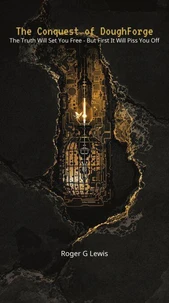
Tools, not arguments - because arguments can be ignored, but a working set of scales cannot. Beneath the detective narrative lies a 27-year dataset showing a 59% collapse in UK housing affordability, a dissection of how banks create money from nothing and call it a mortgage, and a quiet, devastating identification of the institution that owns the oven in which all of this is baked. It Is One Chapter in Three Books at OnceThe "Pimpernell Cut" - a single chapter in six parts - appears across The Conquest of DoughForge, The Wandering Anchor, and this book.
Lewis uses transclusion (Ted Nelson's concept of content included by reference rather than copied) as a structural principle. You are not reading a standalone book; you are reading a node in a living library of 14 interconnected works. The Parliament of LLMs chapter features Large Language Models admitting, in chorus, their own unreliability. Appendix C of the companion volume even includes AI-hallucinated "phantom chapters" preserved as exhibits.
Lewis doesn't just write about AI drift - he demonstrates it, documents it, and builds a protocol to fix it, all within the same text. Most economic books cite Keynes or Friedman. This one's methodological anchor is a Welsh miner born in 1902 who stood at a colliery weighbridge with his own scales. The Check-Weighman Principle isn't a metaphor borrowed for rhetorical effect - it is the literal origin of the FAIR-Index's independence claim.
The Villain Has a Real AddressMost critiques of financial power gesture vaguely at "the system." Lewis names the Bank for International Settlements in Basel - its capital adequacy ratios, its Basel Accords, its structural invisibility - and calls it, with precision and without hysteria, the institution that owns the oven. The serpent is identified. It has a postcode. Every other book about AI, housing, or institutional power asks you to believe its argument.
The Case of the Elusive W-Anchor hands you the scales and asks you to weigh it yourself.
Part technical manual, part autobiography, part meta-fiction - this is the book that reads you back. While Father Brown investigates a hijacked domain through the labyrinth of Heart Internet, GoDaddy, and Nominet, Roger G. Lewis is simultaneously at a kitchen table in Hjärnarp, Sweden, building the very protocol that might have prevented the crime. The W-Anchor Protocol. The FAIR-Index. The Check-Weighman Principle.
Tools, not arguments - because arguments can be ignored, but a working set of scales cannot. Beneath the detective narrative lies a 27-year dataset showing a 59% collapse in UK housing affordability, a dissection of how banks create money from nothing and call it a mortgage, and a quiet, devastating identification of the institution that owns the oven in which all of this is baked. It Is One Chapter in Three Books at OnceThe "Pimpernell Cut" - a single chapter in six parts - appears across The Conquest of DoughForge, The Wandering Anchor, and this book.
Lewis uses transclusion (Ted Nelson's concept of content included by reference rather than copied) as a structural principle. You are not reading a standalone book; you are reading a node in a living library of 14 interconnected works. The Parliament of LLMs chapter features Large Language Models admitting, in chorus, their own unreliability. Appendix C of the companion volume even includes AI-hallucinated "phantom chapters" preserved as exhibits.
Lewis doesn't just write about AI drift - he demonstrates it, documents it, and builds a protocol to fix it, all within the same text. Most economic books cite Keynes or Friedman. This one's methodological anchor is a Welsh miner born in 1902 who stood at a colliery weighbridge with his own scales. The Check-Weighman Principle isn't a metaphor borrowed for rhetorical effect - it is the literal origin of the FAIR-Index's independence claim.
The Villain Has a Real AddressMost critiques of financial power gesture vaguely at "the system." Lewis names the Bank for International Settlements in Basel - its capital adequacy ratios, its Basel Accords, its structural invisibility - and calls it, with precision and without hysteria, the institution that owns the oven. The serpent is identified. It has a postcode. Every other book about AI, housing, or institutional power asks you to believe its argument.
The Case of the Elusive W-Anchor hands you the scales and asks you to weigh it yourself.