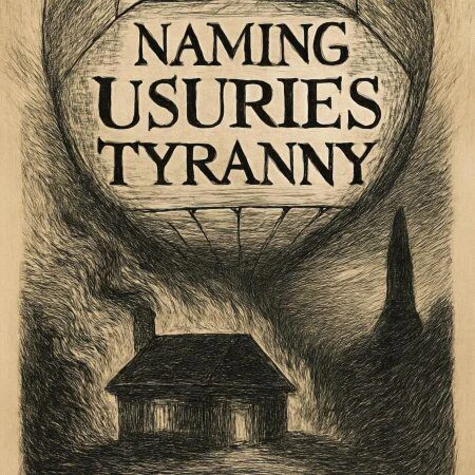
Naming UsuriesTyranny
Par :Formats :
Disponible dans votre compte client Decitre ou Furet du Nord dès validation de votre commande. Le format ePub est :
- Compatible avec une lecture sur My Vivlio (smartphone, tablette, ordinateur)
- Compatible avec une lecture sur liseuses Vivlio
- Pour les liseuses autres que Vivlio, vous devez utiliser le logiciel Adobe Digital Edition. Non compatible avec la lecture sur les liseuses Kindle, Remarkable et Sony
 , qui est-ce ?
Notre partenaire de plateforme de lecture numérique où vous retrouverez l'ensemble de vos ebooks gratuitement
Pour en savoir plus sur nos ebooks, consultez notre aide en ligne ici
C'est si simple ! Lisez votre ebook avec l'app Vivlio sur votre tablette, mobile ou ordinateur :

- FormatePub
- ISBN8233764127
- EAN9798233764127
- Date de parution10/02/2026
- Protection num.pas de protection
- Infos supplémentairesepub
- ÉditeurLinda Balsamo
Résumé
Naming Usuries Tyranny is a hybrid work-poetry, pamphlet, satire, elegy, and civic brief-written as a witness statement against a world where shelter, time, and dignity are priced through debt. Moving between imagined introductions (including a Ruskin-like foreword) and a "sourced essay in fourteen movements after Cicero, " the collection argues that recurring crises in housing affordability, inequality, and political legitimacy cannot be separated from the architecture of money creation, credit allocation, and tax design.
At its center is a sustained refusal of "neutral" technocratic language. The poems and orations return again and again to the laundering of harm into respectability-prudence, independence, stability-and to the way private credit-money inflates assets, disciplines labour, and turns homes into leveraged collateral. The Bank for International Settlements appears not as a cartoon villain but as a symbolic node: a coordinating temple of central-banking consensus and Basel-style standards that shape incentives, constrain democratic choice, and protect balance sheets faster than households.
Formally, the book ranges widely: riddles that "name the hidden power, " prophetic Blakean sequences ("The Conquest of Dough"), Odyssean rewrites of blame-shifting and institutional evasion, and intimate memorial pieces that insist white-collar harm is not bloodless-only slow, dispersed, and easy to deny. The work closes toward reconstruction: money and payments as public utility, credit guided toward productive and social ends, taxes shifted toward land/location value, and housing treated as infrastructure rather than a speculative game.
At its center is a sustained refusal of "neutral" technocratic language. The poems and orations return again and again to the laundering of harm into respectability-prudence, independence, stability-and to the way private credit-money inflates assets, disciplines labour, and turns homes into leveraged collateral. The Bank for International Settlements appears not as a cartoon villain but as a symbolic node: a coordinating temple of central-banking consensus and Basel-style standards that shape incentives, constrain democratic choice, and protect balance sheets faster than households.
Formally, the book ranges widely: riddles that "name the hidden power, " prophetic Blakean sequences ("The Conquest of Dough"), Odyssean rewrites of blame-shifting and institutional evasion, and intimate memorial pieces that insist white-collar harm is not bloodless-only slow, dispersed, and easy to deny. The work closes toward reconstruction: money and payments as public utility, credit guided toward productive and social ends, taxes shifted toward land/location value, and housing treated as infrastructure rather than a speculative game.