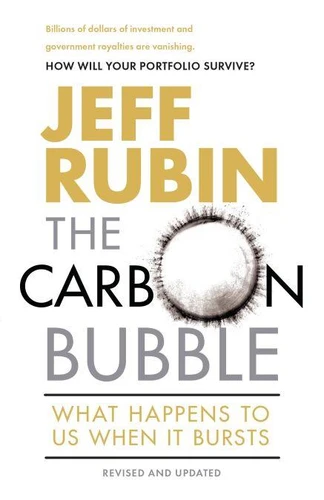
The Carbon Bubble. What Happens to Us When It Bursts
Par :Formats :
Disponible dans votre compte client Decitre ou Furet du Nord dès validation de votre commande. Le format ePub protégé est :
- Compatible avec une lecture sur My Vivlio (smartphone, tablette, ordinateur)
- Compatible avec une lecture sur liseuses Vivlio
- Pour les liseuses autres que Vivlio, vous devez utiliser le logiciel Adobe Digital Edition. Non compatible avec la lecture sur les liseuses Kindle, Remarkable et Sony
- Non compatible avec un achat hors France métropolitaine
 , qui est-ce ?
Notre partenaire de plateforme de lecture numérique où vous retrouverez l'ensemble de vos ebooks gratuitement
Pour en savoir plus sur nos ebooks, consultez notre aide en ligne ici
C'est si simple ! Lisez votre ebook avec l'app Vivlio sur votre tablette, mobile ou ordinateur :

- Nombre de pages304
- FormatePub
- ISBN978-0-345-81471-5
- EAN9780345814715
- Date de parution12/05/2015
- Protection num.Adobe DRM
- Taille1 Mo
- Infos supplémentairesepub
- ÉditeurRandom House Canada
Résumé
As the price of oil falls, bestselling author and economist Jeff Rubin takes us to the epicentre of the bursting global carbon bubble, and dares us to imagine a new engine for growth that does not run on oil. For a decade, the vision of Canada's future as an energy superpower has driven the country's political agenda, as well as the fast-paced development of Alberta's oil sands and the push for more pipelines like Keystone XL across the continent to bring that bitumen to market.
Anyone who objects to pipelines and tanker-train traffic, north or south of the US border, is labeled a dreamer, or worse-an environmentalist: someone who puts the health of the planet ahead of the economic survival of their neighbours. In The Carbon Bubble, Jeff Rubin compellingly shows how an economic vision that rests on oil is dead wrong. Changes in energy markets in the US-where domestic production is booming while demand for oil is shrinking-are quickly turning the oil dream into an economic nightmare.
Like U. S. coal stocks, the share values of oil-sands producers have been drastically reduced by falling fuel prices and are increasingly exposed to the world's efforts to reduce carbon emissions. Rubin argues that there is a lifeline to a better future. The very climate change that will leave much of the country's carbon unburnable could at the same time make some of Canada's other resource assets more valuable: its water and its land.
In tomorrow's economy, he argues, Canada won't be an energy superpower, but it has the makings of one of the world's great breadbaskets, as everything from the corn belt to viniculture heads to higher latitudes. And in the global climate that the world's carbon emissions are inexorably creating, growing food will soon be a lot more valuable than mining bitumen.
Anyone who objects to pipelines and tanker-train traffic, north or south of the US border, is labeled a dreamer, or worse-an environmentalist: someone who puts the health of the planet ahead of the economic survival of their neighbours. In The Carbon Bubble, Jeff Rubin compellingly shows how an economic vision that rests on oil is dead wrong. Changes in energy markets in the US-where domestic production is booming while demand for oil is shrinking-are quickly turning the oil dream into an economic nightmare.
Like U. S. coal stocks, the share values of oil-sands producers have been drastically reduced by falling fuel prices and are increasingly exposed to the world's efforts to reduce carbon emissions. Rubin argues that there is a lifeline to a better future. The very climate change that will leave much of the country's carbon unburnable could at the same time make some of Canada's other resource assets more valuable: its water and its land.
In tomorrow's economy, he argues, Canada won't be an energy superpower, but it has the makings of one of the world's great breadbaskets, as everything from the corn belt to viniculture heads to higher latitudes. And in the global climate that the world's carbon emissions are inexorably creating, growing food will soon be a lot more valuable than mining bitumen.