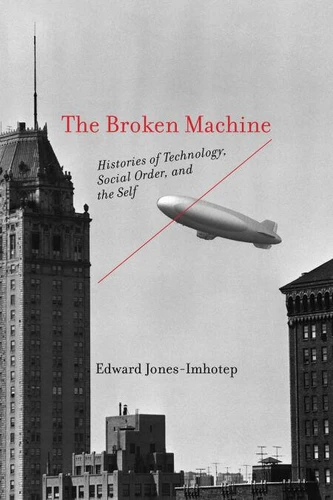
The Broken Machine. Histories of Technology, Social Order, and the Self
Par :Formats :
Disponible dans votre compte client Decitre ou Furet du Nord dès validation de votre commande. Le format ePub protégé est :
- Compatible avec une lecture sur My Vivlio (smartphone, tablette, ordinateur)
- Compatible avec une lecture sur liseuses Vivlio
- Pour les liseuses autres que Vivlio, vous devez utiliser le logiciel Adobe Digital Edition. Non compatible avec la lecture sur les liseuses Kindle, Remarkable et Sony
- Non compatible avec un achat hors France métropolitaine
 , qui est-ce ?
Notre partenaire de plateforme de lecture numérique où vous retrouverez l'ensemble de vos ebooks gratuitement
Pour en savoir plus sur nos ebooks, consultez notre aide en ligne ici
C'est si simple ! Lisez votre ebook avec l'app Vivlio sur votre tablette, mobile ou ordinateur :

- Nombre de pages264
- FormatePub
- ISBN978-0-262-38471-1
- EAN9780262384711
- Date de parution19/05/2026
- Protection num.Adobe DRM
- Taille37 Mo
- Infos supplémentairesepub
- ÉditeurThe MIT Press
Résumé
A cultural history of technological breakdown, social order, and the self in the modern Atlantic World. The Broken Machine explores the intertwined histories of breaking machines, social order, and the self in the modern Atlantic World. Edward Jones-Imhotep reveals how breakdowns are not the kinds of objects we imagine. More than just material failures or social disruptions, since the 18th century, breakdowns served as moments for defining a modern technological self and the core values of social order in Western democracies: what kinds of people belonged to it, what virtues they should possess, and who stood outside it.
Tracing this politics of breakdown and belonging across two centuries and two continents, the book rewrites five well-known episodes in the history of technology, influential histories that we thought we knew: the politics of the guillotine during the French Revolution, the causes of railway accidents and the rise of "systems" as a tool of self-responsibility and self-governance in Victorian Britain, the surprising antebellum history of breakdown in American slave cultures, the Gantt chart's origins as a Progressive Era tool for linking failure as a condition of industrial machinery to failure as a kind of person in the US, and, finally, the electronic malfunctions during the Cold War that helped define the rational selves underpinning Western democracy.
Tracing this politics of breakdown and belonging across two centuries and two continents, the book rewrites five well-known episodes in the history of technology, influential histories that we thought we knew: the politics of the guillotine during the French Revolution, the causes of railway accidents and the rise of "systems" as a tool of self-responsibility and self-governance in Victorian Britain, the surprising antebellum history of breakdown in American slave cultures, the Gantt chart's origins as a Progressive Era tool for linking failure as a condition of industrial machinery to failure as a kind of person in the US, and, finally, the electronic malfunctions during the Cold War that helped define the rational selves underpinning Western democracy.