
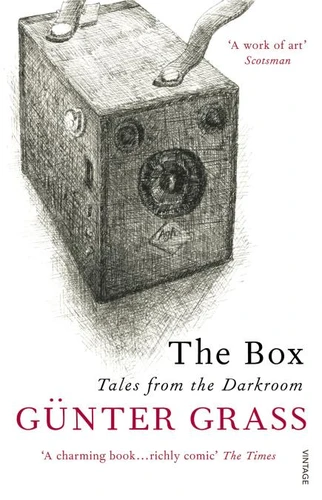
Günter Grass (1927-2015) was Germany's most celebrated post-war writer. He was a creative artist of remarkable versatility: novelist, poet, playwright, essayist, graphic artist. Grass's first novel, The Tin Drum, is widely regarded as one of the finest novels of the twentieth century, and he was awarded the Nobel Prize for Literature in 1999.
The Box. Tales from the Darkroom
Par : ,Formats :
Disponible dans votre compte client Decitre ou Furet du Nord dès validation de votre commande. Le format ePub protégé est :
- Compatible avec une lecture sur My Vivlio (smartphone, tablette, ordinateur)
- Compatible avec une lecture sur liseuses Vivlio
- Pour les liseuses autres que Vivlio, vous devez utiliser le logiciel Adobe Digital Edition. Non compatible avec la lecture sur les liseuses Kindle, Remarkable et Sony
- Non compatible avec un achat hors France métropolitaine
 , qui est-ce ?
Notre partenaire de plateforme de lecture numérique où vous retrouverez l'ensemble de vos ebooks gratuitement
Pour en savoir plus sur nos ebooks, consultez notre aide en ligne ici
C'est si simple ! Lisez votre ebook avec l'app Vivlio sur votre tablette, mobile ou ordinateur :

- Nombre de pages224
- FormatePub
- ISBN978-1-4070-8724-5
- EAN9781407087245
- Date de parution15/06/2017
- Protection num.Adobe DRM
- Infos supplémentairesepub
- ÉditeurVintage Digital
Résumé
In this delightful sequel to Peeling the Onion, Günter Grass writes in the voices of his eight children as they record memories of their childhoods, of growing up, of their father, who was always at work on a new book, always at the margins of their lives. Memories contradictory, critical, loving, accusatory - they piece together an intimate picture of this most public of men. To say nothing of Marie, Grass's assistant, a family friend of many years, perhaps even a lover, whose snapshots taken with an old-fashioned Agfa box camera provide the author with ideas for his work.
But her images offer much more. They reveal a truth beyond the ordinary detail of life, depict the future, tell what might have been, grant the wishes in visual form of those photographed. The children speculate on the nature of this magic: was the enchanted camera a source of inspiration for their father? Did it represent the power of art itself? Was it the eye of God?Winner of the Nobel Prize for Literature.
But her images offer much more. They reveal a truth beyond the ordinary detail of life, depict the future, tell what might have been, grant the wishes in visual form of those photographed. The children speculate on the nature of this magic: was the enchanted camera a source of inspiration for their father? Did it represent the power of art itself? Was it the eye of God?Winner of the Nobel Prize for Literature.
A propos de Günter Grass
Prendre la pose. Une légende
Grand Format
13,90 €
3/5
Mon siècle
Poche
8,95 €
The Tin Drum
E-book
8,99 €
12,99 €
The Call of the Toad
E-book
10,99 €
8,99 €
The Flounder
E-book
8,99 €
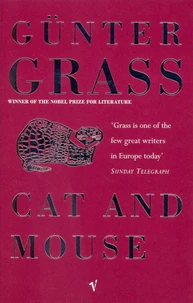
Cat and Mouse
E-book
8,49 €

Local Anaesthetic
E-book
4,99 €
8,99 €
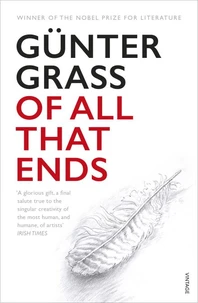
Of All That Ends
E-book
8,49 €
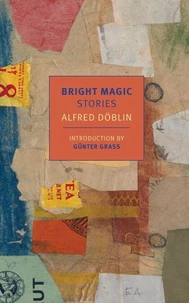
Bright Magic. Stories
E-book
15,65 €