

Günter Grass (1927-2015) was Germany's most celebrated post-war writer. He was a creative artist of remarkable versatility: novelist, poet, playwright, essayist, graphic artist. Grass's first novel, The Tin Drum, is widely regarded as one of the finest novels of the twentieth century, and he was awarded the Nobel Prize for Literature in 1999.
Local Anaesthetic
Par :Formats :
Disponible dans votre compte client Decitre ou Furet du Nord dès validation de votre commande. Le format ePub protégé est :
- Compatible avec une lecture sur My Vivlio (smartphone, tablette, ordinateur)
- Compatible avec une lecture sur liseuses Vivlio
- Pour les liseuses autres que Vivlio, vous devez utiliser le logiciel Adobe Digital Edition. Non compatible avec la lecture sur les liseuses Kindle, Remarkable et Sony
- Non compatible avec un achat hors France métropolitaine
 , qui est-ce ?
Notre partenaire de plateforme de lecture numérique où vous retrouverez l'ensemble de vos ebooks gratuitement
Pour en savoir plus sur nos ebooks, consultez notre aide en ligne ici
C'est si simple ! Lisez votre ebook avec l'app Vivlio sur votre tablette, mobile ou ordinateur :

- Nombre de pages160
- FormatePub
- ISBN978-1-4735-4529-8
- EAN9781473545298
- Date de parution25/05/2017
- Protection num.Adobe DRM
- Infos supplémentairesepub
- ÉditeurVintage Digital
Résumé
Starusch, a bachelor aged forty teaching 'German and history (two inseparable subjects), undergoes protracted treatment by a dentist who uses TV to distract his patients. Gagged in his chair, the patient projects onto the screen his past and present with the fluidity and visual quality of the movies. Reality and fantasy, the actual and the repressed, overrun the screen in a mirror image of German history.
Thus among other episodes we see Krings, one of Hitler's most ferocious 'fight-to-the-finish' generals, return from Russian captivity and engage in sandbox reconstructions of Germany's battles, determined to win them this time. In a casual throwaway, the author reveals his true identity -- Field Marshal Schoerner. Under the influence of local anesthesia, Starusch's imagination releases h erotic fantasies and the very violence he tries to combat in his pupils, one of them a militant Maoist.
The dentist, dispensing humdrum wisdom and painkillers with godlike aloofness, objects to violence, real or imagined, advocating universal Sickcare and a diet preventive of caries as a cure-all. Meanwhile, Scherbaum, Starusch's favorite pupil, grimly prepares to burn his dachshund Max to stir u the conscience of dog- and cat-loving Berliners. Juggling mockingly with lost and found illusions, with the tensions between reformists and revolutionaries, middle age and youth, Grass has created a satirical portrait of social confusions that adds to his customary exuberance a new mastery of subtle control.
Thus among other episodes we see Krings, one of Hitler's most ferocious 'fight-to-the-finish' generals, return from Russian captivity and engage in sandbox reconstructions of Germany's battles, determined to win them this time. In a casual throwaway, the author reveals his true identity -- Field Marshal Schoerner. Under the influence of local anesthesia, Starusch's imagination releases h erotic fantasies and the very violence he tries to combat in his pupils, one of them a militant Maoist.
The dentist, dispensing humdrum wisdom and painkillers with godlike aloofness, objects to violence, real or imagined, advocating universal Sickcare and a diet preventive of caries as a cure-all. Meanwhile, Scherbaum, Starusch's favorite pupil, grimly prepares to burn his dachshund Max to stir u the conscience of dog- and cat-loving Berliners. Juggling mockingly with lost and found illusions, with the tensions between reformists and revolutionaries, middle age and youth, Grass has created a satirical portrait of social confusions that adds to his customary exuberance a new mastery of subtle control.
A propos de Günter Grass
Prendre la pose. Une légende
Grand Format
13,90 €
3/5
Mon siècle
Poche
8,95 €
The Tin Drum
E-book
8,99 €
12,99 €
The Call of the Toad
E-book
10,99 €
8,99 €
The Flounder
E-book
8,99 €
10,99 €
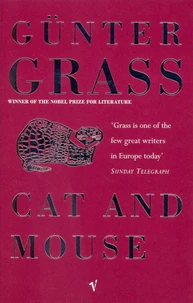
Cat and Mouse
E-book
8,49 €
8,99 €
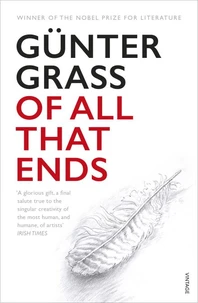
Of All That Ends
E-book
8,49 €
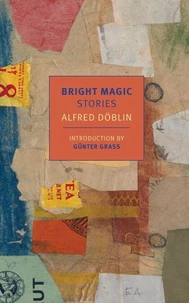
Bright Magic. Stories
E-book
15,65 €