SOLDES
Jusqu'à -70% sur une sélection d'articles*

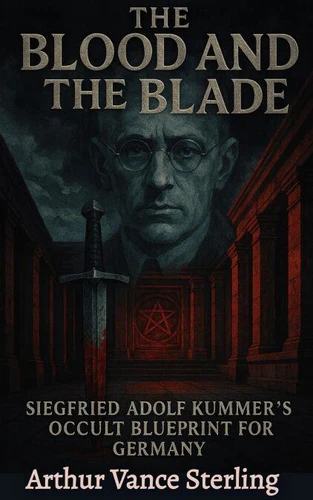
The Blood and the Blade: Siegfried Adolf Kummer’s Occult Blueprint for Germany
Par :Formats :
Disponible dans votre compte client Decitre ou Furet du Nord dès validation de votre commande. Le format ePub est :
- Compatible avec une lecture sur My Vivlio (smartphone, tablette, ordinateur)
- Compatible avec une lecture sur liseuses Vivlio
- Pour les liseuses autres que Vivlio, vous devez utiliser le logiciel Adobe Digital Edition. Non compatible avec la lecture sur les liseuses Kindle, Remarkable et Sony
 , qui est-ce ?
Notre partenaire de plateforme de lecture numérique où vous retrouverez l'ensemble de vos ebooks gratuitement
Pour en savoir plus sur nos ebooks, consultez notre aide en ligne ici
C'est si simple ! Lisez votre ebook avec l'app Vivlio sur votre tablette, mobile ou ordinateur :

- FormatePub
- ISBN8233400209
- EAN9798233400209
- Date de parution20/01/2026
- Protection num.pas de protection
- Infos supplémentairesepub
- ÉditeurLinda Balsamo
Résumé
What if the most dangerous weapons of the Third Reich weren't made of steel, but of symbols?Most history buffs know the names of the generals and the architects of the Blitzkrieg. But beneath the surface of the Thousand-Year Reich lay a hidden foundation of occultism that dictated the very rhythm of the war. The Blood and the Blade strips away the sensationalism to reveal the chilling reality of Siegfried Adolf Kummer-the man who saw runes as more than letters, but as tools of biological and spiritual transformation.
This isn't a dry recitation of dates; it is an invitation to step into the smoke-filled lodges of Dresden where the nightmare was first dreamt. You've read about the tanks and the treaties, but have you ever felt the psychological weight of the symbols that held a nation in a trance? Kummer's "Ariology" was the invisible blueprint for a new German soul. He was a man so radical that even the SS feared his influence, eventually casting him into the shadows.
This book explores the bitter rivalry between Kummer and the Nazi elite, documenting how a struggle for mystical dominance shaped the iconography we still recognize with a shudder today. For the seasoned historian, the allure lies in the details-the suppressed Gestapo files, the specific mechanics of runic yoga, and the architectural geometry used to create "sacred" Aryan spaces. We examine Kummer's life not as a footnote, but as a central pillar of the völkisch movement.
This is a deep-dive into the "Black Sun" mysticism that permeated every layer of the Reich, from the youth camps to the secret chambers of Wewelsburg Castle. Experience the past through the eyes of a man who believed he was reclaiming a god-like heritage for his people, only to be devoured by the monster he helped create. The Blood and the Blade offers a visceral look at the intersection of folklore and fanaticism.
It is a narrative built on primary sources and a refusal to look away from the bizarre, the ritualistic, and the truly esoteric motivations behind historical events. If the symbols of the past were powerful enough to set the world on fire, do we dare leave them unexamined?
This isn't a dry recitation of dates; it is an invitation to step into the smoke-filled lodges of Dresden where the nightmare was first dreamt. You've read about the tanks and the treaties, but have you ever felt the psychological weight of the symbols that held a nation in a trance? Kummer's "Ariology" was the invisible blueprint for a new German soul. He was a man so radical that even the SS feared his influence, eventually casting him into the shadows.
This book explores the bitter rivalry between Kummer and the Nazi elite, documenting how a struggle for mystical dominance shaped the iconography we still recognize with a shudder today. For the seasoned historian, the allure lies in the details-the suppressed Gestapo files, the specific mechanics of runic yoga, and the architectural geometry used to create "sacred" Aryan spaces. We examine Kummer's life not as a footnote, but as a central pillar of the völkisch movement.
This is a deep-dive into the "Black Sun" mysticism that permeated every layer of the Reich, from the youth camps to the secret chambers of Wewelsburg Castle. Experience the past through the eyes of a man who believed he was reclaiming a god-like heritage for his people, only to be devoured by the monster he helped create. The Blood and the Blade offers a visceral look at the intersection of folklore and fanaticism.
It is a narrative built on primary sources and a refusal to look away from the bizarre, the ritualistic, and the truly esoteric motivations behind historical events. If the symbols of the past were powerful enough to set the world on fire, do we dare leave them unexamined?