SOLDES
Jusqu'à -70% sur une sélection d'articles*

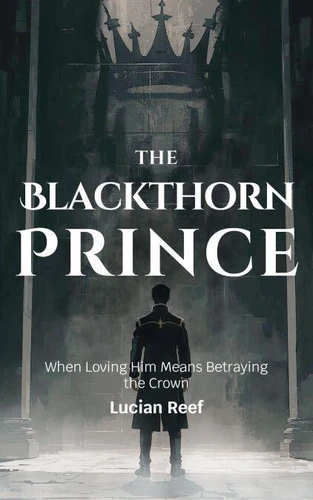
The Blackthorn Prince: When Loving Him Means Betraying the Crown
Par :Formats :
Disponible dans votre compte client Decitre ou Furet du Nord dès validation de votre commande. Le format ePub est :
- Compatible avec une lecture sur My Vivlio (smartphone, tablette, ordinateur)
- Compatible avec une lecture sur liseuses Vivlio
- Pour les liseuses autres que Vivlio, vous devez utiliser le logiciel Adobe Digital Edition. Non compatible avec la lecture sur les liseuses Kindle, Remarkable et Sony
 , qui est-ce ?
Notre partenaire de plateforme de lecture numérique où vous retrouverez l'ensemble de vos ebooks gratuitement
Pour en savoir plus sur nos ebooks, consultez notre aide en ligne ici
C'est si simple ! Lisez votre ebook avec l'app Vivlio sur votre tablette, mobile ou ordinateur :

- FormatePub
- ISBN8233974663
- EAN9798233974663
- Date de parution21/12/2025
- Protection num.pas de protection
- Infos supplémentairesepub
- ÉditeurLinda Balsamo
Résumé
Blackthorn does not rule through cruelty. It rules through language. In a state where every action must be justified, every movement recorded, and every silence interpreted, order is not enforced by violence but by procedure-measured, reasonable, and impeccably polite. Nothing here is forbidden outright. It is simply managed, scheduled, and named until resistance loses its shape. Dorian has been raised to understand this order from the inside.
As the Crown Prince, he knows how power moves: through documents rather than decrees, through signatures rather than swords, through choices framed so carefully they appear inevitable. He has learned to govern without appearing to rule, to comply without believing himself complicit, to trust that distance is a form of responsibility. Rowan exists at the edge of that system. Watched but not condemned, restricted but never formally accused, he learns to live within narrowing boundaries where survival depends not on rebellion, but on precision-knowing when to speak, when to move, and when to disappear.
In Blackthorn, even restraint is observed. When their paths begin to cross more closely than the state intends, nothing overt changes. No accusations are made. No laws are broken. Instead, language tightens. Procedures accumulate. Permissions acquire conditions. What begins as oversight becomes proximity, and proximity becomes leverage. Dorian is asked only to maintain continuity. Rowan is asked for nothing at all.
As authority asserts itself through calm decisions and reasonable measures, both men are forced to confront a truth the system never names: that power does not need to declare itself to destroy, and that care-once observed-can be repurposed as control. Every choice carries a cost, even those framed as mercy. Every silence becomes a record. This is not a story of open rebellion or sudden collapse. It is a story of gradual narrowing, of worlds made smaller through logic and consent, of love that grows not in defiance of the state but under its scrutiny.
And when the moment comes where choosing nothing is no longer possible, the question is no longer who holds power-but what remains when a name, a title, or a signature is finally given up. The Blackthorn Prince is a slow-burning dark fantasy of political control, quiet resistance, and forbidden intimacy, where survival depends on understanding not how systems punish, but how they endure-and what it costs to step outside them.
As the Crown Prince, he knows how power moves: through documents rather than decrees, through signatures rather than swords, through choices framed so carefully they appear inevitable. He has learned to govern without appearing to rule, to comply without believing himself complicit, to trust that distance is a form of responsibility. Rowan exists at the edge of that system. Watched but not condemned, restricted but never formally accused, he learns to live within narrowing boundaries where survival depends not on rebellion, but on precision-knowing when to speak, when to move, and when to disappear.
In Blackthorn, even restraint is observed. When their paths begin to cross more closely than the state intends, nothing overt changes. No accusations are made. No laws are broken. Instead, language tightens. Procedures accumulate. Permissions acquire conditions. What begins as oversight becomes proximity, and proximity becomes leverage. Dorian is asked only to maintain continuity. Rowan is asked for nothing at all.
As authority asserts itself through calm decisions and reasonable measures, both men are forced to confront a truth the system never names: that power does not need to declare itself to destroy, and that care-once observed-can be repurposed as control. Every choice carries a cost, even those framed as mercy. Every silence becomes a record. This is not a story of open rebellion or sudden collapse. It is a story of gradual narrowing, of worlds made smaller through logic and consent, of love that grows not in defiance of the state but under its scrutiny.
And when the moment comes where choosing nothing is no longer possible, the question is no longer who holds power-but what remains when a name, a title, or a signature is finally given up. The Blackthorn Prince is a slow-burning dark fantasy of political control, quiet resistance, and forbidden intimacy, where survival depends on understanding not how systems punish, but how they endure-and what it costs to step outside them.