Parrsboro, Nova Scotia. 1987. Silas Crowe walks into his barn at dusk carrying a rifle for coyotes and never walks back out alive. Moments later, his wife Ruth hears a single gunshot echo across the Fundy cliffs. The barn doors are chained from the inside. Deputies break through hours later and find Silas dead in the hay with a rifle wound through his chest. No weapon. No footprints. No explanation.
The sheriff calls it suicide, then quietly changes the report to accidental death when the details stop making sense. The file disappears into county storage. The Crowe farm remains. Then the scuffing starts. Every night at 9:03 p.m., boots circle the barn loft in slow, deliberate loops. Chains rattle without wind. Hay shifts by itself. And one morning Ruth finds Silas alive again, walking from the barn with a glowing wound in his chest and dirt packed beneath his fingernails.
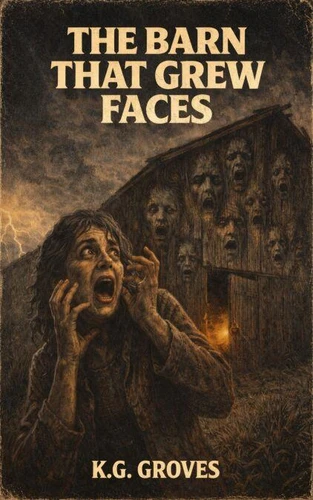
By nightfall, black corn erupts from the field in impossible rows. Faces form inside the kernels. Blinking. Whispering. Waiting. As the farm begins swallowing names, reflections, and pieces of the living, Ruth realizes the barn is not haunted. It is planting people. The Barn That Grew Faces is a slow-burning dread novella about land memory, inherited guilt, isolation, and the terrifying idea that some places grow human sorrow the way fields grow crops.
Saturated with salt air, wet soil, chains, and whispering cornfields, it blends folk horror with cosmic rural dread. Some fields feed families. Others feed on them.
Parrsboro, Nova Scotia. 1987. Silas Crowe walks into his barn at dusk carrying a rifle for coyotes and never walks back out alive. Moments later, his wife Ruth hears a single gunshot echo across the Fundy cliffs. The barn doors are chained from the inside. Deputies break through hours later and find Silas dead in the hay with a rifle wound through his chest. No weapon. No footprints. No explanation.
The sheriff calls it suicide, then quietly changes the report to accidental death when the details stop making sense. The file disappears into county storage. The Crowe farm remains. Then the scuffing starts. Every night at 9:03 p.m., boots circle the barn loft in slow, deliberate loops. Chains rattle without wind. Hay shifts by itself. And one morning Ruth finds Silas alive again, walking from the barn with a glowing wound in his chest and dirt packed beneath his fingernails.
By nightfall, black corn erupts from the field in impossible rows. Faces form inside the kernels. Blinking. Whispering. Waiting. As the farm begins swallowing names, reflections, and pieces of the living, Ruth realizes the barn is not haunted. It is planting people. The Barn That Grew Faces is a slow-burning dread novella about land memory, inherited guilt, isolation, and the terrifying idea that some places grow human sorrow the way fields grow crops.
Saturated with salt air, wet soil, chains, and whispering cornfields, it blends folk horror with cosmic rural dread. Some fields feed families. Others feed on them.

 , qui est-ce ?