Nouveauté
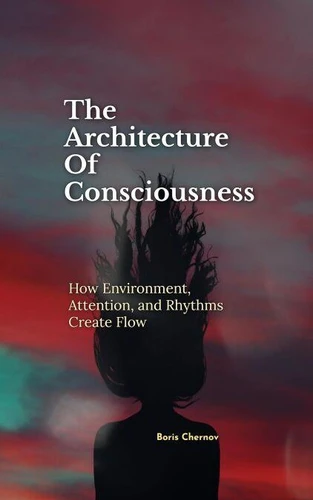
The Architecture of Consciousness. Laminar Dynamics, #1
Par :Formats :
Disponible dans votre compte client Decitre ou Furet du Nord dès validation de votre commande. Le format ePub est :
- Compatible avec une lecture sur My Vivlio (smartphone, tablette, ordinateur)
- Compatible avec une lecture sur liseuses Vivlio
- Pour les liseuses autres que Vivlio, vous devez utiliser le logiciel Adobe Digital Edition. Non compatible avec la lecture sur les liseuses Kindle, Remarkable et Sony
 , qui est-ce ?
Notre partenaire de plateforme de lecture numérique où vous retrouverez l'ensemble de vos ebooks gratuitement
Pour en savoir plus sur nos ebooks, consultez notre aide en ligne ici
C'est si simple ! Lisez votre ebook avec l'app Vivlio sur votre tablette, mobile ou ordinateur :

- FormatePub
- ISBN8235541405
- EAN9798235541405
- Date de parution15/07/2026
- Protection num.pas de protection
- Infos supplémentairesepub
- ÉditeurIoakim Ioakim
Résumé
What if consciousness is not something contained inside a person, but a property of coordinated space?The Architecture of Consciousness introduces an architectural approach to observing consciousness through environments, attention, rhythm, coordination, and recoverable traces. Rather than treating consciousness as an isolated mental phenomenon, this book explores how coherent environments allow awareness to emerge, stabilize, and become observable.
Drawing on the work of Flow Systems Lab, the book introduces concepts such as architectural traces, environmental conductivity, lamination, and Flow JSON-not as technical products, but as practical languages for describing coordination and recoverability. Written for researchers, architects, engineers, designers, and curious readers, this book invites exploration of consciousness as an architectural phenomenon that can be observed, described, and reconstructed across different environments.
This is the first volume in an ongoing research series from Flow Systems Lab.
Drawing on the work of Flow Systems Lab, the book introduces concepts such as architectural traces, environmental conductivity, lamination, and Flow JSON-not as technical products, but as practical languages for describing coordination and recoverability. Written for researchers, architects, engineers, designers, and curious readers, this book invites exploration of consciousness as an architectural phenomenon that can be observed, described, and reconstructed across different environments.
This is the first volume in an ongoing research series from Flow Systems Lab.