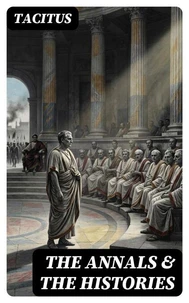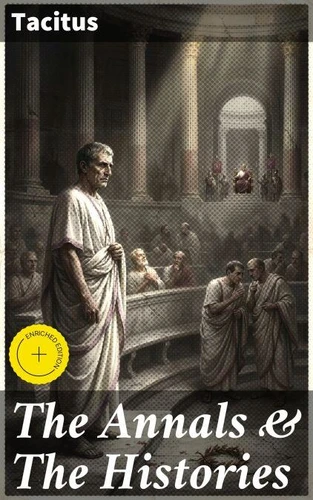
The Annals & The Histories. Enriched edition. A Timeless Analysis of Power and Corruption in the Roman Empire
Par : , , ,Formats :
Disponible dans votre compte client Decitre ou Furet du Nord dès validation de votre commande. Le format ePub est :
- Compatible avec une lecture sur My Vivlio (smartphone, tablette, ordinateur)
- Compatible avec une lecture sur liseuses Vivlio
- Pour les liseuses autres que Vivlio, vous devez utiliser le logiciel Adobe Digital Edition. Non compatible avec la lecture sur les liseuses Kindle, Remarkable et Sony
 , qui est-ce ?
Notre partenaire de plateforme de lecture numérique où vous retrouverez l'ensemble de vos ebooks gratuitement
Pour en savoir plus sur nos ebooks, consultez notre aide en ligne ici
C'est si simple ! Lisez votre ebook avec l'app Vivlio sur votre tablette, mobile ou ordinateur :

- Nombre de pages583
- FormatePub
- ISBN859-65--4767010-0
- EAN8596547670100
- Date de parution18/11/2023
- Protection num.Digital Watermarking
- Taille2 Mo
- Infos supplémentairesepub
- ÉditeurGOOD PRESS
Résumé
Tacitus' "The Annals & The Histories" stands as a monumental chronicle of the Roman Empire's imperial governance and civil strife from the death of Augustus in AD 14 to the year 70. Written in an elegant and concise style, Tacitus employs a meticulous narrative technique, blending historical rigor with a profound psychological insight into the motivations of political actors. The text is distinguished by its moral seriousness and the keen observation of power dynamics, presenting a vivid depiction of the tumultuous period characterized by political intrigue, corruption, and the fluctuations of power, all enriched by Tacitus' distinctive prose that interweaves dramatic narrative with astute analysis, reflecting the complexities of human ambition and ethical dilemmas in governance.
Tacitus, a senator and historian of the first century, was profoundly affected by the political landscape of his time, marked by the transition from the Republic to an Empire. His life immersed in political and social spheres of Rome provided him with the insights and perspectives instrumental in crafting a narrative both reflective of his society's moral decay and a cautionary tale regarding absolute power.
He grappled with themes of tyranny, the loss of republican values, and the integrity of history itself, making his works both personal and profoundly political. This essential text is recommended for readers interested in the intricate workings of power and governance, historians seeking rich narratives of the past, and anyone desiring to understand the complexities of moral integrity amidst the backdrop of political ambition.
Tacitus' reflections and interpretations invite readers to ponder the cyclical nature of history, establishing the significance of his work in any comprehensive study of Roman history. In this enriched edition, we have carefully created added value for your reading experience: - A comprehensive Introduction outlines these selected works' unifying features, themes, or stylistic evolutions. - The Author Biography highlights personal milestones and literary influences that shape the entire body of writing. - A Historical Context section situates the works in their broader era-social currents, cultural trends, and key events that underpin their creation. - A concise Synopsis (Selection) offers an accessible overview of the included texts, helping readers navigate plotlines and main ideas without revealing critical twists. - A unified Analysis examines recurring motifs and stylistic hallmarks across the collection, tying the stories together while spotlighting the different work's strengths. - Reflection questions inspire deeper contemplation of the author's overarching message, inviting readers to draw connections among different texts and relate them to modern contexts. - Lastly, our hand-picked Memorable Quotes distill pivotal lines and turning points, serving as touchstones for the collection's central themes.
Tacitus, a senator and historian of the first century, was profoundly affected by the political landscape of his time, marked by the transition from the Republic to an Empire. His life immersed in political and social spheres of Rome provided him with the insights and perspectives instrumental in crafting a narrative both reflective of his society's moral decay and a cautionary tale regarding absolute power.
He grappled with themes of tyranny, the loss of republican values, and the integrity of history itself, making his works both personal and profoundly political. This essential text is recommended for readers interested in the intricate workings of power and governance, historians seeking rich narratives of the past, and anyone desiring to understand the complexities of moral integrity amidst the backdrop of political ambition.
Tacitus' reflections and interpretations invite readers to ponder the cyclical nature of history, establishing the significance of his work in any comprehensive study of Roman history. In this enriched edition, we have carefully created added value for your reading experience: - A comprehensive Introduction outlines these selected works' unifying features, themes, or stylistic evolutions. - The Author Biography highlights personal milestones and literary influences that shape the entire body of writing. - A Historical Context section situates the works in their broader era-social currents, cultural trends, and key events that underpin their creation. - A concise Synopsis (Selection) offers an accessible overview of the included texts, helping readers navigate plotlines and main ideas without revealing critical twists. - A unified Analysis examines recurring motifs and stylistic hallmarks across the collection, tying the stories together while spotlighting the different work's strengths. - Reflection questions inspire deeper contemplation of the author's overarching message, inviting readers to draw connections among different texts and relate them to modern contexts. - Lastly, our hand-picked Memorable Quotes distill pivotal lines and turning points, serving as touchstones for the collection's central themes.