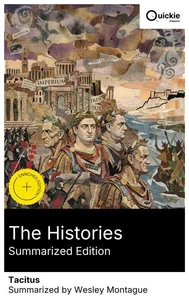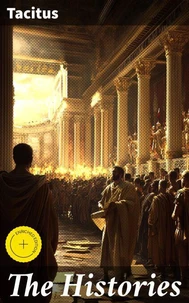
Histories. Enriched edition. Intrigue and Upheaval in Ancient Rome: The Year of the Four Emperors and the Rise of the Flavian Dynasty
Par : , ,Formats :
Disponible dans votre compte client Decitre ou Furet du Nord dès validation de votre commande. Le format ePub est :
- Compatible avec une lecture sur My Vivlio (smartphone, tablette, ordinateur)
- Compatible avec une lecture sur liseuses Vivlio
- Pour les liseuses autres que Vivlio, vous devez utiliser le logiciel Adobe Digital Edition. Non compatible avec la lecture sur les liseuses Kindle, Remarkable et Sony
 , qui est-ce ?
Notre partenaire de plateforme de lecture numérique où vous retrouverez l'ensemble de vos ebooks gratuitement
Pour en savoir plus sur nos ebooks, consultez notre aide en ligne ici
C'est si simple ! Lisez votre ebook avec l'app Vivlio sur votre tablette, mobile ou ordinateur :

- Nombre de pages217
- FormatePub
- ISBN978-80-272-4403-4
- EAN9788027244034
- Date de parution02/11/2018
- Protection num.Digital Watermarking
- Taille543 Ko
- Infos supplémentairesepub
- ÉditeurJazzybee Verlag
Résumé
Tacitus's 'Histories' is a detailed account of the reigns of the Roman emperors from 69-96 AD, focusing primarily on the tumultuous Year of the Four Emperors in 69 AD and the subsequent Flavian Dynasty. Written in a detached and objective style, Tacitus uses a combination of historical facts and vivid storytelling to provide a well-rounded view of the political intrigues, military campaigns, and social upheavals of the time.
His use of rhetorical flourishes and powerful imagery adds depth and complexity to the narrative, making 'Histories' a compelling read for those interested in the history of ancient Rome. Tacitus's meticulous attention to detail and critical analysis of the events make this work an important contribution to Roman historiography. Historical scholars have praised Tacitus for his unbiased portrayal of the characters and events, making 'Histories' a valuable source for understanding the complexities of Roman history.
I highly recommend 'Histories' to anyone looking to delve into the political machinations and social dynamics of ancient Rome, as Tacitus's insightful analysis and engaging narrative style make it a must-read for history enthusiasts. In this enriched edition, we have carefully created added value for your reading experience: - A succinct Introduction situates the work's timeless appeal and themes. - The Synopsis outlines the central plot, highlighting key developments without spoiling critical twists. - A detailed Historical Context immerses you in the era's events and influences that shaped the writing. - An Author Biography reveals milestones in the author's life, illuminating the personal insights behind the text. - A thorough Analysis dissects symbols, motifs, and character arcs to unearth underlying meanings. - Reflection questions prompt you to engage personally with the work's messages, connecting them to modern life. - Hand-picked Memorable Quotes shine a spotlight on moments of literary brilliance. - Interactive footnotes clarify unusual references, historical allusions, and archaic phrases for an effortless, more informed read.
His use of rhetorical flourishes and powerful imagery adds depth and complexity to the narrative, making 'Histories' a compelling read for those interested in the history of ancient Rome. Tacitus's meticulous attention to detail and critical analysis of the events make this work an important contribution to Roman historiography. Historical scholars have praised Tacitus for his unbiased portrayal of the characters and events, making 'Histories' a valuable source for understanding the complexities of Roman history.
I highly recommend 'Histories' to anyone looking to delve into the political machinations and social dynamics of ancient Rome, as Tacitus's insightful analysis and engaging narrative style make it a must-read for history enthusiasts. In this enriched edition, we have carefully created added value for your reading experience: - A succinct Introduction situates the work's timeless appeal and themes. - The Synopsis outlines the central plot, highlighting key developments without spoiling critical twists. - A detailed Historical Context immerses you in the era's events and influences that shaped the writing. - An Author Biography reveals milestones in the author's life, illuminating the personal insights behind the text. - A thorough Analysis dissects symbols, motifs, and character arcs to unearth underlying meanings. - Reflection questions prompt you to engage personally with the work's messages, connecting them to modern life. - Hand-picked Memorable Quotes shine a spotlight on moments of literary brilliance. - Interactive footnotes clarify unusual references, historical allusions, and archaic phrases for an effortless, more informed read.