SOLDES
Jusqu'à -70% sur une sélection d'articles*

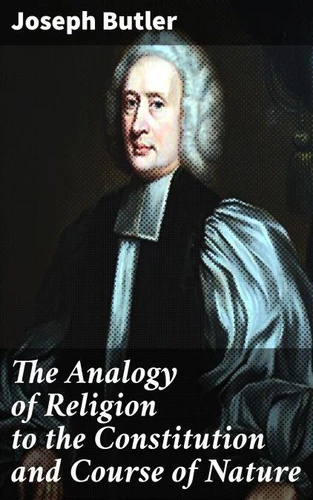
The Analogy of Religion to the Constitution and Course of Nature. To which are added two brief dissertations: I. On personal identity. II. On the nature of virtue
Par : ,Formats :
Disponible dans votre compte client Decitre ou Furet du Nord dès validation de votre commande. Le format ePub est :
- Compatible avec une lecture sur My Vivlio (smartphone, tablette, ordinateur)
- Compatible avec une lecture sur liseuses Vivlio
- Pour les liseuses autres que Vivlio, vous devez utiliser le logiciel Adobe Digital Edition. Non compatible avec la lecture sur les liseuses Kindle, Remarkable et Sony
 , qui est-ce ?
Notre partenaire de plateforme de lecture numérique où vous retrouverez l'ensemble de vos ebooks gratuitement
Pour en savoir plus sur nos ebooks, consultez notre aide en ligne ici
C'est si simple ! Lisez votre ebook avec l'app Vivlio sur votre tablette, mobile ou ordinateur :

- Nombre de pages426
- FormatePub
- ISBN4057664590343
- EAN4057664590343
- Date de parution29/11/2019
- Protection num.Digital Watermarking
- Taille771 Ko
- Infos supplémentairesepub
- ÉditeurGOOD PRESS
Résumé
In "The Analogy of Religion to the Constitution and Course of Nature, " Joseph Butler examines the profound relationship between religious belief and the natural world, employing a rigorous philosophical approach that merges theology with moral reasoning. Butler's literary style is marked by clarity and precision, as he constructs a systematic argument that highlights parallels between the complexities of nature and the principles of Christianity.
Written in the early 18th century amidst the Enlightenment, this work responds to the growing skepticism toward religious tenets, inviting readers to consider faith through a rational lens while maintaining a deep respect for its mysteries. Joseph Butler, an English bishop and philosopher, was profoundly influenced by the theological debates of his era as well as by the emerging emphasis on empirical reasoning.
His background in religious education and moral philosophy shaped his exploration of the fundamental questions surrounding existence, morality, and divinity. Butler'Äôs engagement with both the empirical sciences and Christian doctrine reflects a unique synthesis intended to affirm the rational basis of faith in a tumultuous intellectual climate. This book is highly recommended for those interested in theology, philosophy, and the intersection of faith and reason.
Butler's work serves as a relevant commentary for contemporary discussions on religious belief, challenging readers to engage with questions of existence and morality in a nuanced and scientifically informed manner.
Written in the early 18th century amidst the Enlightenment, this work responds to the growing skepticism toward religious tenets, inviting readers to consider faith through a rational lens while maintaining a deep respect for its mysteries. Joseph Butler, an English bishop and philosopher, was profoundly influenced by the theological debates of his era as well as by the emerging emphasis on empirical reasoning.
His background in religious education and moral philosophy shaped his exploration of the fundamental questions surrounding existence, morality, and divinity. Butler'Äôs engagement with both the empirical sciences and Christian doctrine reflects a unique synthesis intended to affirm the rational basis of faith in a tumultuous intellectual climate. This book is highly recommended for those interested in theology, philosophy, and the intersection of faith and reason.
Butler's work serves as a relevant commentary for contemporary discussions on religious belief, challenging readers to engage with questions of existence and morality in a nuanced and scientifically informed manner.