SOLDES
Jusqu'à -70% sur une sélection d'articles*

Nouveauté
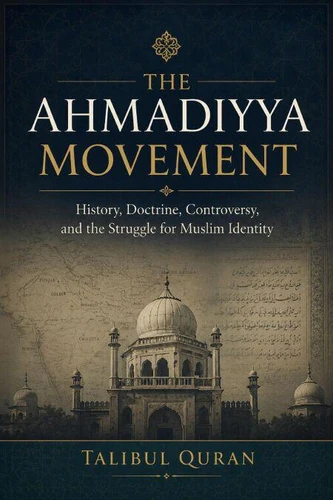
The Ahmadiyya movement: history and identity
Par :Formats :
Disponible dans votre compte client Decitre ou Furet du Nord dès validation de votre commande. Le format ePub est :
- Compatible avec une lecture sur My Vivlio (smartphone, tablette, ordinateur)
- Compatible avec une lecture sur liseuses Vivlio
- Pour les liseuses autres que Vivlio, vous devez utiliser le logiciel Adobe Digital Edition. Non compatible avec la lecture sur les liseuses Kindle, Remarkable et Sony
 , qui est-ce ?
Notre partenaire de plateforme de lecture numérique où vous retrouverez l'ensemble de vos ebooks gratuitement
Pour en savoir plus sur nos ebooks, consultez notre aide en ligne ici
C'est si simple ! Lisez votre ebook avec l'app Vivlio sur votre tablette, mobile ou ordinateur :

- FormatePub
- ISBN8235505919
- EAN9798235505919
- Date de parution06/07/2026
- Protection num.pas de protection
- Infos supplémentairesepub
- ÉditeurIoakim Ioakim
Résumé
Who has the authority to define a Muslim-and what happens when theology becomes law?The Ahmadiyya Movement offers a balanced, accessible examination of one of the most controversial religious movements in modern Islam. Founded by Mirza Ghulam Ahmad in nineteenth-century British India, the movement presented itself as a revival of Islam but created a lasting rupture with mainstream Sunni and Shia belief over prophethood, revelation, the Messiah, the Mahdi, and the finality of Muhammad's mission.
Talibul Quran traces the movement's origins, theological development, 1914 division, global missionary expansion, and influence in Africa, Europe, and early African American Islam. The book also examines Pakistan's constitutional classification of Ahmadis as non-Muslims, Ordinance XX, legal restrictions, persecution, migration, and religious freedom. Drawing on Ahmadi writings, Muslim scholarship, historical research, legal records, and human-rights reporting, this book defends two principles at once: Muslims have the right to reject Ahmadi theology, and Ahmadis have the right to live and worship without violence, coercion, or state persecution.
Talibul Quran traces the movement's origins, theological development, 1914 division, global missionary expansion, and influence in Africa, Europe, and early African American Islam. The book also examines Pakistan's constitutional classification of Ahmadis as non-Muslims, Ordinance XX, legal restrictions, persecution, migration, and religious freedom. Drawing on Ahmadi writings, Muslim scholarship, historical research, legal records, and human-rights reporting, this book defends two principles at once: Muslims have the right to reject Ahmadi theology, and Ahmadis have the right to live and worship without violence, coercion, or state persecution.