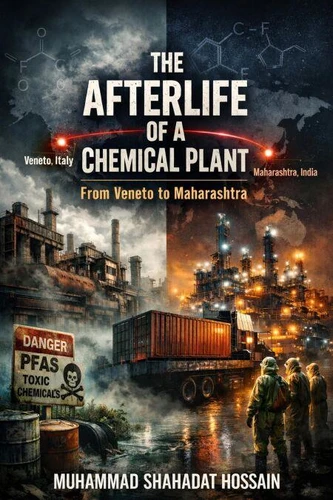
A collapsed Italian chemical plant. A trail of toxic PFAS pollution. A controversial industrial rebirth in India. The Afterlife of a Chemical Plant: From Veneto to Maharashtra is a groundbreaking investigative work that follows one of Europe's most infamous environmental disasters across continents-revealing how chemical technology, corporate liability, and global supply chains intersect in ways the public rarely sees.
The story begins in Veneto, Italy, where decades of fluorochemical production contaminated the drinking water of hundreds of thousands and triggered one of Europe's largest public-health investigations. As the company fell into bankruptcy and its executives faced criminal prosecution, its machinery, patents, and technical knowledge were quietly dismantled and shipped to India. What follows is a gripping examination of how an industrial legacy can be reborn far from the site of its collapse.
In Maharashtra, the relocated technologies raise new questions for worker safety, environmental monitoring, and regulatory oversight. Through firsthand accounts, scientific analysis, and a detailed look at PFAS chemistry, this book exposes the hidden costs of globalized manufacturing and the uneven distribution of risk between nations. Combining investigative reporting, science writing, and geopolitical analysis, this book offers an unflinching look at the future of fluorochemical production-and the communities living in its shadow.
It is a vital resource for readers interested in environmental justice, industrial policy, public health, and the global movement of hazardous industries.
A collapsed Italian chemical plant. A trail of toxic PFAS pollution. A controversial industrial rebirth in India. The Afterlife of a Chemical Plant: From Veneto to Maharashtra is a groundbreaking investigative work that follows one of Europe's most infamous environmental disasters across continents-revealing how chemical technology, corporate liability, and global supply chains intersect in ways the public rarely sees.
The story begins in Veneto, Italy, where decades of fluorochemical production contaminated the drinking water of hundreds of thousands and triggered one of Europe's largest public-health investigations. As the company fell into bankruptcy and its executives faced criminal prosecution, its machinery, patents, and technical knowledge were quietly dismantled and shipped to India. What follows is a gripping examination of how an industrial legacy can be reborn far from the site of its collapse.
In Maharashtra, the relocated technologies raise new questions for worker safety, environmental monitoring, and regulatory oversight. Through firsthand accounts, scientific analysis, and a detailed look at PFAS chemistry, this book exposes the hidden costs of globalized manufacturing and the uneven distribution of risk between nations. Combining investigative reporting, science writing, and geopolitical analysis, this book offers an unflinching look at the future of fluorochemical production-and the communities living in its shadow.
It is a vital resource for readers interested in environmental justice, industrial policy, public health, and the global movement of hazardous industries.


 , qui est-ce ?