SOLDES
Jusqu'à -70% sur une sélection d'articles*

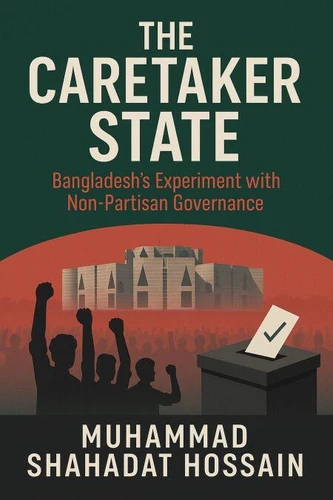
The Caretaker State: Bangladesh's Experiment with Non-Partisan Governance. The Caretaker State: Bangladesh's Experiment with Non-Partisan Governance, #1
Par : ,Formats :
Disponible dans votre compte client Decitre ou Furet du Nord dès validation de votre commande. Le format ePub est :
- Compatible avec une lecture sur My Vivlio (smartphone, tablette, ordinateur)
- Compatible avec une lecture sur liseuses Vivlio
- Pour les liseuses autres que Vivlio, vous devez utiliser le logiciel Adobe Digital Edition. Non compatible avec la lecture sur les liseuses Kindle, Remarkable et Sony
 , qui est-ce ?
Notre partenaire de plateforme de lecture numérique où vous retrouverez l'ensemble de vos ebooks gratuitement
Pour en savoir plus sur nos ebooks, consultez notre aide en ligne ici
C'est si simple ! Lisez votre ebook avec l'app Vivlio sur votre tablette, mobile ou ordinateur :

- FormatePub
- ISBN8231282227
- EAN9798231282227
- Date de parution13/06/2025
- Protection num.pas de protection
- Infos supplémentairesepub
- ÉditeurWalzone Press
Résumé
The Caretaker State: Bangladesh's Experiment with Non-Partisan Governance offers an insightful journey into one of South Asia's most unique political innovations - the non-partisan caretaker government system of Bangladesh. Born out of crisis and public demand, this extraordinary mechanism was designed to ensure free and fair elections by temporarily handing power to an unelected, neutral administration.
But did it truly deliver?This book unpacks the origins, rise, constitutional validation, and eventual fall of the caretaker government system, analyzing its impact on democracy, elections, and political trust in Bangladesh. From the dramatic resignation of autocrats to the bold yet controversial experiments with judicial leadership, each chapter explores the socio-political dynamics that shaped this governance model.
Key highlights include:The 1990 mass uprising and Justice Shahabuddin Ahmed's interim leadershipThe 13th Amendment and its role in formalizing neutralityElectoral successes and tensions during the 1996 and 2001 transitionsThe extended 2007-2008 emergency rule and its democratic implicationsThe abolition via the 15th Amendment and its contested legacyThe resurgence of public demand for neutral elections in the 2020sThe 2024 student-led movement and the appointment of an interim leadership Written in a clear, analytical, and accessible style, this book is essential reading for students of political science, policy-makers, researchers, and general readers curious about democracy's challenges in the Global South.
Author Muhammad Shahadat Hossain blends detailed historical context with balanced critique, offering a rare inside look at how Bangladesh attempted - and struggled - to separate politics from elections.
But did it truly deliver?This book unpacks the origins, rise, constitutional validation, and eventual fall of the caretaker government system, analyzing its impact on democracy, elections, and political trust in Bangladesh. From the dramatic resignation of autocrats to the bold yet controversial experiments with judicial leadership, each chapter explores the socio-political dynamics that shaped this governance model.
Key highlights include:The 1990 mass uprising and Justice Shahabuddin Ahmed's interim leadershipThe 13th Amendment and its role in formalizing neutralityElectoral successes and tensions during the 1996 and 2001 transitionsThe extended 2007-2008 emergency rule and its democratic implicationsThe abolition via the 15th Amendment and its contested legacyThe resurgence of public demand for neutral elections in the 2020sThe 2024 student-led movement and the appointment of an interim leadership Written in a clear, analytical, and accessible style, this book is essential reading for students of political science, policy-makers, researchers, and general readers curious about democracy's challenges in the Global South.
Author Muhammad Shahadat Hossain blends detailed historical context with balanced critique, offering a rare inside look at how Bangladesh attempted - and struggled - to separate politics from elections.