SOLDES
Jusqu'à -70% sur une sélection d'articles*

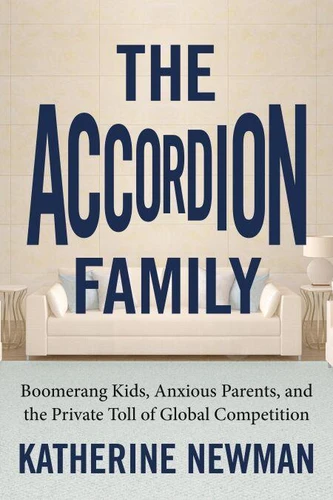
The Accordion Family. Boomerang Kids, Anxious Parents, and the Private Toll of Global Competition
Par :Formats :
Disponible dans votre compte client Decitre ou Furet du Nord dès validation de votre commande. Le format ePub protégé est :
- Compatible avec une lecture sur My Vivlio (smartphone, tablette, ordinateur)
- Compatible avec une lecture sur liseuses Vivlio
- Pour les liseuses autres que Vivlio, vous devez utiliser le logiciel Adobe Digital Edition. Non compatible avec la lecture sur les liseuses Kindle, Remarkable et Sony
- Non compatible avec un achat hors France métropolitaine
 , qui est-ce ?
Notre partenaire de plateforme de lecture numérique où vous retrouverez l'ensemble de vos ebooks gratuitement
Pour en savoir plus sur nos ebooks, consultez notre aide en ligne ici
C'est si simple ! Lisez votre ebook avec l'app Vivlio sur votre tablette, mobile ou ordinateur :

- Nombre de pages320
- FormatePub
- ISBN978-0-8070-0744-0
- EAN9780807007440
- Date de parution17/01/2012
- Protection num.Adobe DRM
- Taille935 Ko
- Infos supplémentairesepub
- ÉditeurBeacon Press
Résumé
Why are adults in their twenties and thirties stuck in their parents' homes in the world's wealthiest countries? There's no question that globalization has drastically changed the cultural landscape across the world. The cost of living is rising, and high unemployment rates have created an untenable economic climate that has severely compromised the path to adulthood for young people in their twenties and thirties.
And there's no end in sight. Families are hunkering down, expanding the reach of their households to envelop economically vulnerable young adults. Acclaimed sociologist Katherine Newman explores the trend toward a rising number of "accordion families" composed of adult children who will be living off their parents' retirement savings with little means of their own when the older generation is gone. While the trend crosses the developed world, the cultural and political responses to accordion families differ dramatically.
In Japan, there is a sense of horror and fear associated with "parasite singles, " whereas in Italy, the "cult of mammismo, " or mamma's boys, is common and widely accepted, though the government is rallying against it. Meanwhile, in Spain, frustrated parents and millenials angrily blame politicians and big business for the growing number of youth forced to live at home. Newman's investigation, conducted in six countries, transports the reader into the homes of accordion families and uncovers fascinating links between globalization and the failure-to-launch trend.
Drawing from over three hundred interviews, Newman concludes that nations with weak welfare states have the highest frequency of accordion families while the trend is virtually unknown in the Nordic countries. The United States is caught in between. But globalization is reshaping the landscape of adulthood everywhere, and the consequences are far-reaching in our private lives. In this gripping and urgent book, Newman urges Americans not to simply dismiss the boomerang generation but, rather, to strategize how we can help the younger generation make its own place in the world.
And there's no end in sight. Families are hunkering down, expanding the reach of their households to envelop economically vulnerable young adults. Acclaimed sociologist Katherine Newman explores the trend toward a rising number of "accordion families" composed of adult children who will be living off their parents' retirement savings with little means of their own when the older generation is gone. While the trend crosses the developed world, the cultural and political responses to accordion families differ dramatically.
In Japan, there is a sense of horror and fear associated with "parasite singles, " whereas in Italy, the "cult of mammismo, " or mamma's boys, is common and widely accepted, though the government is rallying against it. Meanwhile, in Spain, frustrated parents and millenials angrily blame politicians and big business for the growing number of youth forced to live at home. Newman's investigation, conducted in six countries, transports the reader into the homes of accordion families and uncovers fascinating links between globalization and the failure-to-launch trend.
Drawing from over three hundred interviews, Newman concludes that nations with weak welfare states have the highest frequency of accordion families while the trend is virtually unknown in the Nordic countries. The United States is caught in between. But globalization is reshaping the landscape of adulthood everywhere, and the consequences are far-reaching in our private lives. In this gripping and urgent book, Newman urges Americans not to simply dismiss the boomerang generation but, rather, to strategize how we can help the younger generation make its own place in the world.
A propos de Katherine S. Newman


14,99 €