SOLDES
Jusqu'à -70% sur une sélection d'articles*

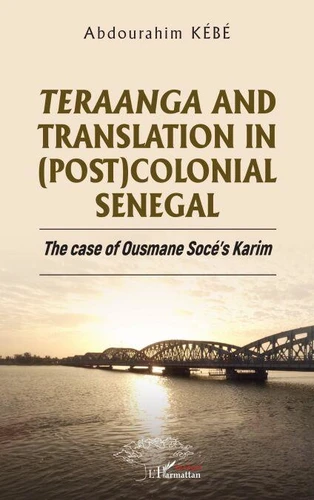
Teraanga and Translation in (Post)colonial Senegal. The case of Ousmane Socé’s Karim
Par :Formats :
Disponible dans votre compte client Decitre ou Furet du Nord dès validation de votre commande. Le format PDF est :
- Compatible avec une lecture sur My Vivlio (smartphone, tablette, ordinateur)
- Compatible avec une lecture sur liseuses Vivlio
- Pour les liseuses autres que Vivlio, vous devez utiliser le logiciel Adobe Digital Edition. Non compatible avec la lecture sur les liseuses Kindle, Remarkable et Sony
 , qui est-ce ?
Notre partenaire de plateforme de lecture numérique où vous retrouverez l'ensemble de vos ebooks gratuitement
Pour en savoir plus sur nos ebooks, consultez notre aide en ligne ici
C'est si simple ! Lisez votre ebook avec l'app Vivlio sur votre tablette, mobile ou ordinateur :

- Nombre de pages172
- FormatPDF
- ISBN978-2-336-56591-0
- EAN9782336565910
- Date de parution02/04/2026
- Protection num.Digital Watermarking
- Taille2 Mo
- Infos supplémentairespdf
- ÉditeurL'Harmattan
Résumé
The book explores the concept of resistance in translation, examining how writing and translation can challenge colonial French hierarchies of race and language and had to resist the dominant Western logocentric thought. Teraanga and Translation contributes to the field of Translation Studies by introducing in the discipline a new concept called "ethics of teraanga." Rooted in long-standing Senegalese cultural values, Teraanga is a Wolof word meaning hospitality and solidarity and is central to understanding Socé's subversive strategies.
It emphasizes respect, community, fostering syncretism through cohabitation rather than assimilation."Abdourahim Kébé brings a fresh perspective to translation studies and to African literary studies with the concept of teraanga-a Senegalese value connected to hospitality-applied as a critical lens for interpreting Ousmane Socé's orality-inspired, multilingual writing. In this way, Kébé successfully navigates the paradoxes of the novel Karim and sheds light on how Socé resists colonialist ideologies and grapples with the modern challenges Senegal faces while also celebrating the country's rich history and traditions and the cultural diversity of its urban centers" (Profesor Jeanette Patterson, Binghamton University).
It emphasizes respect, community, fostering syncretism through cohabitation rather than assimilation."Abdourahim Kébé brings a fresh perspective to translation studies and to African literary studies with the concept of teraanga-a Senegalese value connected to hospitality-applied as a critical lens for interpreting Ousmane Socé's orality-inspired, multilingual writing. In this way, Kébé successfully navigates the paradoxes of the novel Karim and sheds light on how Socé resists colonialist ideologies and grapples with the modern challenges Senegal faces while also celebrating the country's rich history and traditions and the cultural diversity of its urban centers" (Profesor Jeanette Patterson, Binghamton University).