Cedar Rapids, Iowa. 1963. Lila Voss closes the Dairy Queen on First Avenue and walks into the humid Midwestern dark toward her white '57 Chevy Bel Air. Minutes later, the lot is empty. Her car remains idling beneath the sodium lights, driver's door hanging open, keys still in the ignition. Her purse is gone. So is Lila. Three days later, city workers pull her body from a storm drain. Someone carved delicate butterfly wings into her shoulders with impossible precision.
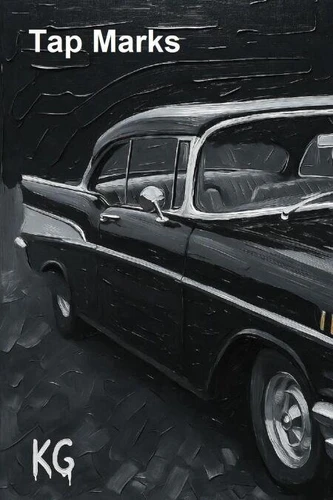
Her shoes sit neatly arranged on the hood of the Bel Air like offerings. The coroner rules the death a suicide before the week is over. Cedar Rapids buries the story. The car does not. Thirty years later, the Bel Air resurfaces on a used-car lot outside Des Moines. The chrome still gleams. The engine still purrs. But once the road stretches dark enough, the tapping starts. At first, it comes from the trunk.
Then the glove box. Then the mirrors. Owners begin reporting the same things: tapping rhythms in empty compartments, a bottle of red nail polish that refuses to disappear, and the faint reflection of a woman blinking slowly from the rearview mirror. Waiting. Watching. Asking someone to finish the outline. Tap Marks is a slow-burning dread novella about memory, obsession, small-town silence, and the terrifying persistence of objects that carry unfinished violence inside them.
Thick with neon, chrome, fog, and Midwestern decay, it blends ghost story horror with cursed Americana. Some cars keep mileage. Others keep ghosts.
Cedar Rapids, Iowa. 1963. Lila Voss closes the Dairy Queen on First Avenue and walks into the humid Midwestern dark toward her white '57 Chevy Bel Air. Minutes later, the lot is empty. Her car remains idling beneath the sodium lights, driver's door hanging open, keys still in the ignition. Her purse is gone. So is Lila. Three days later, city workers pull her body from a storm drain. Someone carved delicate butterfly wings into her shoulders with impossible precision.
Her shoes sit neatly arranged on the hood of the Bel Air like offerings. The coroner rules the death a suicide before the week is over. Cedar Rapids buries the story. The car does not. Thirty years later, the Bel Air resurfaces on a used-car lot outside Des Moines. The chrome still gleams. The engine still purrs. But once the road stretches dark enough, the tapping starts. At first, it comes from the trunk.
Then the glove box. Then the mirrors. Owners begin reporting the same things: tapping rhythms in empty compartments, a bottle of red nail polish that refuses to disappear, and the faint reflection of a woman blinking slowly from the rearview mirror. Waiting. Watching. Asking someone to finish the outline. Tap Marks is a slow-burning dread novella about memory, obsession, small-town silence, and the terrifying persistence of objects that carry unfinished violence inside them.
Thick with neon, chrome, fog, and Midwestern decay, it blends ghost story horror with cursed Americana. Some cars keep mileage. Others keep ghosts.

 , qui est-ce ?