SOLDES
Jusqu'à -70% sur une sélection d'articles*

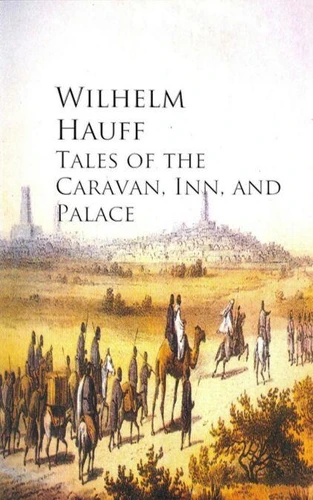
Tales of the Caravan, Inn, and Palace
Par :Formats :
Disponible dans votre compte client Decitre ou Furet du Nord dès validation de votre commande. Le format ePub est :
- Compatible avec une lecture sur My Vivlio (smartphone, tablette, ordinateur)
- Compatible avec une lecture sur liseuses Vivlio
- Pour les liseuses autres que Vivlio, vous devez utiliser le logiciel Adobe Digital Edition. Non compatible avec la lecture sur les liseuses Kindle, Remarkable et Sony
 , qui est-ce ?
Notre partenaire de plateforme de lecture numérique où vous retrouverez l'ensemble de vos ebooks gratuitement
Pour en savoir plus sur nos ebooks, consultez notre aide en ligne ici
C'est si simple ! Lisez votre ebook avec l'app Vivlio sur votre tablette, mobile ou ordinateur :

- Nombre de pages500
- FormatePub
- ISBN978-3-7364-0731-2
- EAN9783736407312
- Date de parution27/08/2016
- Protection num.Digital Watermarking
- Taille3 Mo
- Infos supplémentairesepub
- ÉditeurAndhof
Résumé
In introducing to American readers these charming and unique Tales, a few details may properly be given of their author's life and literary work. The record, though brief, is one of unusual interest.
Wilhelm Hauff was born at Stuttgart, Germany, in 1802, and received his education at Tuebingen. He graduated from the University, in 1824, with the degree of Doctor of Philosophy; and for the following two years filled the position of tutor in a nobleman's family.
It was during the leisure hours afforded by this occupation that he composed the greater part of the works upon which his fame rests. In 1826 he published his "Maerchenalmanach auf das Jahr 1826, fuer Soehne und Toechter gebildeter Staende, " a translation of which is herewith tendered the American public, under the changed and abbreviated title of: "Tales of the Caravan, Inn, and Palace." In the same year, and closely following the "Fairy Tales, " came "Mittheilungen aus den Memoiren des Satan, " "Der Mann im Monde, " a second volume of "Satan's Memoirs, " and a collection of short tales.
These volumes appeared in such rapid succession as to obscure for a time the brilliancy of the "Fairy Tales;" but later editions of them acquired a widespread circulation, while their popularity is so constantly on the increase as to suggest the thought that in time they may prove a formidable rival of the "Arabian Nights, " in the regards of the young, the world over. The publication of "The Man in the Moon" gave Hauff a national reputation; but when his "Lichtenstein, eine romantische Sage" appeared, shortly afterward, the Wuertembergers hailed him as the coming Walter Scott of Germany.
Whether he would have merited this fond and proud prediction of his countrymen, can not now be told.
It was during the leisure hours afforded by this occupation that he composed the greater part of the works upon which his fame rests. In 1826 he published his "Maerchenalmanach auf das Jahr 1826, fuer Soehne und Toechter gebildeter Staende, " a translation of which is herewith tendered the American public, under the changed and abbreviated title of: "Tales of the Caravan, Inn, and Palace." In the same year, and closely following the "Fairy Tales, " came "Mittheilungen aus den Memoiren des Satan, " "Der Mann im Monde, " a second volume of "Satan's Memoirs, " and a collection of short tales.
These volumes appeared in such rapid succession as to obscure for a time the brilliancy of the "Fairy Tales;" but later editions of them acquired a widespread circulation, while their popularity is so constantly on the increase as to suggest the thought that in time they may prove a formidable rival of the "Arabian Nights, " in the regards of the young, the world over. The publication of "The Man in the Moon" gave Hauff a national reputation; but when his "Lichtenstein, eine romantische Sage" appeared, shortly afterward, the Wuertembergers hailed him as the coming Walter Scott of Germany.
Whether he would have merited this fond and proud prediction of his countrymen, can not now be told.
A propos de Wilhelm Hauff

0,99 €