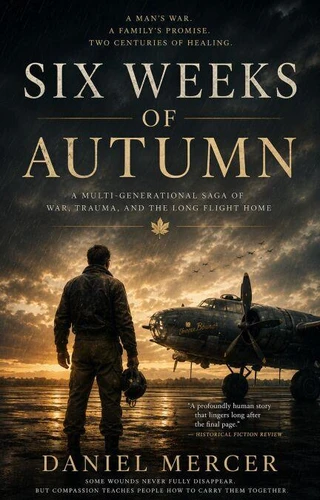
In November 1944, Captain Elias Mercer came home to East Texas with forty-six combat missions behind him and six weeks of leave ahead. The Army Air Forces called it recovery. He called it borrowed time. The war had already taken pieces of him over Europe-flak, burning engines, boys who never made it back. What it had not yet taken was his mind. That would come later, over the black Pacific, on a mission so secret even the men flying it were not told what they carried.
When the voices started, Mercer did the unthinkable. He turned the formation around. What followed was a court-martial that could have ended in a firing squad, a verdict that saved his life but not his peace, and forty years of listening for engines in every thunderstorm. Six Weeks of Autumn is a story about the weight of survival-the kind that does not end when the war does. It is about the men who came home changed, the women who waited for them, and the quiet cost of carrying more than a human mind was built to bear.
In November 1944, Captain Elias Mercer came home to East Texas with forty-six combat missions behind him and six weeks of leave ahead. The Army Air Forces called it recovery. He called it borrowed time. The war had already taken pieces of him over Europe-flak, burning engines, boys who never made it back. What it had not yet taken was his mind. That would come later, over the black Pacific, on a mission so secret even the men flying it were not told what they carried.
When the voices started, Mercer did the unthinkable. He turned the formation around. What followed was a court-martial that could have ended in a firing squad, a verdict that saved his life but not his peace, and forty years of listening for engines in every thunderstorm. Six Weeks of Autumn is a story about the weight of survival-the kind that does not end when the war does. It is about the men who came home changed, the women who waited for them, and the quiet cost of carrying more than a human mind was built to bear.


 , qui est-ce ?