Callum West is an English-language author known for thoughtful contemporary nonfiction that explores innovation, resilience, and the human drive for progress. His writing style blends sharp observation with accessible storytelling, creating works that examine the emotional and social forces shaping modern life and decision-making.
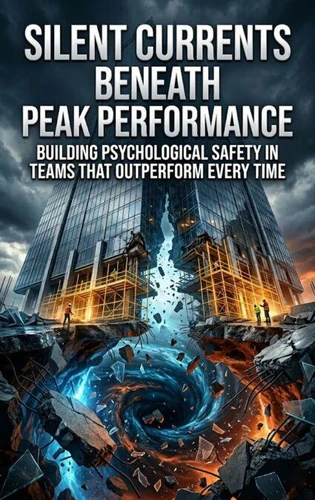
Silent Currents Beneath Peak Performance. Building Psychological Safety in Teams That Outperform Every Time
Par :Formats :
Disponible dans votre compte client Decitre ou Furet du Nord dès validation de votre commande. Le format ePub est :
- Compatible avec une lecture sur My Vivlio (smartphone, tablette, ordinateur)
- Compatible avec une lecture sur liseuses Vivlio
- Pour les liseuses autres que Vivlio, vous devez utiliser le logiciel Adobe Digital Edition. Non compatible avec la lecture sur les liseuses Kindle, Remarkable et Sony
 , qui est-ce ?
Notre partenaire de plateforme de lecture numérique où vous retrouverez l'ensemble de vos ebooks gratuitement
Pour en savoir plus sur nos ebooks, consultez notre aide en ligne ici
C'est si simple ! Lisez votre ebook avec l'app Vivlio sur votre tablette, mobile ou ordinateur :

- Nombre de pages152
- FormatePub
- ISBN978-3-565-45496-9
- EAN9783565454969
- Date de parution23/05/2026
- Protection num.pas de protection
- Taille2 Mo
- Infos supplémentairesepub
- ÉditeurEmphaloz Publishing House
Résumé
This book examines how silent currents beneath peak performance shape psychological safety in teams that consistently outperform, not as a leadership technique but as a systemic interaction between unspoken group dynamics and deliberate safety practices. It reveals how hidden undercurrents can either strengthen or weaken trust, openness, and collective resilience.
First, the communication system positions psychological safety as a shared belief that permits interpersonal risk taking.
When teams openly share mistakes, ask for help, and express uncertainty without fear, information flows more freely, improving learning, collaboration, and decision making. Safety therefore becomes the condition that allows high performance behaviors to emerge. Second, the feedback integration mechanism determines whether teams remain adaptive or become stagnant. In psychologically safe environments, members challenge assumptions, voice constructive criticism, and experiment with new approaches.
These behaviors strengthen cohesion, encourage continuous learning, and support innovation by helping teams identify weaknesses before they escalate into larger problems. Third, the leadership modeling system operates through consistent behavioral signals. Leaders who demonstrate accountability, appreciation, and clear work agreements normalize vulnerability and establish predictable interaction patterns that reinforce trust over time.
In German and European business contexts, where long term relational trust and procedural fairness are highly valued, sustained psychological safety depends on aligning visible safety initiatives with the deeper informal dynamics shaping team behavior.
When teams openly share mistakes, ask for help, and express uncertainty without fear, information flows more freely, improving learning, collaboration, and decision making. Safety therefore becomes the condition that allows high performance behaviors to emerge. Second, the feedback integration mechanism determines whether teams remain adaptive or become stagnant. In psychologically safe environments, members challenge assumptions, voice constructive criticism, and experiment with new approaches.
These behaviors strengthen cohesion, encourage continuous learning, and support innovation by helping teams identify weaknesses before they escalate into larger problems. Third, the leadership modeling system operates through consistent behavioral signals. Leaders who demonstrate accountability, appreciation, and clear work agreements normalize vulnerability and establish predictable interaction patterns that reinforce trust over time.
In German and European business contexts, where long term relational trust and procedural fairness are highly valued, sustained psychological safety depends on aligning visible safety initiatives with the deeper informal dynamics shaping team behavior.
A propos de Callum West





24,99 €