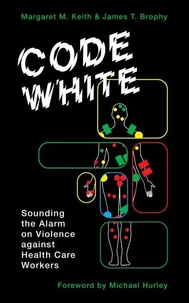



James T. Brophy is a career activist, researcher, and advocate focussing on occupational and environmental health. He received his doctorate from the University of Stirling on occupational risks for breast cancer. He is a former executive director of the Occupational Health Clinics for Ontario Workers (OCHOW) in Windsor and then Sarnia, where he and his partner, Margaret Keith, helped to document one of the largest cohorts of asbestos diseased workers in Canadian history.
In recent years, he collaborated on research exploring violence against health care workers and on the lived experience of inadequately protected health care staff working during the pandemic. He lives in Emeryville, Ontario. nicole marie burton is a comic book and children's book illustrator based in Ontario. With over a decade of experience in activist art and design, she is a founding member of the Ad Astra Comix publishing collective, which specializes in comics with social justice themes.
Her published work includes The Beast: Making a Living on a Dying Planet, The Boy Who Walked Backwards, and a chapter in the anthology Drawn to Change: Graphic Histories of Working Class Struggle. John Clarke has been involved in anti-poverty struggles since he helped to form a union of unemployed workers in London, Ontario, in 1983. He is a founding member of the Ontario Coalition Against Poverty (OCAP) and worked as one of its organizers from 1990 to 2019.
He is currently the Packer Visitor in Social Justice at York University in Toronto. Anita Girvan is assistant professor of cultural studies, Athabasca University, Alberta, Canada. Harry Glasbeek is Professor Emeritus and Senior Scholar at Osgoode Hall Law School, York University. He has also taught at the universities of Melbourne and Monash in Australia, and the University of Western Ontario.
He is the author of ten books including Wealth by Stealth: Corporate Crime, Corporate Law, and the Perversion of Democracy. Hugh Goldring works with nicole marie burton as a writer and artist comics production team based in Ottawa, Canada. They primarily work on adapting research on social justice themes into comics. Their debut graphic novel, The Beast: Making a Living on a Dying Planet, is available in its entirety through The Digital Press at the University of North Dakota.
Dallas Hunt is Cree and a member of Wapsewsipi (Swan River First Nation), and is an assistant professor of Indigenous literature at the University of British Columbia. Their book, Storying Violence: Unravelling Colonial Narratives in the Stanley Trial, will be released in May 2020. Andrew Jackson spent most of his career as Chief Economist and Director of Social and Economic Policy with the Canadian Labour Congress.
Since retiring from the CLC in 2012 he has been senior policy adviser to the Broadbent Institute, and spent two years as the Packer Visiting Professor of Social Justice at York University. He is currently an adjunct research professor at Carleton University. He writes a regular column for the Globe and Mail Report on Business and is the author of numerous articles and several books, including Work and Labour in Canada: Critical Issues, which is now in its third edition with Canadian Scholars Press.
Emma Jackson is an organizer for 350.org. and Climate Justice Edmonton. El Jones is a poet, professor, community advocate, and prison abolitionist from Halifax, Nova Scotia. She was the fifth Poet Laureate of Halifax, and the fifteenth Nancy's Chair in Women's Studies at Mount Saint Vincent University. She is a co-founder of the Black Power Hour, a radio show collective with prisoners on CKDU 88.1 FM.
Her book of poetry and essays about state violence, Canada Is So Polite, is forthcoming from Gaspereau Press. Margaret M. Keith is an occupational and environmental health advocate and researcher, focussing particularly on women and work. She earned a PhD from the University of Stirling. Margaret served as Executive Director of the Windsor Occupational Health Information Service before joining the Occupational Health Clinics for Ontario Workers in Sarnia.
She and her partner, Jim Brophy, assisted the First Nation's community of Aamjiwnaang near Sarnia in exploring health problems related to environmental pollution from the adjacent petrochemical industry. Margaret was co-author of an internationally recognized research article documenting a skewed sex birth ratio uncovered after examining Aamjiwnaang birth records. She lives in Emeryville, Ontario.
Gary Kinsman was one of the first three employees of the AIDS Committee of Toronto, a member of AIDS ACTION NOW!, the Newfoundland AIDS Association, the Valley AIDS Concern Group in Nova Scotia, and now the AIDS Activist History Project (https://aidsactivisthistory.ca). He is currently involved in the Policing the Pandemic group. He is also the author of The Regulation of Desire, and co-author of The Canadian War on Queers.
His website is https://radicalnoise.ca. Julie S. Lalonde is an award-winning women's rights advocate and public educator based in Ottawa. She is the author of Resilience Is Futile: The Life and Death and Life of Julie S. Lalonde (Between the Lines, 2020). Economic historian Wayne Lewchuk taught Labour Studies at McMaster University for many years. He was the co-principal investigator of the PEPSO project.
Robyn Maynard is an award-winning author and Black feminist. Her published works include Policing Black Lives: State Violence in Canada from Slavery to the Present (Fernwood, 2017), a national bestseller, as well as numerous works published in academic and trade anthologies. She has a long history of involvement supporting grassroots activism against racial profiling, incarceration, detention, and deportation in Toronto and Montreal, and is currently a Vanier Scholar at the University of Toronto.
Jane E. McArthur is a PhD candidate in sociology/social justice at the University of Windsor. Her dissertation research focuses on the understandings and strategies women workers have of risks for breast cancer in their working environments. The focus of Jane's work outside her dissertation has been community-based environmental and occupational health research, education, communication, and advocacy.
She is a mother of two school-age children and together they participate in the local climate justice movement. Alexander McClelland is a sociolegal researcher and Banting Postdoctoral Fellow at the University of Ottawa in the Department of Criminology. He is currently examining issues of confidentiality for research with criminalized people. His work focuses on the intersections of life, law, and disease, where he has developed a range of collaborative and interdisciplinary writing, academic, activist, and artistic projects to address issues of criminalization, sexual autonomy, surveillance, drug liberation, and the construction of knowledge on HIV.
Karen Messing is a professor of biology at the Université du Québec à Montréal, where she does research in partnership with unions and women's groups. She was trained in ergonomics and genetics. She is an internationally-known expert on occupational health from a gender perspective. Her 2014 Pain and Prejudice: What Science Can Learn about Work from the People Who Do It was translated into French, Korean and German.
She has won numerous academic and non-academic awards, most recently the Yant Award from the American Industrial Hygiene Association and the Order of Canada (Officer Level). Justin Piché is associate professor in the Department of Criminology and director of the Carceral Studies Research Collective at the University of Ottawa. He is also co-editor of the Journal of Prisoners on Prisons, a founding member of the Criminalization and Punishment Education Project, and researcher for the Carceral Cultures Research Initiative.
His research examines how criminalization and confinement is justified and resisted during state campaigns to expand carceral controls and in popular culture. Elaine Power is an associate professor in the School of Kinesiology & Health Studies and head of the Department of Gender Studies at Queen's University. Elaine is a founding member of the Kingston Action Group for a Basic Income Guarantee.
Gina Starblanket is Cree/Saulteaux and a member of the Star Blanket Cree Nation, and is an assistant political science professor at the University of Calgary. Kingston writer Jamie Swift is the author of numerous books. He works on social justice issues for the Sisters of Providence of St. Vincent de Paul and lectures at the Smith School of Business at Queen's University. Richard Swift is a Montreal-based writer and activist and was a long time editor with New Internationalist magazine.
He is the author of The No-Nonsense Guide to Democracy. Kai Cheng Thom is a writer, performer, educator, and community worker based in Toronto. She has published several books in various genres, including the essay collection I Hope We Choose Love: A Trans Girl's Notes from the End of the World. Alberto Toscano is reader in critical theory and co-director of the Centre for Philosophy and Critical Thought at Goldsmiths, University of London.
He is the author of Fanaticism: On the Uses of an Idea and Cartographies of the Absolute (with Jeff Kinkle). He edits The Italian List for Seagull Books and sits on the editorial board of the journal Historical Materialism.
In recent years, he collaborated on research exploring violence against health care workers and on the lived experience of inadequately protected health care staff working during the pandemic. He lives in Emeryville, Ontario. nicole marie burton is a comic book and children's book illustrator based in Ontario. With over a decade of experience in activist art and design, she is a founding member of the Ad Astra Comix publishing collective, which specializes in comics with social justice themes.
Her published work includes The Beast: Making a Living on a Dying Planet, The Boy Who Walked Backwards, and a chapter in the anthology Drawn to Change: Graphic Histories of Working Class Struggle. John Clarke has been involved in anti-poverty struggles since he helped to form a union of unemployed workers in London, Ontario, in 1983. He is a founding member of the Ontario Coalition Against Poverty (OCAP) and worked as one of its organizers from 1990 to 2019.
He is currently the Packer Visitor in Social Justice at York University in Toronto. Anita Girvan is assistant professor of cultural studies, Athabasca University, Alberta, Canada. Harry Glasbeek is Professor Emeritus and Senior Scholar at Osgoode Hall Law School, York University. He has also taught at the universities of Melbourne and Monash in Australia, and the University of Western Ontario.
He is the author of ten books including Wealth by Stealth: Corporate Crime, Corporate Law, and the Perversion of Democracy. Hugh Goldring works with nicole marie burton as a writer and artist comics production team based in Ottawa, Canada. They primarily work on adapting research on social justice themes into comics. Their debut graphic novel, The Beast: Making a Living on a Dying Planet, is available in its entirety through The Digital Press at the University of North Dakota.
Dallas Hunt is Cree and a member of Wapsewsipi (Swan River First Nation), and is an assistant professor of Indigenous literature at the University of British Columbia. Their book, Storying Violence: Unravelling Colonial Narratives in the Stanley Trial, will be released in May 2020. Andrew Jackson spent most of his career as Chief Economist and Director of Social and Economic Policy with the Canadian Labour Congress.
Since retiring from the CLC in 2012 he has been senior policy adviser to the Broadbent Institute, and spent two years as the Packer Visiting Professor of Social Justice at York University. He is currently an adjunct research professor at Carleton University. He writes a regular column for the Globe and Mail Report on Business and is the author of numerous articles and several books, including Work and Labour in Canada: Critical Issues, which is now in its third edition with Canadian Scholars Press.
Emma Jackson is an organizer for 350.org. and Climate Justice Edmonton. El Jones is a poet, professor, community advocate, and prison abolitionist from Halifax, Nova Scotia. She was the fifth Poet Laureate of Halifax, and the fifteenth Nancy's Chair in Women's Studies at Mount Saint Vincent University. She is a co-founder of the Black Power Hour, a radio show collective with prisoners on CKDU 88.1 FM.
Her book of poetry and essays about state violence, Canada Is So Polite, is forthcoming from Gaspereau Press. Margaret M. Keith is an occupational and environmental health advocate and researcher, focussing particularly on women and work. She earned a PhD from the University of Stirling. Margaret served as Executive Director of the Windsor Occupational Health Information Service before joining the Occupational Health Clinics for Ontario Workers in Sarnia.
She and her partner, Jim Brophy, assisted the First Nation's community of Aamjiwnaang near Sarnia in exploring health problems related to environmental pollution from the adjacent petrochemical industry. Margaret was co-author of an internationally recognized research article documenting a skewed sex birth ratio uncovered after examining Aamjiwnaang birth records. She lives in Emeryville, Ontario.
Gary Kinsman was one of the first three employees of the AIDS Committee of Toronto, a member of AIDS ACTION NOW!, the Newfoundland AIDS Association, the Valley AIDS Concern Group in Nova Scotia, and now the AIDS Activist History Project (https://aidsactivisthistory.ca). He is currently involved in the Policing the Pandemic group. He is also the author of The Regulation of Desire, and co-author of The Canadian War on Queers.
His website is https://radicalnoise.ca. Julie S. Lalonde is an award-winning women's rights advocate and public educator based in Ottawa. She is the author of Resilience Is Futile: The Life and Death and Life of Julie S. Lalonde (Between the Lines, 2020). Economic historian Wayne Lewchuk taught Labour Studies at McMaster University for many years. He was the co-principal investigator of the PEPSO project.
Robyn Maynard is an award-winning author and Black feminist. Her published works include Policing Black Lives: State Violence in Canada from Slavery to the Present (Fernwood, 2017), a national bestseller, as well as numerous works published in academic and trade anthologies. She has a long history of involvement supporting grassroots activism against racial profiling, incarceration, detention, and deportation in Toronto and Montreal, and is currently a Vanier Scholar at the University of Toronto.
Jane E. McArthur is a PhD candidate in sociology/social justice at the University of Windsor. Her dissertation research focuses on the understandings and strategies women workers have of risks for breast cancer in their working environments. The focus of Jane's work outside her dissertation has been community-based environmental and occupational health research, education, communication, and advocacy.
She is a mother of two school-age children and together they participate in the local climate justice movement. Alexander McClelland is a sociolegal researcher and Banting Postdoctoral Fellow at the University of Ottawa in the Department of Criminology. He is currently examining issues of confidentiality for research with criminalized people. His work focuses on the intersections of life, law, and disease, where he has developed a range of collaborative and interdisciplinary writing, academic, activist, and artistic projects to address issues of criminalization, sexual autonomy, surveillance, drug liberation, and the construction of knowledge on HIV.
Karen Messing is a professor of biology at the Université du Québec à Montréal, where she does research in partnership with unions and women's groups. She was trained in ergonomics and genetics. She is an internationally-known expert on occupational health from a gender perspective. Her 2014 Pain and Prejudice: What Science Can Learn about Work from the People Who Do It was translated into French, Korean and German.
She has won numerous academic and non-academic awards, most recently the Yant Award from the American Industrial Hygiene Association and the Order of Canada (Officer Level). Justin Piché is associate professor in the Department of Criminology and director of the Carceral Studies Research Collective at the University of Ottawa. He is also co-editor of the Journal of Prisoners on Prisons, a founding member of the Criminalization and Punishment Education Project, and researcher for the Carceral Cultures Research Initiative.
His research examines how criminalization and confinement is justified and resisted during state campaigns to expand carceral controls and in popular culture. Elaine Power is an associate professor in the School of Kinesiology & Health Studies and head of the Department of Gender Studies at Queen's University. Elaine is a founding member of the Kingston Action Group for a Basic Income Guarantee.
Gina Starblanket is Cree/Saulteaux and a member of the Star Blanket Cree Nation, and is an assistant political science professor at the University of Calgary. Kingston writer Jamie Swift is the author of numerous books. He works on social justice issues for the Sisters of Providence of St. Vincent de Paul and lectures at the Smith School of Business at Queen's University. Richard Swift is a Montreal-based writer and activist and was a long time editor with New Internationalist magazine.
He is the author of The No-Nonsense Guide to Democracy. Kai Cheng Thom is a writer, performer, educator, and community worker based in Toronto. She has published several books in various genres, including the essay collection I Hope We Choose Love: A Trans Girl's Notes from the End of the World. Alberto Toscano is reader in critical theory and co-director of the Centre for Philosophy and Critical Thought at Goldsmiths, University of London.
He is the author of Fanaticism: On the Uses of an Idea and Cartographies of the Absolute (with Jeff Kinkle). He edits The Italian List for Seagull Books and sits on the editorial board of the journal Historical Materialism.