
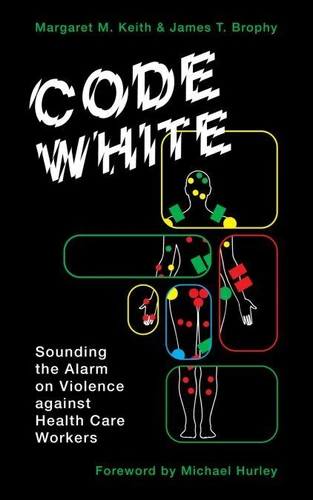
Code White. Sounding the Alarm on Violence against Health Care Workers
Par : ,Formats :
Disponible dans votre compte client Decitre ou Furet du Nord dès validation de votre commande. Le format ePub est :
- Compatible avec une lecture sur My Vivlio (smartphone, tablette, ordinateur)
- Compatible avec une lecture sur liseuses Vivlio
- Pour les liseuses autres que Vivlio, vous devez utiliser le logiciel Adobe Digital Edition. Non compatible avec la lecture sur les liseuses Kindle, Remarkable et Sony
 , qui est-ce ?
Notre partenaire de plateforme de lecture numérique où vous retrouverez l'ensemble de vos ebooks gratuitement
Pour en savoir plus sur nos ebooks, consultez notre aide en ligne ici
C'est si simple ! Lisez votre ebook avec l'app Vivlio sur votre tablette, mobile ou ordinateur :

- Nombre de pages288
- FormatePub
- ISBN978-1-77113-566-5
- EAN9781771135665
- Date de parution01/09/2021
- Protection num.Digital Watermarking
- Taille2 Mo
- Infos supplémentairesepub
- ÉditeurBetween the Lines
Résumé
When health care workers call a Code White, it's an emergency response for a violent incident: a call for help. But it's one that goes unanswered in hospitals, clinics, and long-term care homes across the country. Code White exposes a shocking epidemic of violence that's hidden in plain sight, one in which workers are bruised, battered, assaulted, and demeaned, but carry on in silence, with little recourse or support.
Researchers Margaret M. Keith and James T. Brophy lay bare the stories of over one hundred nurses and personal support workers, aides and porters, clerical workers and cleaners. The nightmarish experiences they relate are not one-off incidents, but symptoms of deep systemic flaws that have transformed health care into one of the most dangerous occupational sectors in Canada. The same questions echo in the wake of each and every brutal encounter: Is violence and trauma really just "part of the job"? Why is this going underreported and unchecked? What needs to be done, and how?
Researchers Margaret M. Keith and James T. Brophy lay bare the stories of over one hundred nurses and personal support workers, aides and porters, clerical workers and cleaners. The nightmarish experiences they relate are not one-off incidents, but symptoms of deep systemic flaws that have transformed health care into one of the most dangerous occupational sectors in Canada. The same questions echo in the wake of each and every brutal encounter: Is violence and trauma really just "part of the job"? Why is this going underreported and unchecked? What needs to be done, and how?